Pulled muscle in your back: how long it takes to heal
You bend to pick something up, twist awkwardly or finish a heavy lift, and your back grabs. A 'pulled muscle' is how most people describe a sudden episode of back pain, and it's one of the most common reasons people come to see us.
What does a pulled back muscle feel like?
Usually a sudden sharp or grabbing pain on one or both sides of the lower back, followed by aching, stiffness and muscle spasm. It often hurts to bend, twist, get out of a chair or roll over in bed, and the muscles beside the spine feel tight and tender. The pain stays in the back or buttock rather than travelling down the leg.
Is it really a pulled muscle?
Sometimes. It's hard to tell exactly which structure is involved in most episodes of back pain: muscle, ligament, a small joint or a disc can all produce similar symptoms, and the muscles often spasm to protect the area whatever the source. The good news is that the early management is the same.
How long does a pulled back muscle take to heal?
Most improve a lot in the first couple of weeks. A meta-analysis of 33 groups of patients found that people with acute low back pain improved markedly in the first six weeks, with average pain falling from 52 out of 100 to 23, and continued to improve more slowly after that (da C Menezes Costa et al., CMAJ, 2012). A simple strain often feels much better within one to two weeks, though some stiffness can linger.
What should I do in the first few days?
Keep moving within comfort. Short, frequent walks help more than bed rest. Use heat for spasm, and simple pain relief if needed; ask your pharmacist what's suitable. Change position regularly, and avoid heavy lifting and repeated bending for a few days.
See our post on back pain relief at home.
Should I rest or stay active?
Stay active. Prolonged rest tends to slow recovery. Carry on with normal activities as far as pain allows, modifying the things that hurt most.
Should I stretch a pulled back muscle?
Gentle movement is better than strong stretching early on: knee rocks, pelvic tilts and bringing your knees towards your chest within a comfortable range. Forcing a stretch into sharp pain can increase spasm.
Heat or ice?
Most people with back spasm find heat more helpful. Use whichever feels better.
How do I tell a pulled muscle from a disc problem?
Pain that travels down the leg below the knee, pins and needles, numbness or weakness in the leg, or pain that's much worse with coughing and sneezing, suggests a nerve is irritated, often by a disc. Back pain alone, with tight tender muscles, is more consistent with a strain.
See our post on bulging discs.
When can I go back to the gym or sport?
Once you can bend, twist and walk comfortably, start with lighter loads and build back over one to two weeks. You don't need to wait until you're completely pain-free; mild discomfort that settles afterwards is acceptable.
See our post on back pain after deadlifts.
Can I work with a pulled back muscle?
Usually, with adjustments. For desk work, change position often. For manual work, lighter duties for a few days help; your GP can provide a certificate if needed.
Why does it keep happening?
Repeated episodes are common. They often follow periods of fatigue, a jump in activity, or long spells of inactivity. Building strength in the back, hips and trunk and keeping generally active reduces how often they occur.
What about a pulled muscle in the upper back or neck?
The same principles apply: gentle movement, heat, and a gradual return to normal activity.
See our posts on neck strain and pain between the shoulder blades.
Do I need a scan for a pulled back muscle?
Not usually. Scans rarely change the management of a new episode of back pain without warning signs, and often show age-related changes that aren't the cause. Imaging is used when symptoms suggest something more serious or aren't improving as expected.
Should I use a back brace?
A brace for a few days is reasonable if it helps you keep moving, but it isn't needed, and long-term use isn't recommended.
How can an osteopath help?
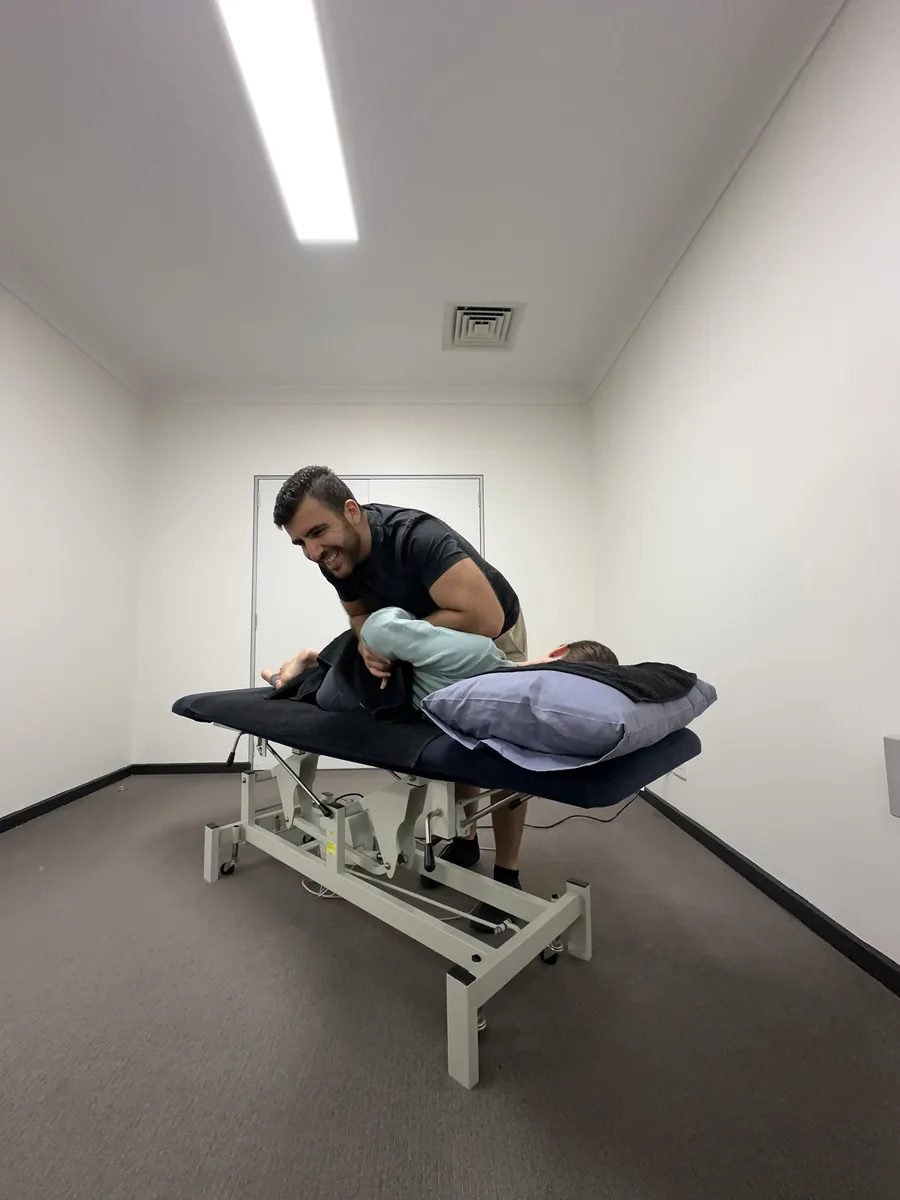
We assess your back and nerves to work out what's going on, treat hands-on to ease pain and spasm, and give you movements and a plan for returning to work, training and daily life.
When should back pain be checked urgently?
Go to an emergency department straight away if back pain comes with new difficulty controlling your bladder or bowels, numbness around the groin or inner thighs, or weakness or numbness in both legs. See your GP promptly for leg weakness that's getting worse, back pain with fever or feeling unwell, unexplained weight loss, or a history of cancer.
See our back pain treatment in Berwick page. Book an assessment at our Berwick clinic. A 60-minute initial consultation is $149, with no referral needed and HICAPS on-site.
Sources
Book an initial consultation at RISE Sports & Spinal in Berwick. Clear diagnosis, hands-on treatment, and a plan that actually gets you better.
Related articles