Back pain after deadlifts: should you train through it or rest?
Few things make a lifter more nervous than a twinge in the lower back halfway through a set of deadlifts. Steven lifts himself and sees a lot of gym-goers at the clinic, and the questions are always the same: is this serious, did I do it because my back rounded, and do I have to stop deadlifting? Here are straight answers.
Is it normal for your back to hurt after deadlifts?
Some soreness is normal. A deep, even ache through the muscles either side of your spine a day or two after a heavy or high-volume session is the same delayed-onset muscle soreness you get anywhere else, and it fades as you move. What isn't normal is sharp, catching pain during a rep, pain that's worse the next morning and stops you bending or putting your socks on, or pain that travels into your buttock or leg.
Does rounding your back when deadlifting cause back pain?
Less than you'd think. A systematic review found low-quality evidence that greater lower-back flexion during lifting was not a risk factor for developing or keeping low back pain, and didn't distinguish people with back pain from people without it (Saraceni et al., Journal of Orthopaedic & Sports Physical Therapy, 2020). Technique still matters for performance and for sharing load well, but a rounded rep is rarely the whole story.
The more common culprit is load: a jump in weight or volume, a lot of fatigue, poor sleep, or a big week of other training on top. Our post on preventing gym injuries covers why load spikes injure more lifters than bad form.
Is deadlifting bad for your back?
No. Across the weight-training sports, injury rates are low, ranging from under one injury per 1,000 hours of training in bodybuilding to around 4.5 to 6 in strongman, although the lower back is one of the most commonly injured areas (Keogh and Winwood, Sports Medicine, 2017). Deadlifts are also used as a rehabilitation exercise for mechanical low back pain; one study found people with less pain and disability and better back-extensor endurance were the ones who benefited most (Berglund et al., Journal of Strength and Conditioning Research, 2015). Getting back to deadlifting is usually part of recovery, not something to avoid forever.
Should I stop deadlifting with lower back pain?
Usually you modify rather than stop. For a simple strain, most people do well by dropping the load and volume for a week or two rather than stopping completely, swapping to a variation their back tolerates (a trap bar deadlift, a block or rack pull, a kettlebell deadlift, or a Romanian deadlift in a range that feels fine), and keeping the rest of their training going, including squats, single-leg work and upper body, as long as those don't flare things up.
A common rule of thumb is that mild discomfort during and after training is acceptable if it settles by the next morning and isn't building week to week. Sharp pain, pain that lingers into the next day, or pain spreading into your leg means back off and get it looked at.
How long until I can deadlift heavy again?
Simple muscle strains often settle over a few days to a couple of weeks, and most lifters can build back to their previous weights over the following weeks with a planned progression. Disc-related pain, especially with leg symptoms, usually takes longer. Rather than testing a heavy single to see if you're right, rebuild through volume at moderate loads first.
If leg pain is involved, our disc bulge guide covers recovery timelines and training with a disc injury, and our post on gym training and lower back injuries covers the other common presentations we see.
When should you get back pain from lifting checked?
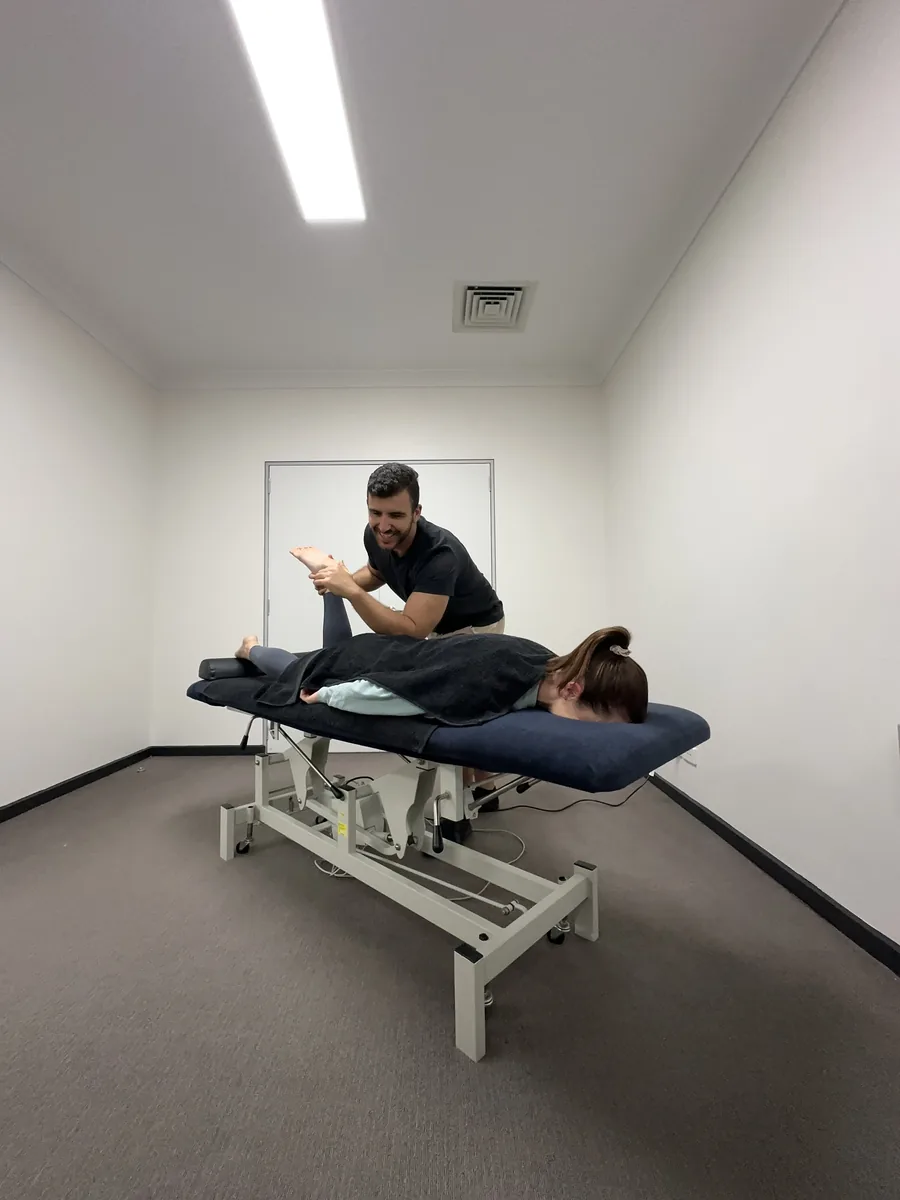
Book in if pain isn't clearly improving after a week or two, if it keeps coming back every time you push your deadlift, or if you have pain, numbness or pins and needles in your leg. We'll work out what's actually irritated, treat it hands-on, and give you a specific plan: which lifts to change for now, what you can keep, and the order to build back to heavy pulls.
Go to an emergency department straight away if back pain comes with new difficulty controlling your bladder or bowels, numbness around the groin or inner thighs, or weakness or numbness in both legs. See your GP promptly if you have leg weakness that is getting worse, back pain with fever or feeling unwell, unexplained weight loss, a history of cancer, or pain after a significant fall or accident.
Book an assessment at our Berwick clinic. A 60-minute initial consultation is $149, with no referral needed and HICAPS on-site.
Sources
Book an initial consultation at RISE Sports & Spinal in Berwick. Clear diagnosis, hands-on treatment, and a plan that actually gets you better.
Related articles