Skip to content
Osteopathy · Jaw Pain & TMJ

Jaw pain
& TMJ.

Clicking, clenching, aching in front of the ear: jaw pain is common, and usually manageable without surgery.

Temporomandibular disorders (TMD) are problems with the jaw joint just in front of the ear and the chewing muscles that move it. They are common, affecting an estimated 5–12% of people, and most cases improve with conservative care rather than surgery (National Institute of Dental and Craniofacial Research).

Last updated: September 2026

Temporomandibular disorders (TMD) are problems with the jaw joint just in front of the ear and the chewing muscles that move it. They are common, affecting an estimated 5–12% of people, and most cases improve with conservative care rather than surgery (National Institute of Dental and Craniofacial Research). Typical symptoms are an ache in the jaw, cheek, temple or ear, clicking or popping, a jaw that feels stiff or tired, and headaches. Jaw problems often travel with neck pain and tension-type headaches, which is where an osteopathic assessment of the jaw, neck and posture together can help.

Common causes

Muscle overload (myofascial pain)

The most common pattern: the chewing muscles (masseter and temporalis) become overworked and sore, often from clenching, grinding or stress. Expect a dull ache in the cheek or temple that gets worse with chewing.

Joint irritation

The jaw joint itself can become irritated, giving pain directly in front of the ear, especially when opening wide, yawning or chewing hard food.

Disc displacement (clicking)

A click or pop on opening is often the small disc inside the joint shifting. Clicking without pain is common and usually harmless; a jaw that catches or locks needs assessment.

Clenching and grinding (bruxism)

Read more →
Daytime clenching and night-time grinding load the muscles and joint for hours at a time. Stress and poor sleep often drive it.

Neck and posture

The upper neck and jaw share muscle and nerve connections. Neck stiffness and sustained forward-head posture can feed tension into the jaw, and clenching feeds back into the neck and head.
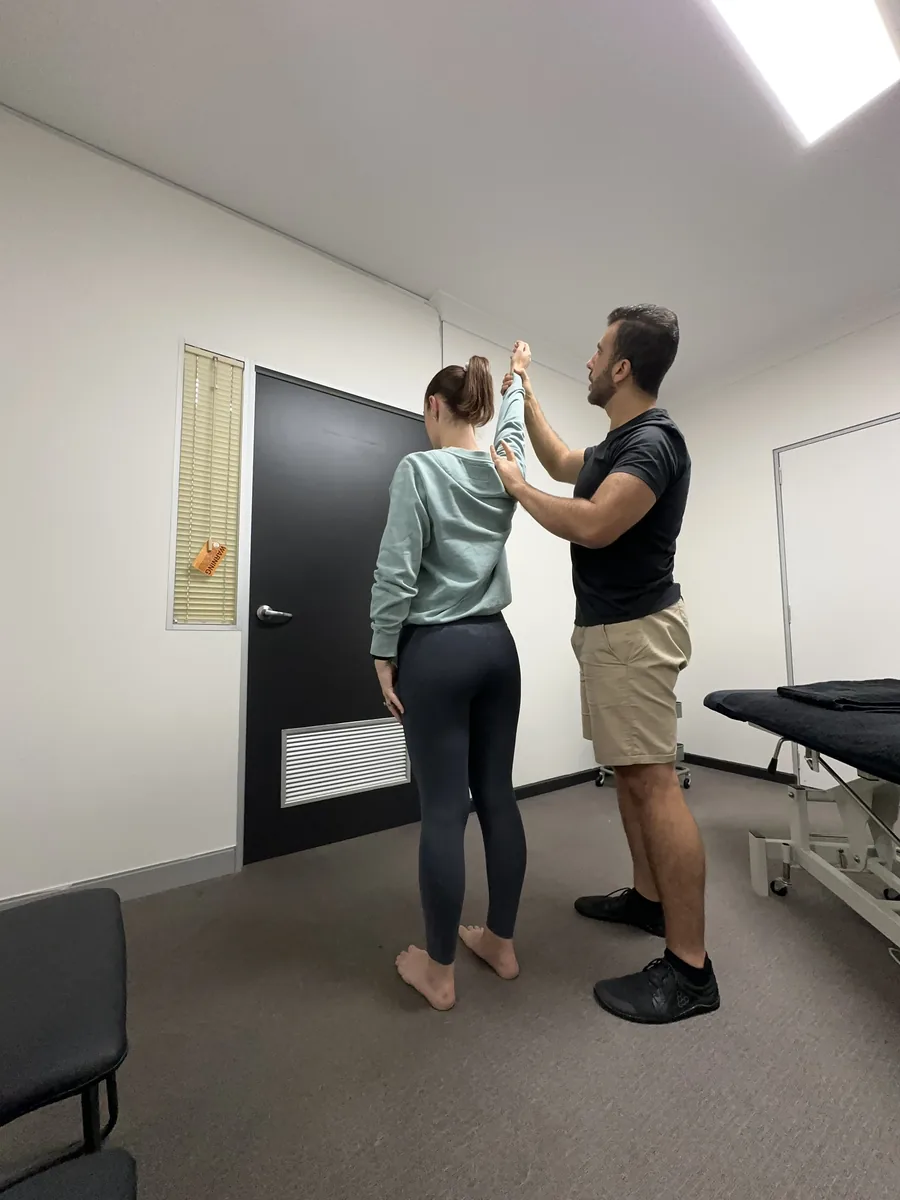
Osteopath Steven Eskaf assessing a standing patient’s shoulder and arm range of motion in the Berwick clinic
Assessment first — we test movement and joint mobility before treating.

How we treat it

We start by working out which pattern you have: muscle, joint, disc or neck-driven, or a mix. Treatment combines gentle hands-on work for the jaw and neck muscles, mobilisation of the jaw and upper neck, and a short home program: jaw exercises, relaxation and posture strategies, and habits that reduce clenching. Systematic reviews support manual therapy and exercise for TMD pain as part of conservative care (Armijo-Olivo et al., Physical Therapy, 2016). We work alongside your dentist: if night grinding is wearing your teeth, a dental splint may be part of the plan.

Ready to get started?

Same-week appointments available. Initial consult 60 min · $149 · HICAPS on-site.

Common questions

FAQ: jaw pain & tmj

Can an osteopath help with TMJ?
Often, yes, particularly when the chewing muscles or the neck are part of the problem. We assess the jaw, neck and posture together and give you a plan. If the cause is dental, we'll refer you to your dentist.
Should I see a dentist or an osteopath for jaw pain?
It depends on the cause. Tooth pain, a dental infection, a bite that has suddenly changed, or teeth worn down by grinding need a dentist. Muscle and joint pain, especially alongside neck pain or headaches, is something we can assess and treat. Many people benefit from both.
Is jaw clicking a problem?
Clicking on its own, without pain or locking, is common and usually doesn't need treatment. If it's painful, getting worse, or your jaw catches or locks, get it assessed.
How many sessions will I need?
It depends on what's driving the pain and how long you've had it. You'll get an honest estimate at your first visit, and a home program so you're not relying on appointments alone.
When should jaw pain be checked by a doctor first?
See a doctor promptly if jaw pain comes with chest pain, breathlessness or pain on exertion; if you're over 50 with new headaches, scalp tenderness, jaw pain when chewing or changes in vision; or if there's facial swelling, fever, a lump, numbness in the face, or a jaw locked open or closed. After a blow to the face, get checked for a fracture first.

Seen enough?
Let's fix it.

Book an initial assessment in Berwick. Same-week availability most weeks.

Same-week appointments availableCall

Tweaks