
Disc bulge
& herniation.
A disc bulge on a scan is common, and most disc injuries settle without surgery.
A disc bulge or herniation happens when the soft centre of a spinal disc pushes against or through its tougher outer wall, sometimes irritating a nearby nerve and causing back pain, leg pain (sciatica), pins and needles or weakness. It sounds alarming, but disc changes are common and often painless, and most disc injuries recover without surgery.
Last updated: October 2026
A disc bulge or herniation happens when the soft centre of a spinal disc pushes against or through its tougher outer wall, sometimes irritating a nearby nerve and causing back pain, leg pain (sciatica), pins and needles or weakness. It sounds alarming, but disc changes are common and often painless, and most disc injuries recover without surgery. A meta-analysis of 31 studies and 2,233 people treated without surgery found the herniation shrank or was reabsorbed in about 70% of cases (Zou et al., Clinical Spine Surgery, 2024).
Common causes
Sudden loading
Repeated flexion under load
Age-related change
Nerve root irritation
How we treat it
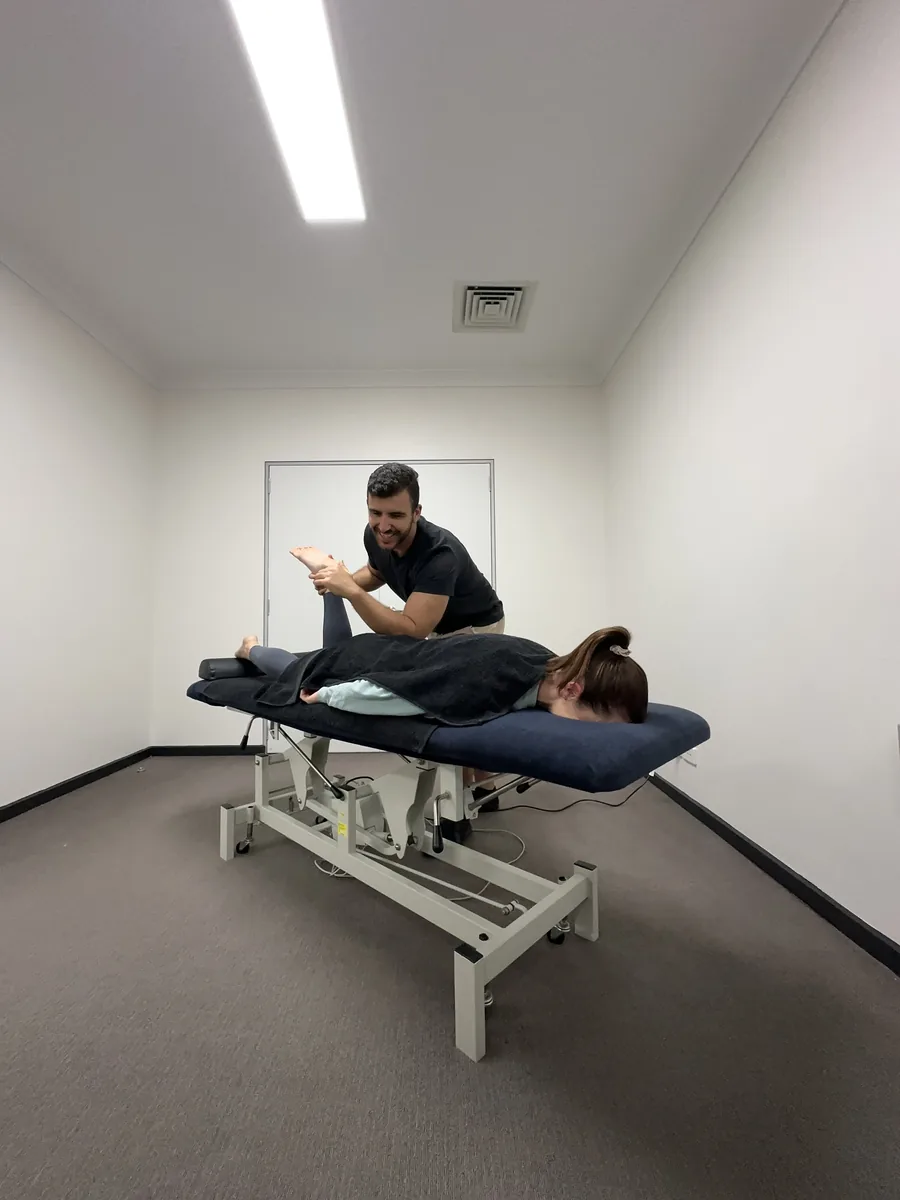
We first confirm whether the disc is actually the source through orthopaedic and neurological testing, because many "disc" diagnoses turn out to be joint or muscle pain. Treatment then combines hands-on work to settle pain and restore movement, directional exercises, nerve mobility work where it helps, and graded loading to rebuild tolerance. Guidelines recommend exercise as the foundation, with manual therapy as part of that package rather than on its own (NICE guideline NG59), and that's how we use it.
Same-week appointments available. Initial consult 60 min · $149 · HICAPS on-site.
Bulge, protrusion, extrusion: what do the scan words mean?
Radiology reports describe how far disc material has moved. A bulge is a broad, shallow spread of the disc; a protrusion is a more focal bump; an extrusion pushes further out; and a sequestration is a fragment that has separated from the disc.
The larger types sound worse, but they are also the most likely to be reabsorbed. In the same meta-analysis, sequestrations were reabsorbed in about 88% of cases, extrusions in 67%, protrusions in 38% and simple bulges in 13% (Zou et al., 2024). The body clears larger fragments more actively, which is part of why severe early symptoms often settle.
Do you need a scan for a disc bulge?
Usually not at first. Disc findings are very common in people without any back pain: a large review found disc bulges in 30% of pain-free 20-year-olds and 84% of pain-free 80-year-olds (Brinjikji et al., American Journal of Neuroradiology, 2015). A scan often shows changes that aren't causing your pain, and it rarely changes early treatment.
Clinical guidelines advise against routine imaging for back pain and sciatica, and recommend it when the result would change management, such as when surgery is being considered or red flags are present (NICE guideline NG59). We'll refer you for a scan when there's a clear reason.
How long does a disc injury take to recover?
It varies with the size of the injury and how irritated the nerve is, but the overall picture is encouraging. Back pain from a disc often eases over weeks. Disc-related sciatica tends to take longer, commonly improving over six to twelve weeks, with some cases taking several months.
In a well-known Dutch trial comparing early surgery with a period of conservative care, people who had early surgery got relief from leg pain faster, but by one year 95% of people in both groups reported recovery (Peul et al., New England Journal of Medicine, 2007).
Training with a disc injury: gym and BJJ
Most people don't need to stop training completely. The aim is to reduce the loads that irritate the disc while keeping you moving and strong. At the gym that usually means temporarily swapping heavy deadlifts, loaded good mornings and deep flexion work for variations your back tolerates, then building load back up in stages.
On the mats, the positions that tend to aggravate a lumbar disc are the ones that crank the spine into flexion under load: getting stacked in guard, heavy pressure passing from top, and explosive scrambles. Drilling, positional work and lighter rounds can often continue while those are managed.
Steven trains BJJ and lifts himself, and treats a lot of gym-goers and martial artists at the clinic. Your plan will be built around getting you back to full training, with specific loads and positions to return to in order.
When does a disc need urgent medical care?
Go to an emergency department straight away if you notice new trouble passing urine or controlling your bladder or bowels, numbness around the groin, genitals or inner thighs (saddle numbness), or weakness or numbness in both legs. These can be signs of cauda equina syndrome, which needs urgent treatment.
See your GP promptly for leg weakness that is getting worse (such as a foot that slaps or drags), back pain with fever or feeling unwell, unexplained weight loss, or a history of cancer.
When is surgery worth discussing?
Surgery is usually considered for progressive or significant weakness, for cauda equina symptoms, or for severe leg pain that hasn't improved after a reasonable period of conservative care, often six to twelve weeks. If you reach that point, we'll help you get a surgical opinion rather than continuing treatment that isn't working.
FAQ: disc bulge & herniation
References
- Zou T, et al. Incidence of spontaneous resorption of lumbar disc herniation: a meta-analysis. Clinical Spine Surgery. 2024;37(6):256–269.
- Brinjikji W, et al. Systematic literature review of imaging features of spinal degeneration in asymptomatic populations. American Journal of Neuroradiology. 2015;36(4):811–816.
- Peul WC, et al. Surgery versus prolonged conservative treatment for sciatica. New England Journal of Medicine. 2007;356(22):2245–2256.
- National Institute for Health and Care Excellence. Low back pain and sciatica in over 16s: assessment and management (NG59).
Also treating
Areas we serve
Seen enough?
Let's fix it.
Book an initial assessment in Berwick. Same-week availability most weeks.