Spinal decompression and spinal alignment: what the evidence says
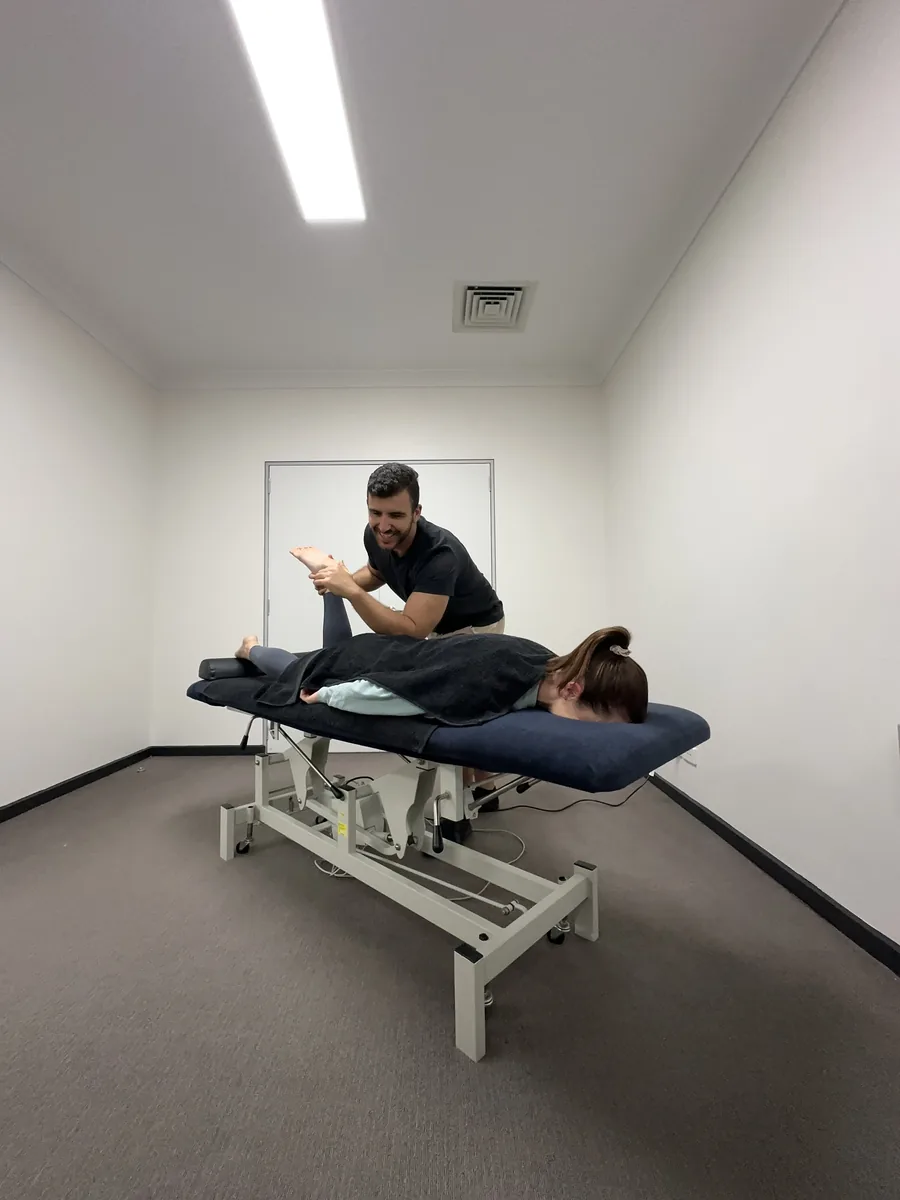
When back or neck pain won't settle, a lot of people in Berwick and around Casey end up searching for spinal decompression or someone to put their spine back into alignment. Both ideas sound logical: take pressure off the disc, straighten what looks crooked. It's worth knowing what the research actually shows before you commit time and money to either, so here is an honest summary from an osteopath's side of the table.
What is spinal decompression therapy?
Non-surgical spinal decompression is a form of motorised traction. You lie on a table while a machine gently pulls on your lower back or neck in cycles, usually over a course of many sessions. It is often marketed for disc bulges, sciatica and long-standing back pain. It isn't the same as surgical decompression, which is an operation (such as a discectomy or laminectomy) used to relieve pressure on a nerve when conservative care hasn't worked.
Does spinal decompression work?
The best evidence we have is on traction, which is what decompression tables deliver. A Cochrane review of 32 randomised trials involving 2,762 people found that traction, on its own or combined with other treatments, makes little or no difference to pain, function or return to work for people with low back pain, with or without sciatica (Wegner et al., Cochrane Database of Systematic Reviews, 2013). The UK's national guideline for low back pain and sciatica advises clinicians not to offer traction at all (NICE guideline NG59).
That doesn't mean nobody feels better on a decompression table. Many people do feel relief while the pull is on, and back pain often improves over the same weeks anyway. What the trials show is that it doesn't do better than other care. If you're offered a long prepaid course, it's reasonable to ask what evidence supports it and what the plan is if you aren't improving.
Is my spine 'out of alignment'?
Very rarely in the way the phrase suggests. Spines come in a wide range of shapes, and small asymmetries, curves and tilts are common in people with no pain at all. A review that pooled 41 systematic reviews found no consensus that particular spinal postures cause low back pain (Swain et al., Journal of Biomechanics, 2020). Treatments built around putting vertebrae back into place rest on a model the evidence doesn't support.
The same goes for the crack you sometimes hear during hands-on treatment. Real-time MRI filming shows that sound comes from a small gas cavity forming in the joint fluid as the joint surfaces separate, not from a bone popping back into position (Kawchuk et al., PLOS ONE, 2015). We cover this in more detail in our post on osteopathy myths.
What about cervical spine correction for neck posture?
You may also see programs that aim to change the curve of your neck on an X-ray. How your neck looks on a scan and how it feels are often poorly matched, so we don't treat to change an X-ray. We treat how your neck moves, what's loading it through work, screens, sleep and training, and how strong and tolerant it is.
So what does help disc and back pain?
The things with the best evidence are less dramatic but more reliable: staying active, a progressive exercise program matched to what your back tolerates, understanding what's going on, and hands-on treatment as part of that package rather than on its own (NICE guideline NG59). Spinal manipulation, for example, performs about as well as other recommended treatments for chronic low back pain (Rubinstein et al., BMJ, 2019), which is why we use it as one tool rather than the whole plan.
If a disc is involved, it helps to know that disc material is often reabsorbed over time without any machine pulling on it. Our disc bulge and herniation guide explains what scan terms mean, typical recovery timelines and when a disc needs a surgical opinion.
What does treatment at RISE look like instead?
We start with a proper assessment to work out what's actually driving your pain: disc, joint, muscle, nerve or a mix. Treatment combines hands-on work to settle pain and restore movement with exercise that rebuilds how much load your back can take. You'll get an honest estimate of how long it should take, and if something needs a scan, a GP or a surgical opinion, we'll tell you.
If you train, we'll build the plan around getting you back to it. Steven lifts and trains BJJ himself, so we'll talk specifics: which lifts or positions to change for now, what you can keep doing, and the order to bring things back. Hanging from a pull-up bar after a session is fine to keep doing if it feels good. It just isn't a substitute for the strength work that makes a back more resilient.
When should back pain be checked urgently?
Go to an emergency department straight away if you have new difficulty controlling your bladder or bowels, numbness around the groin or inner thighs, or weakness or numbness in both legs. See your GP promptly for leg weakness that's getting worse, back pain with fever or feeling unwell, unexplained weight loss, or a history of cancer.
If your back or neck pain has been hanging around and you want a clear explanation and a plan that doesn't depend on a machine, book an assessment at our Berwick clinic. A 60-minute initial consultation is $149, with no referral needed.
Sources
Kawchuk GN, et al. Real-time visualization of joint cavitation. PLOS ONE, 2015.
Book an initial consultation at RISE Sports & Spinal in Berwick. Clear diagnosis, hands-on treatment, and a plan that actually gets you better.
Related articles