Degenerative disc disease: what it means and what helps
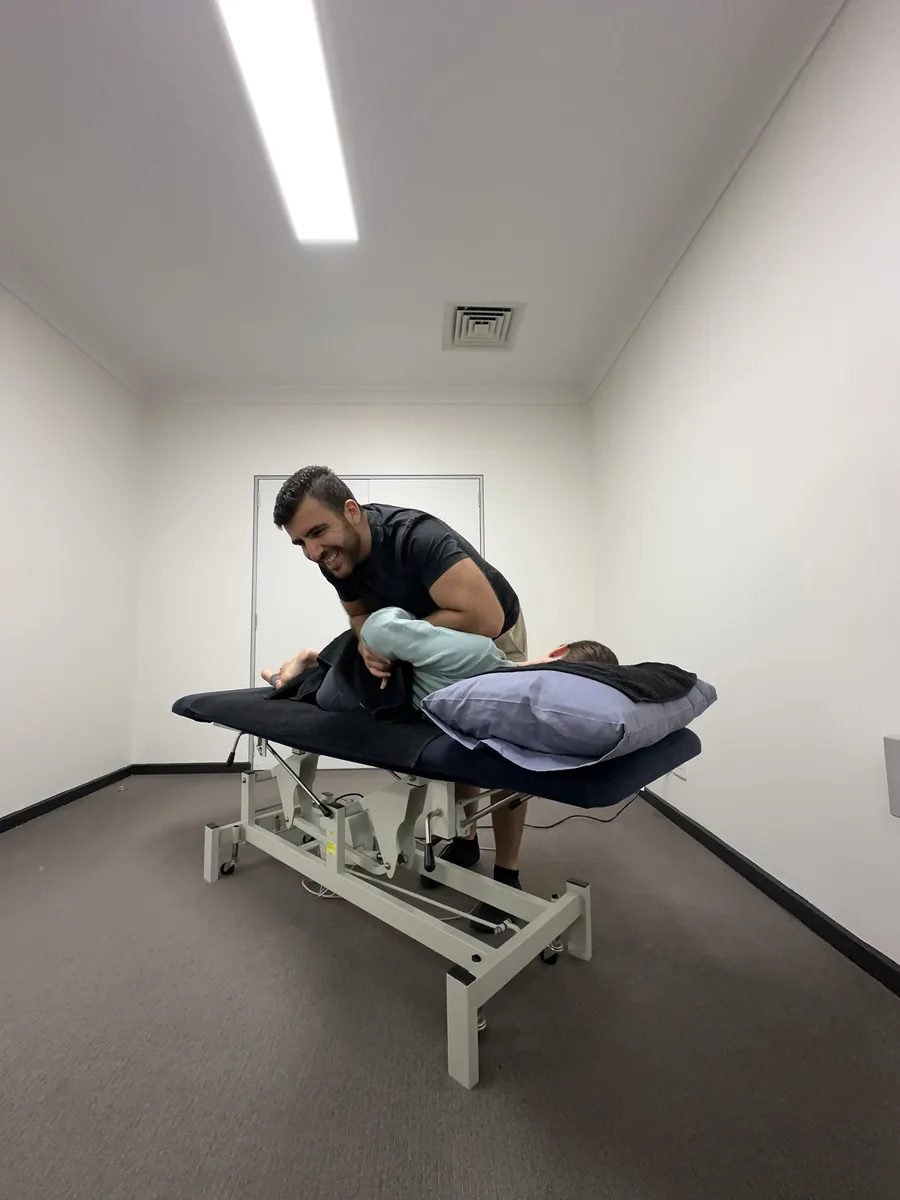
'Degenerative disc disease' is one of the most alarming phrases on a scan report. It sounds progressive and permanent. In reality, it describes age-related changes that most adults have, many without any pain at all.
What is degenerative disc disease?
It isn't really a disease. The term describes changes in the spinal discs over time: they lose some water content and height, and may bulge or develop small fissures. On an MRI this shows up as darker, thinner discs. Radiologists report these changes because they see them, not because they're necessarily the cause of your pain.
How common is disc degeneration?
Very. A review of imaging in people with no back pain found disc degeneration in 37% of 20-year-olds, rising to 96% of 80-year-olds. The authors concluded that many of these findings are likely part of normal ageing and unrelated to pain (Brinjikji et al., American Journal of Neuroradiology, 2015). Think of it like grey hair or skin wrinkles, but on the inside.
Does disc degeneration cause back pain?
Sometimes it contributes, but the link is weaker than most people assume. A second meta-analysis found disc degeneration and some other findings were more common in adults under 50 with back pain than in those without (Brinjikji et al., AJNR, 2015). So these changes can matter, particularly in younger adults, but plenty of people with marked degeneration have no pain, and plenty with pain have little to see on a scan.
Will it keep getting worse?
The changes on a scan generally progress slowly with age, like other age-related changes. Symptoms don't follow the same path. Back pain tends to come in episodes that settle, and many people with degenerative discs have long periods with no symptoms. A scan showing degeneration doesn't predict a future of worsening pain.
What does it feel like when discs are a source of pain?
Typically a deep ache in the lower back, sometimes spreading to the buttocks, that's worse with prolonged sitting, bending and lifting, and stiff in the morning. It often eases with walking and changing position. Leg pain, pins and needles or numbness suggest a nerve is also irritated.
What is the best treatment for degenerative disc disease?
The same things that help most back pain: staying active, progressive strengthening of the back, hips and trunk, managing flare-ups with heat, movement and simple pain relief, and hands-on treatment as part of a plan that includes exercise. There's no treatment that reverses the scan changes, and none is needed for the back to feel and function well.
Is exercise safe with degenerative discs?
Yes. Discs, like other tissues, respond to regular loading. Walking, strength training, swimming and cycling are all appropriate. Start at a comfortable level and build gradually. Lifting weights with good technique is not harmful to degenerated discs.
See our posts on starting strength training and core strength and back pain.
Should I avoid bending and lifting?
No. Avoiding movement tends to make backs stiffer and more sensitive. During a flare, ease off heavy or repeated bending for a few days, then reintroduce it gradually.
Do I need surgery or injections?
Rarely for degeneration alone. Surgery is considered for specific problems, such as significant nerve compression with weakness, or severe symptoms that haven't responded to good conservative care. Injections are sometimes used for nerve-related leg pain. These decisions are made with your GP and a specialist.
Do supplements or special diets repair discs?
There's no good evidence that any supplement regenerates discs. General health measures, such as not smoking, staying active and maintaining a healthy weight, are worthwhile.
Is it the same as arthritis of the spine?
They often occur together. As discs lose height, the small joints at the back of the spine carry more load and can develop osteoarthritic changes. Both are part of the same ageing process and are managed in similar ways.
Why was I told my spine is like someone much older?
Comments like that are common and unhelpful. Scan appearance varies widely between people of the same age, and doesn't tell you how your back will feel or function. What you can do matters more than what the image looks like.
How can an osteopath help?
We explain your scan in plain language, assess how your back moves and what it tolerates, treat hands-on to ease pain and stiffness, and build a strengthening plan that gets you back to the activities you want to do.
When should back pain be checked urgently?
Go to an emergency department straight away if back pain comes with new difficulty controlling your bladder or bowels, numbness around the groin or inner thighs, or weakness or numbness in both legs. See your GP promptly for leg weakness that's getting worse, back pain with fever or feeling unwell, unexplained weight loss, or a history of cancer.
See our disc bulge guide and our post on whether an osteopath can help a bulging disc. Book an assessment at our Berwick clinic. A 60-minute initial consultation is $149, with no referral needed and HICAPS on-site.
Sources
Book an initial consultation at RISE Sports & Spinal in Berwick. Clear diagnosis, hands-on treatment, and a plan that actually gets you better.
Related articles