Back pain at night: what it means and when to worry
Back pain that bothers you at night is worrying for many people, partly because 'night pain' appears on lists of warning signs. Most of the time, though, it has a simple explanation. Here's how to tell the difference.
Is back pain at night serious?
Usually not. Many common back problems are uncomfortable in certain sleeping positions or when you roll over. Serious causes of back pain are uncommon: a study of people seeing their GP with new low back pain found serious underlying conditions in under 1% of cases, most often a fracture (Henschke et al., Arthritis & Rheumatism, 2009). The same study found that most people had at least one 'red flag', and that many red flags on their own weren't useful for spotting serious problems.
Why does my back hurt when lying down?
Common reasons include lying in one position for hours, a mattress or position that doesn't suit your back, sensitive joints that stiffen when you're still, and muscle spasm after a strain. Disc-related pain can be worse on waking or when getting out of bed. Pain that's worse lying on one side but eases when you change position is very likely mechanical, meaning it comes from the muscles, joints or discs.
When should I worry about back pain at night?
The pattern matters more than the time of day. See your GP promptly if you have constant back pain that doesn't change with position or movement, pain that's getting steadily worse, pain that wakes you and stops you getting back to sleep regardless of how you lie, night sweats, fever or feeling unwell, unexplained weight loss, or a history of cancer. A review of red flags found only a few were genuinely informative, such as older age, long-term steroid use and significant trauma for fractures (Downie et al., BMJ, 2013), so your GP will look at the whole picture rather than any single sign.
Go to an emergency department straight away if back pain comes with new difficulty controlling your bladder or bowels, numbness around the groin or inner thighs, or weakness or numbness in both legs. See your GP promptly for leg weakness that's getting worse, back pain with fever or feeling unwell, unexplained weight loss, or a history of cancer.
Why is my back stiff and sore in the morning?
Morning stiffness that eases within 30 minutes of getting moving is very common with mechanical back pain. Stiffness that lasts longer than half an hour, improves with exercise but not rest, and is accompanied by night pain in the second half of the night, especially in people under 45, can be a sign of an inflammatory condition such as axial spondyloarthritis, which is worth discussing with your GP.
Our post on morning back pain goes into more detail.
What is the best sleeping position for back pain?
There isn't one best position. On your back, try a pillow under your knees. On your side, place a pillow between your knees so your top hip doesn't roll forward. If you sleep on your stomach, a thin pillow under your hips may help. Choose what's comfortable; changing positions through the night is normal.
See the best sleeping positions for back and neck pain.
What helps back pain at night?
Gentle movement before bed, such as a short walk or a few easy stretches, can help. Heat may ease muscle spasm. Roll in one piece by bending your knees and turning your shoulders and hips together. Staying active during the day and building strength over time tends to improve night-time symptoms too.
Can a mattress cause back pain at night?
A mattress that's sagging or very uncomfortable can make it harder to get comfortable, but there's no single best type. Many people do well on a medium-firm mattress. If your back is consistently better when you sleep elsewhere, such as a hotel or a friend's place, it may be worth a change. Otherwise, pillows to support your position are a cheaper first step.
Should I take painkillers for back pain at night?
Simple pain relief can help you sleep while an acute flare settles. Talk to your pharmacist or GP about what's suitable for you, especially if you have other health conditions or take other medicines. If you need regular pain relief to sleep for more than a couple of weeks, it's worth getting your back assessed.
How can an osteopath help back pain at night?
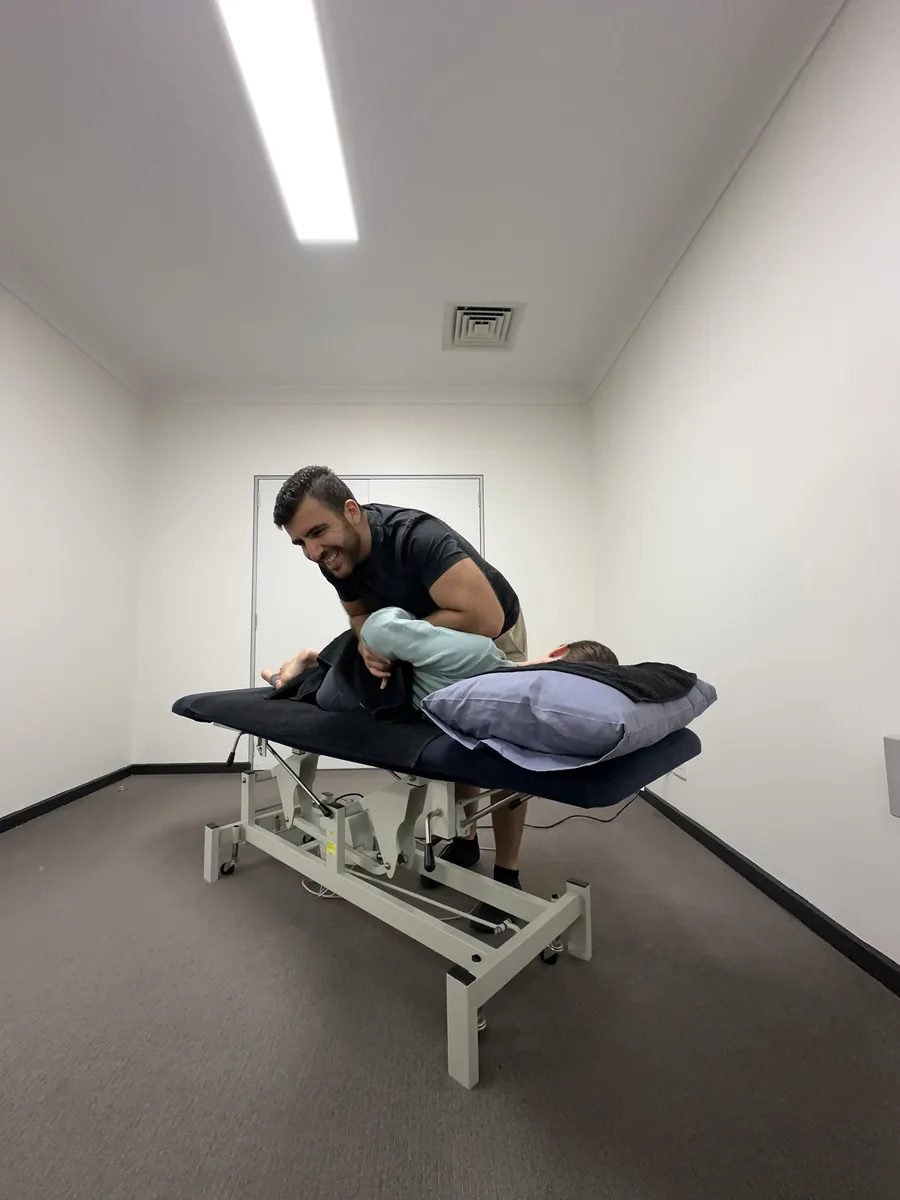
We assess your back, ask about the pattern of your pain, and screen for any features that need a GP or further tests. If your pain is mechanical, treatment typically combines hands-on work to ease pain and stiffness, advice on sleeping positions, and an exercise plan to build back strength and tolerance.
Book an assessment at our Berwick clinic. A 60-minute initial consultation is $149, with no referral needed and HICAPS on-site.
Sources
Book an initial consultation at RISE Sports & Spinal in Berwick. Clear diagnosis, hands-on treatment, and a plan that actually gets you better.
Related articles