Shift work, nursing and healthcare: the injury pattern
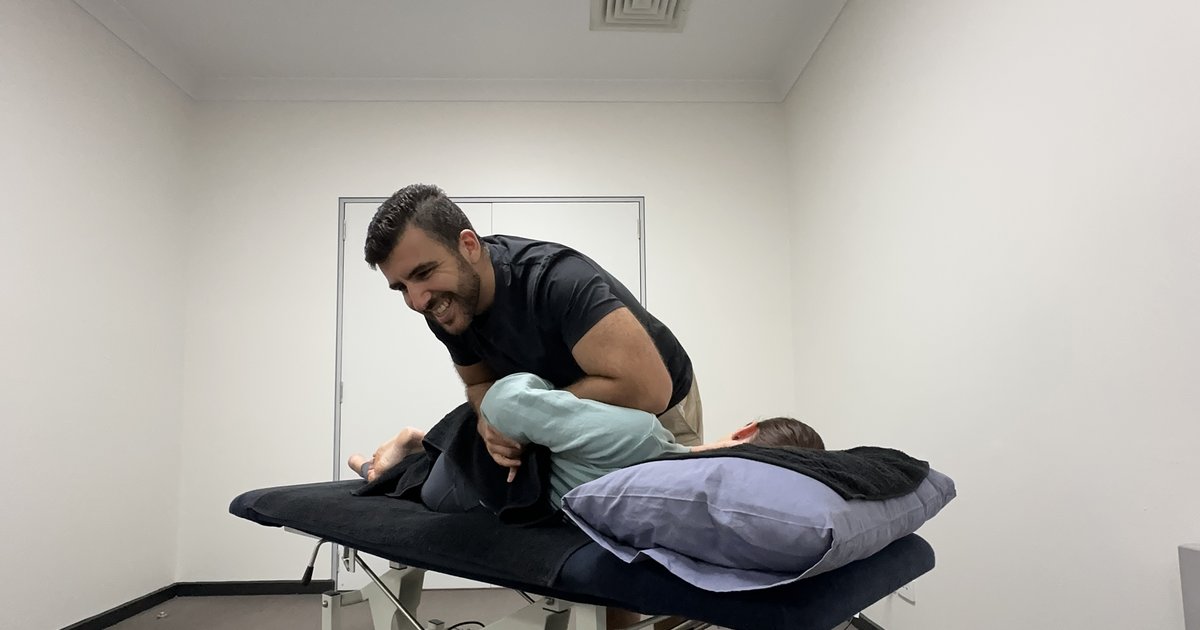
Casey Hospital and the surrounding aged care and healthcare sector employ a large number of people locally. Healthcare work has one of the highest musculoskeletal injury rates of any industry, and the reasons are structural rather than careless.
Patient handling
Assisting, repositioning and transferring patients involves lifting an unpredictable, non-rigid load that you cannot get close to, often in a confined space and frequently in a hurry. It is close to the worst possible lifting scenario from a biomechanical standpoint, and it is unavoidable in the role. See low back pain.
The cumulative pattern
As with most occupational back pain, the injury is rarely one memorable transfer. It is the accumulation across years, usually surfacing during a period of higher workload or shorter staffing.
Rotating rosters
Night shift and rotating rosters fragment sleep, and poor sleep reduces tissue recovery and lowers pain tolerance measurably. Two people with the same physical load will have different pain experiences depending on their sleep, and this is genuinely modifiable even when the roster is not.
Necks and shoulders
Sustained forward posture during procedures, computer charting between rounds, and overhead reaching for equipment all contribute. Neck-driven headaches are very common in this group — see headaches and migraine.
Working around shifts
We run early morning and late afternoon appointments that fit around shift changeovers, and we build plans around a roster rather than around rest that is not available. If there is a WorkCover claim involved, call before booking so the paperwork is right from the start.
For more, see our posts on lower back pain when bending over, back braces for back pain and teachers.
How we approach it
The first appointment covers a full history and a movement and orthopaedic assessment, not just the sore area. With occupational and lifestyle-driven pain in particular, the useful part is usually working out which daily loads are maintaining the problem — because treating the tissue weekly while the cause continues unchanged rarely holds. You leave knowing what we found, what is driving it, and roughly how long it should take.
Booking in
RISE Sports & Spinal is at 5/6-8 Langmore Lane, Berwick, serving Berwick, Narre Warren, Cranbourne, Clyde, Pakenham, Officer, Beaconsfield and the wider Casey area. Same-week appointments most weeks, initial consult 60 minutes at $149, HICAPS on site. No referral needed.
If you're in Berwick or nearby and this sounds like you, see our back pain treatment in Berwick page for how we assess and treat it.
Sources
Book an initial consultation at RISE Sports & Spinal in Berwick. Clear diagnosis, hands-on treatment, and a plan that actually gets you better.
Related articles