Spondylolisthesis: symptoms, exercise and when surgery helps
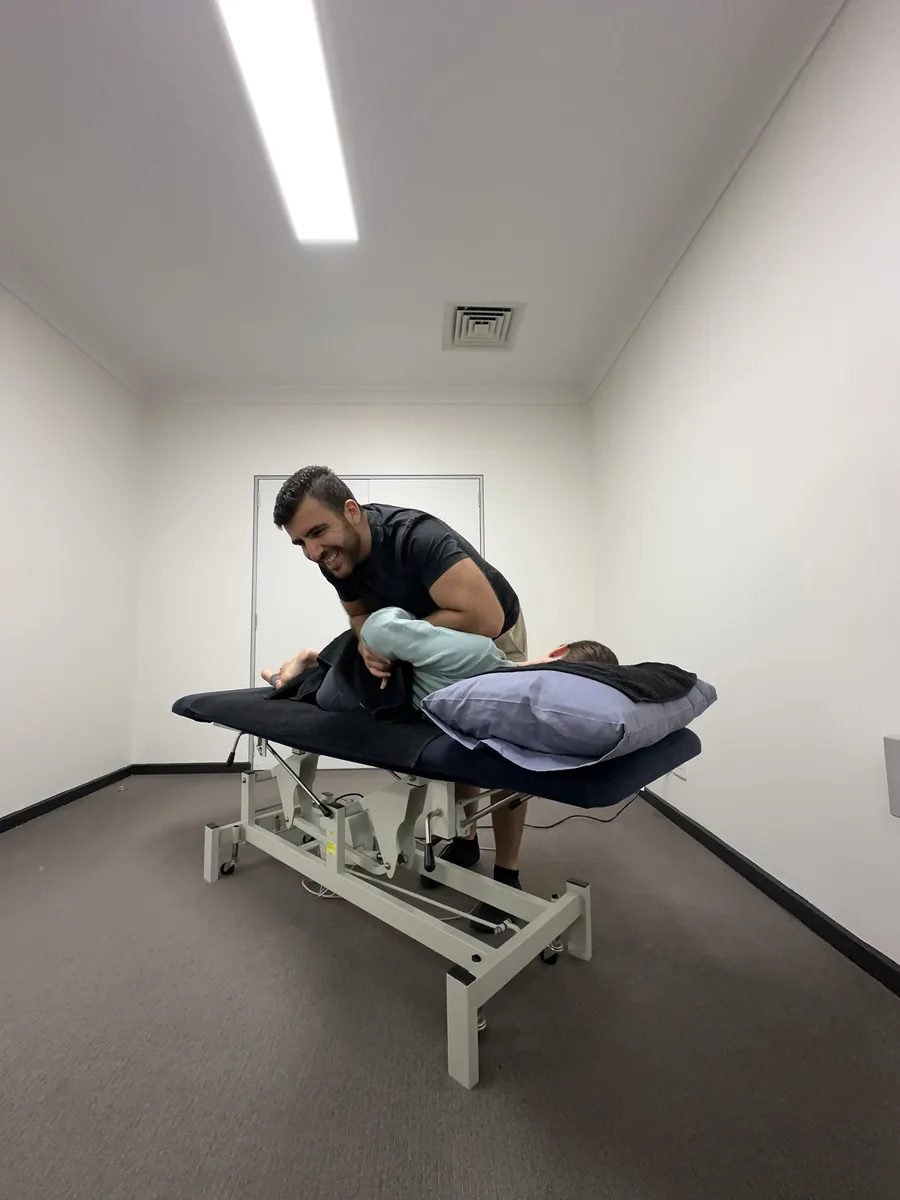
Spondylolisthesis means one vertebra has moved forward relative to the one below. Being told your spine has 'slipped' sounds dramatic, but most cases are mild, stable and manageable without surgery.
What is spondylolisthesis?
It's a forward shift of one vertebra on another, most often at the bottom of the lumbar spine. It's graded by how far the vertebra has moved: grade 1 is up to 25%, grade 2 up to 50%, and so on. The large majority are grade 1 or 2.
What are the main types?
There are two common types. Isthmic spondylolisthesis follows a stress fracture in a small bridge of bone at the back of the vertebra (spondylolysis), which usually develops in childhood or adolescence, often in sports involving repeated arching such as cricket fast bowling, gymnastics and diving. Degenerative spondylolisthesis develops later in life, usually after 50 and more often in women, as discs and joints wear and allow a small shift.
What are the symptoms?
Many people have none, and it's found by chance. When it does cause symptoms, the usual pattern is lower back ache that's worse with standing, walking or arching backwards and eases with sitting or bending forward. Tight hamstrings are common. If nerves are affected, there may be pain, tingling or heaviness in the legs.
Does spondylolisthesis get worse over time?
Usually not much. A study that followed people with these bony defects for more than 45 years found that progression slowed with each decade, no one reached a 40% slip, and there was no association between slip progression and low back pain. Their health scores were no different from the general population of the same age (Beutler et al., Spine, 2003).
Can I exercise with spondylolisthesis?
Yes, and exercise is the main treatment. Strengthening the trunk, glutes and hips, and maintaining hip and hamstring mobility, helps the spine cope with load. Walking, cycling and swimming are generally well tolerated. Most gym exercises are fine with sensible loading.
Which exercises should I be careful with?
While symptoms are flared, movements that repeatedly arch the lower back under load, such as heavy overhead pressing with a big arch, back extensions to end range, and some gymnastics or bowling actions, may aggravate it. These can often be reintroduced gradually. High-grade slips need individual advice from a specialist.
Can teenagers with spondylolysis keep playing sport?
A new stress fracture in a young athlete usually needs a period away from the aggravating activity, often around three months, guided by a sports doctor, followed by rehabilitation and a graded return. Most return to sport.
See our post on lower back pain in teenage fast bowlers.
When is surgery considered?
When symptoms are severe and persistent despite good conservative care, particularly leg pain and difficulty walking from nerve compression, or when there's progressive weakness. In a large study of degenerative spondylolisthesis with spinal stenosis, patients who had surgery showed substantially greater improvement in pain and function over two years than those treated without surgery, although the randomised comparison was limited by many patients switching groups (Weinstein et al., New England Journal of Medicine, 2007).
Do I need a scan?
Spondylolisthesis is diagnosed on X-ray, sometimes with views taken bending forward and back to check stability. MRI is used when nerve symptoms are present. In young athletes with suspected spondylolysis, MRI or other specialised imaging is used to detect a stress reaction early.
Is manipulation safe with spondylolisthesis?
We adapt treatment to the individual. With a known spondylolisthesis, we avoid forceful techniques at that level and use gentler hands-on treatment for the surrounding muscles and joints, alongside exercise.
Is it the same as a slipped disc?
No. A 'slipped disc' is a disc bulge or herniation. Spondylolisthesis is a shift of the bone itself. The two are different conditions, though both can irritate nerves.
Can I lift weights with spondylolisthesis?
Usually, yes. Most people with a low-grade, stable slip can squat, deadlift and press with sensible loads and good technique. Keep your trunk braced, avoid forcing a big arch in your lower back, and progress gradually. If a lift reliably brings on back or leg symptoms, change the variation or range.
How can an osteopath help?
We assess your back, hips and nerves, explain what your imaging means, treat hands-on to ease pain and muscle tension, and build a strengthening program suited to your slip type and your activities. We'll refer you to your GP or a specialist where symptoms suggest nerve compression.
When is it urgent?
Go to an emergency department straight away if back pain comes with new difficulty controlling your bladder or bowels, numbness around the groin or inner thighs, or weakness or numbness in both legs. See your GP promptly for leg weakness that's getting worse, back pain with fever or feeling unwell, unexplained weight loss, or a history of cancer.
See our post on spinal stenosis and our low back pain guide. Book an assessment at our Berwick clinic. A 60-minute initial consultation is $149, with no referral needed and HICAPS on-site.
Sources
Book an initial consultation at RISE Sports & Spinal in Berwick. Clear diagnosis, hands-on treatment, and a plan that actually gets you better.
Related articles