Tight hamstrings and lower back pain: is there a link?
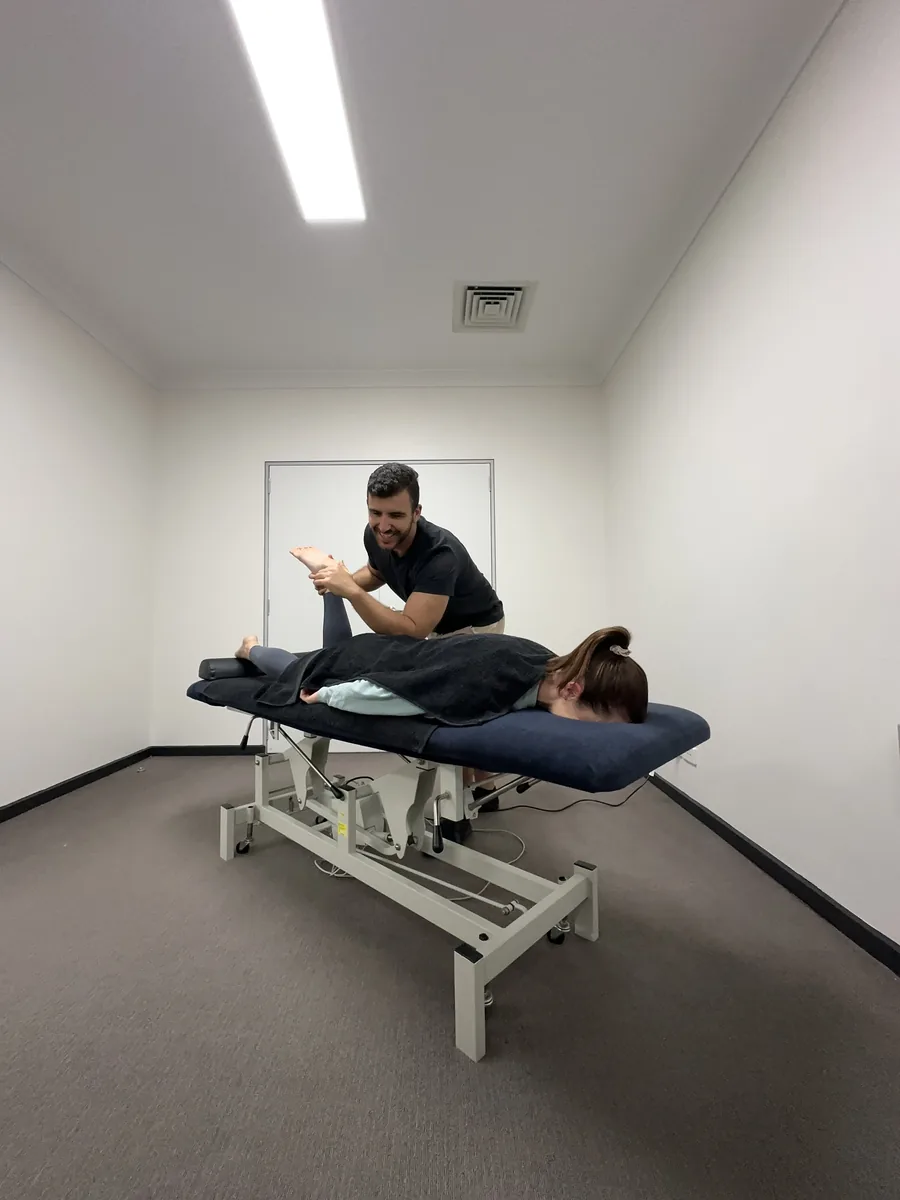
"My hamstrings are tight and my back hurts" is something we hear a lot. It makes sense that the two are connected, but the relationship is less straightforward than most people think.
Do tight hamstrings cause lower back pain?
There's a link, but it's modest. A review of studies that followed people over time found restricted hamstring range was associated with developing low back pain, along with reduced side-bending and lumbar curve, although the effect was small (Sadler et al., BMC Musculoskeletal Disorders, 2017). A separate review found people with back pain tended to have less hamstring flexibility, but the quality of evidence was very low (Hori et al., Physiotherapy Theory and Practice, 2021). So hamstring tightness might contribute, but it's rarely the whole story.
Why do my hamstrings always feel tight?
Hamstrings can feel tight for reasons other than being short. The sciatic nerve runs through the back of the thigh, and when it's sensitive, often because of something happening in the lower back, a hamstring stretch can feel very tight or produce a pulling sensation. Protective muscle tension after a back flare, long periods of sitting, a recent increase in running or training, or an old hamstring strain can also make them feel tight.
Should I stretch my hamstrings for lower back pain?
It may help some people. A meta-analysis found hamstring stretching programs reduced pain and disability in people with low back pain, though the results varied a lot between studies (Gou et al., SAGE Open Medicine, 2024). If stretching feels good and eases your back, keep it in. But if a hamstring stretch sends pain, pins and needles or numbness down your leg, stop, as that points to an irritated nerve rather than a tight muscle.
What works better than stretching?
For many people, strengthening the hamstrings and glutes through a full range helps more than passive stretching. Romanian deadlifts with light weights, hip hinges, bridges and Nordic curls, built up gradually, improve both strength and flexibility. Combine that with regular walking and breaking up long periods of sitting.
Our posts on hamstring strain rehab and sciatica exercises cover related problems.
How can I tell if it's tight hamstrings or nerve tension?
Sit on the edge of a chair, slump forward slightly, and straighten one knee until you feel the pull behind your thigh. Now look down, bringing your chin towards your chest, or pull your toes towards you. If the pull changes noticeably, gets stronger or spreads, the sciatic nerve is probably contributing, because those movements tension the nerve without changing the hamstring's length. If nothing changes, the tightness is more likely the muscle itself. It's a rough guide, not a diagnosis.
Do tight hamstrings cause bad posture?
The idea that tight hamstrings pull the pelvis backwards and flatten your lower back, causing pain, is popular, but posture itself is only weakly linked to back pain. Plenty of people with very different postures have no pain. How much you move, your strength and your training load usually matter more than posture alone.
How often should I stretch my hamstrings?
If you choose to stretch, holding each stretch for around 30 seconds, a few times, most days of the week, is a reasonable approach. Stretching should feel like a pull, not pain, and shouldn't cause pins and needles. Improvements in flexibility tend to build over several weeks of consistent practice.
Could it be a hamstring tendon problem?
If the pain is deep in the buttock right at the sit bone, worse sitting on hard chairs, and aggravated by deadlifts, lunges, running uphill or sprinting, it may be the hamstring tendon rather than tightness. This is common in runners and lifters, and stretching usually makes it worse. It responds to a specific loading program.
Can an osteopath help tight hamstrings and back pain?
Yes. We assess whether the tightness is coming from the muscle, the nerve, the hamstring tendon or your lower back, which changes what we'd recommend. Treatment typically combines hands-on work to ease pain and muscle tension, gentle nerve mobility where appropriate, and a progressive strength and mobility program suited to your training, work and goals.
When should I get it checked?
Book in if back pain or hamstring tightness isn't improving after a few weeks, keeps coming back, or you have leg pain, pins and needles or numbness. Go to an emergency department straight away if back pain comes with new difficulty controlling your bladder or bowels, numbness around the groin or inner thighs, or weakness or numbness in both legs. See your GP promptly for leg weakness that's getting worse, back pain with fever or feeling unwell, unexplained weight loss, or a history of cancer.
See our low back pain guide. Book an assessment at our Berwick clinic. A 60-minute initial consultation is $149, with no referral needed and HICAPS on-site.
Sources
Book an initial consultation at RISE Sports & Spinal in Berwick. Clear diagnosis, hands-on treatment, and a plan that actually gets you better.
Related articles