Lower back pain when bending over: causes and what helps
Pain when bending forward, to put on shoes, pick something up or load the dishwasher, is one of the most common back complaints. It's usually a sign that your back is sensitive right now, not that bending is damaging it. Here's what's going on and what helps.
Why does my lower back hurt when I bend over?
Bending forward puts more load through the discs and the muscles and ligaments at the back of the spine. When any of these are irritated, bending is often the movement that hurts most. Common causes include a muscle or ligament strain after lifting or a sudden movement, an irritated disc, and stiff, sensitive joints. Pain that's sharp and catches as you bend or come back up is common with acute back pain and often eases over days.
Is bending bad for your back?
No. Your spine is designed to bend, and avoiding bending altogether can make your back stiffer and more sensitive over time. A review of lifting research found low-quality evidence that greater lower back flexion during lifting was not a risk factor for back pain (Saraceni et al., JOSPT, 2020). When your back is sore, it's about bending within a comfortable range and building back up, not avoiding it forever.
Why does it hurt more coming back up from bending?
Straightening up asks the back muscles to work hard to lift the weight of your upper body, and an irritated muscle or joint often feels that most. Bending your knees, keeping things close to your body, and pushing through your legs as you stand can ease the strain while it settles.
Is it a disc if my back hurts when bending?
Not necessarily. Disc-related pain is often worse with bending and sitting, but so are muscle strains and many other types of back pain. Pain travelling below the knee, especially with pins and needles or numbness, is more suggestive of an irritated nerve, often from a disc.
Our disc bulge guide explains disc-related pain in more detail.
What helps lower back pain when bending?
Keep moving within comfort. Gentle movements such as knee rocks, pelvic tilts and cat-camel can ease stiffness. Walking helps. For daily tasks, try a hip hinge with soft knees, kneeling or squatting to reach low items, and keeping loads close to you. As pain settles, gradually reintroduce bending: start with a supported forward bend with your hands on your thighs, then build up to reaching lower.
Guidelines recommend exercise as the foundation of treatment for low back pain, with hands-on treatment as part of a package that includes exercise rather than on its own (NICE guideline NG59).
What exercises help pain when bending forward?
Once the initial flare settles, useful exercises include hip hinges with a dowel, Romanian deadlifts with light weights, bridges, bird dogs and dead bugs, and gradually loaded bending such as kettlebell deadlifts from a box. The aim is to build strength and confidence through the full range, including bending.
How long does back pain when bending take to settle?
Most acute back pain improves substantially within a few weeks. Pain with bending is often the last thing to go, so it's normal to still notice it after other symptoms have eased.
Can I keep going to the gym with pain when bending?
Usually yes. Choose exercises your back tolerates, such as goblet squats, split squats, machines and walking, and hold off on heavy deadlifts and bent-over rows until bending is more comfortable. Then reintroduce hinging gradually, starting light and from a raised position.
See our posts on back pain after deadlifts and back pain from squats.
Can an osteopath help back pain when bending?
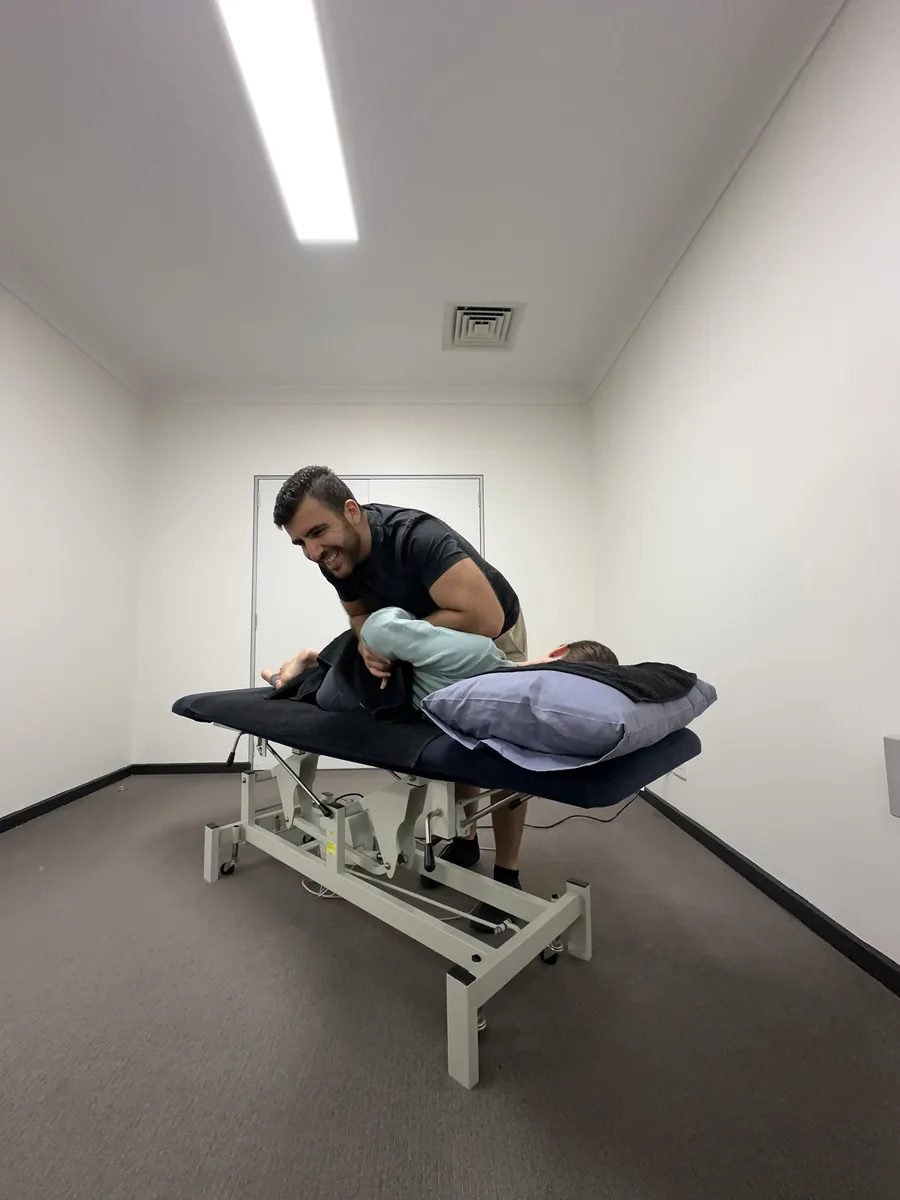
Yes. We assess your back and hips, explain what's likely going on, treat hands-on to ease pain and stiffness, and give you a graded plan to get comfortable bending and lifting again.
Should I wear a back brace when bending?
A brace may make you feel more secure for a few days during a painful flare, but wearing one for weeks can make your back feel more fragile. Gradually building comfort and strength with bending is the better long-term approach.
When should back pain be checked?
Book in if pain isn't improving after a week or two, keeps coming back, or you have leg pain, pins and needles or numbness. Go to an emergency department straight away if back pain comes with new difficulty controlling your bladder or bowels, numbness around the groin or inner thighs, or weakness or numbness in both legs. See your GP promptly for leg weakness that's getting worse, back pain with fever or feeling unwell, unexplained weight loss, or a history of cancer.
See our posts on lower back pain relief at home and back pain when sitting, or our back pain treatment in Berwick page. Book an assessment at our Berwick clinic. A 60-minute initial consultation is $149, with no referral needed and HICAPS on-site.
Sources
Book an initial consultation at RISE Sports & Spinal in Berwick. Clear diagnosis, hands-on treatment, and a plan that actually gets you better.
Related articles