Lower back pain when standing: causes and what helps
Many people can walk or sit comfortably but find their lower back starts aching after 20 to 40 minutes of standing still: at the kitchen bench, in a queue, at a standing desk or on a shop floor. It's a common pattern with some clear reasons and practical fixes.
Why does my lower back hurt when I stand?
Standing still holds the lower back in one position for a long time. In many people the lower back gradually arches more, loading the small facet joints at the back of the spine, while the same muscles work continuously without a break. The result is a building ache that eases quickly with sitting, bending forward or moving.
Who gets back pain from standing?
Lots of people, especially those in retail, hospitality, hairdressing, teaching, healthcare and manufacturing. In laboratory studies, a substantial proportion of healthy people develop low back pain during prolonged standing. A meta-analysis of 52 such studies found people who developed pain tended to move their lower back less (fewer small fidgets), co-activated their hip muscles more, and in those over 25, had more arch in the lower back. Higher pain catastrophising was also associated (Khoshroo et al., Scientific Reports, 2023).
Is it my posture?
Partly, but it's less about having one 'correct' posture and more about staying in any one position for too long. People who naturally shift their weight and move their back a little while standing tend to have less pain. Varying your position is the key.
Why does sitting or bending forward help?
Sitting and bending forward flatten the lower back, taking load off the facet joints and opening the spaces where the nerves travel. That's why people with standing-related back pain often lean on a bench or trolley for relief.
Could it be spinal stenosis?
In people over 50, back and leg pain, heaviness or tingling that comes on with standing and walking and eases with sitting or bending forward can be lumbar spinal stenosis, a narrowing of the spaces around the nerves.
See our post on spinal stenosis.
Are standing desks good for back pain?
Not on their own. A meta-analysis found that standing for prolonged periods at a desk didn't produce less low back pain than sitting, and the authors didn't recommend replacing sitting with long periods of standing (De Carvalho et al., Work, 2020). The best set-up is the one that lets you change between sitting, standing and moving through the day.
See our post on lower back pain when sitting.
What helps back pain when standing?
Change position often, at least every 20 to 30 minutes. Shift your weight, walk a few steps, or put one foot up on a low step, box or rail, which flattens the lower back slightly. Wear supportive, cushioned shoes and use an anti-fatigue mat on hard floors. For long tasks at a bench, alternate between standing and perching on a high stool.
What exercises help?
Exercises that build endurance in the trunk and hips: bridges, bird dogs, side planks, squats and hip hinges, and walking. Gentle movements that flatten the lower back, such as knee-to-chest stretches or a pelvic tilt, can ease an ache during the day. Regular general exercise is one of the most reliable ways to reduce recurrences.
See our post on walking for back pain.
Does weight or pregnancy make a difference?
Carrying more weight at the front, from body weight or pregnancy, tends to increase the arch of the lower back and the load on the facet joints when standing. Strength work and regular position changes become even more important.
See our post on back pain after pregnancy.
Will it get better?
Usually. A meta-analysis found most people with recent low back pain improve substantially within the first six weeks (Menezes Costa et al., CMAJ, 2012). Ongoing standing-related pain often responds well to a combination of strengthening, movement breaks and work set-up changes.
Does standing on hard floors make it worse?
Many people find hard floors such as concrete and tiles worse than carpet or timber. Cushioned shoes, insoles and anti-fatigue mats reduce discomfort for some people, and are worth trying if you stand for long shifts.
How can an osteopath help?
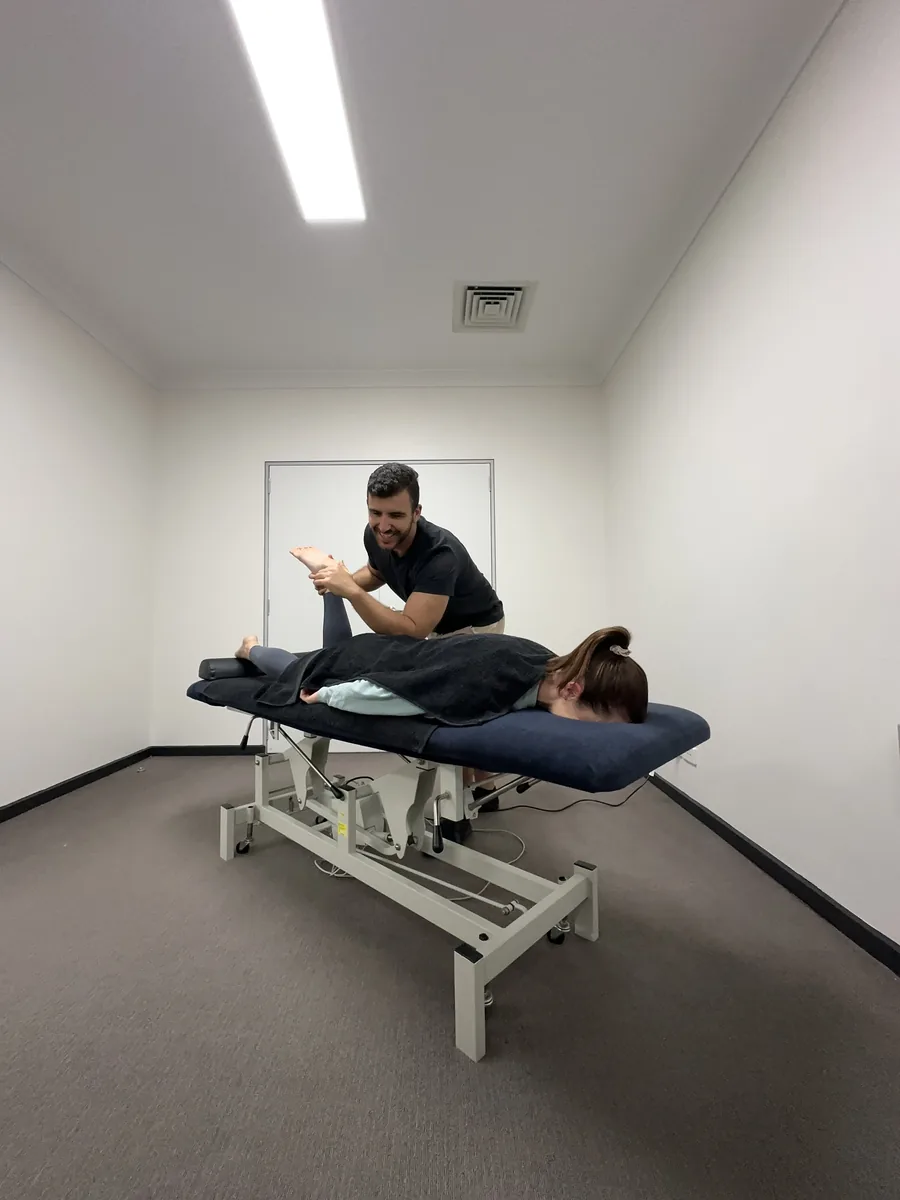
We assess how your back, hips and pelvis move, look at your work and standing habits, treat hands-on to ease stiffness, and give you a practical exercise plan and strategies for long days on your feet.
When should I see a doctor?
See a doctor promptly for back pain with numbness in the groin or buttocks, new bladder or bowel problems, progressive leg weakness, fever, unexplained weight loss, a history of cancer, or pain after a significant fall. Leg symptoms that are getting worse should also be assessed.
See our back pain treatment in Berwick page and low back pain guide. Book an assessment at our Berwick clinic. A 60-minute initial consultation is $149, with no referral needed and HICAPS on-site.
Sources
Book an initial consultation at RISE Sports & Spinal in Berwick. Clear diagnosis, hands-on treatment, and a plan that actually gets you better.
Related articles