Post-natal back and pelvic pain: what is normal and what is not
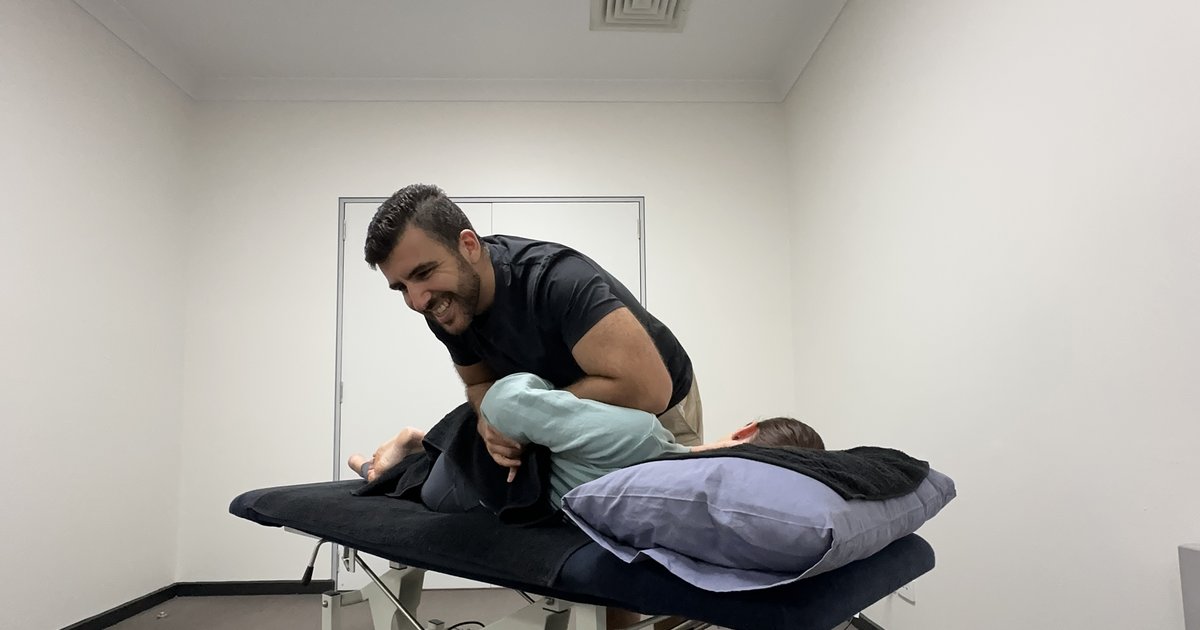
Casey has a young population and a high birth rate, and post-natal musculoskeletal pain is one of the most common things we treat that people assume they simply have to endure. It is common — but common is not the same as untreatable.
Why the pelvis takes months
Hormonal changes during pregnancy soften the ligaments supporting the pelvis, and that laxity does not resolve the day the baby arrives. The pelvis and its supporting structures take months to regain full load capacity, and that window coincides exactly with the heaviest period of repetitive lifting most people ever do.
Is it the back or the pelvis?
Worth establishing, because they present similarly and need different treatment. Pain that stays in the buttock and upper thigh without neurological symptoms points towards the sacroiliac joint and pelvic girdle. Pain travelling below the knee with tingling, numbness or weakness suggests genuine nerve involvement. Orthopaedic testing separates them reliably — see hip and pelvic pain and sciatica.
The daily load nobody counts
Feeding at a fixed downward angle several times a day, carrying on one preferred hip for months, and lifting from a cot with no ability to get close to the load. None of it registers as an injury, which is why it gets left so long.
Sleep
Broken sleep lowers pain thresholds and slows tissue recovery. It rarely causes pain alone, but it amplifies everything else — and it is the factor most often absent from the conversation.
Bringing the baby
Please do. Plenty of our patients do, and it is far better than postponing treatment until childcare works out. Mention it when booking so we can allow the time.
For more, see our posts on De Quervain's and pelvic pain in women.
How we approach it
The first appointment covers a full history and a movement and orthopaedic assessment, not just the sore area. With occupational and lifestyle-driven pain in particular, the useful part is usually working out which daily loads are maintaining the problem — because treating the tissue weekly while the cause continues unchanged rarely holds. You leave knowing what we found, what is driving it, and roughly how long it should take.
Booking in
RISE Sports & Spinal is at 5/6-8 Langmore Lane, Berwick, serving Berwick, Narre Warren, Cranbourne, Clyde, Pakenham, Officer, Beaconsfield and the wider Casey area. Same-week appointments most weeks, initial consult 60 minutes at $149, HICAPS on site. No referral needed.
Sources
Book an initial consultation at RISE Sports & Spinal in Berwick. Clear diagnosis, hands-on treatment, and a plan that actually gets you better.
Related articles