Rib and upper back pain in pregnancy: causes and relief
Lower back and pelvic pain get most of the attention in pregnancy, but pain around the ribs, under the bust and between the shoulder blades is also common, particularly from the middle of the second trimester. It's usually mechanical and manageable. A few symptoms in this area do need urgent attention, so those come first.
When is rib or upper back pain in pregnancy urgent?
Contact your maternity service or go to hospital straight away for pain under the ribs on the right side or in the upper abdomen, especially with a severe headache, vision changes, nausea or vomiting, or sudden swelling of the face, hands or feet, as these can be signs of pre-eclampsia. Call 000 for chest pain, shortness of breath, coughing up blood, or a painful swollen calf. Also seek prompt care for pain with fever, pain when passing urine, or reduced movements from your baby.
Why do my ribs hurt in pregnancy?
As the uterus grows, it pushes upwards against the diaphragm and lower ribs, and the rib cage widens to make room. The joints where the ribs meet the spine and breastbone, and the muscles between the ribs, are stretched and loaded. Hormonal changes that soften ligaments, and the baby's position and kicks later in pregnancy, add to it.
Why does my upper back ache?
Breast growth and the changing shape of the trunk shift your centre of gravity, so the muscles of the upper back and shoulders work harder. Sitting for long periods, sleeping on your side and, later, feeding positions all contribute.
Why is the pain under my bust or at my breastbone?
The lower ribs flare outwards and the cartilage joints at the front of the chest can become irritated, causing tenderness under the bust line or beside the breastbone. A bra that's become too tight around the rib cage often makes it worse.
What helps rib pain in pregnancy?
Change position often. Sit tall with support behind your lower back so your ribs aren't compressed against your bump. Stretch gently by raising the arm on the sore side overhead and leaning away, or by kneeling on all fours. Have a bra fitting; a wider band or an extender can make a real difference. Heat on the upper back is soothing.
How should I sleep?
On your side with a pillow between your knees and another supporting your bump. Hugging a pillow in front stops the top shoulder rolling forward and eases the upper back. Some women are more comfortable slightly propped up.
Does exercise help?
Staying active is recommended in pregnancy for women without complications (Mottola et al., British Journal of Sports Medicine, 2018). For the ribs and upper back, useful options include walking, swimming, gentle upper back mobility such as cat-cow on all fours and seated rotations, and light strengthening such as rows with a band.
See our post on exercise during pregnancy.
Can an osteopath help?
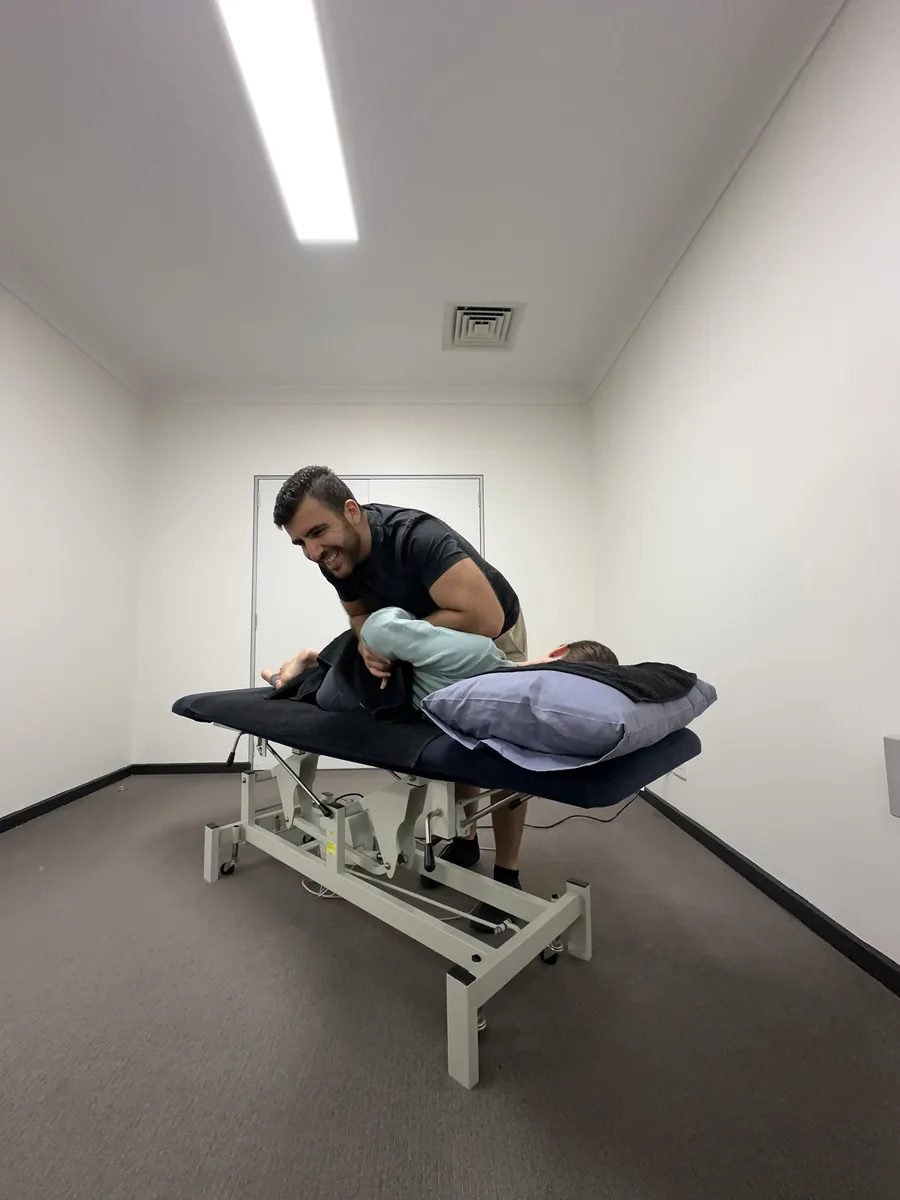
Research on manual therapy in pregnancy has mostly looked at low back and pelvic pain, where a Cochrane review found that a combined approach of manual therapy, exercise and education may be of benefit (Liddle and Pennick, Cochrane, 2015). There's little research on rib pain specifically. In practice, gentle treatment to the upper back, ribs and surrounding muscles, in side-lying or seated positions, often eases symptoms, alongside exercises and positioning advice.
Is treatment safe in pregnancy?
We use gentle techniques adapted to your stage, avoid lying you flat on your back for long periods later in pregnancy, and check for any symptoms that should be assessed by your maternity care provider first.
Does the baby's position matter?
In the third trimester, a baby's feet or bottom under the ribs can cause sharp, local pain, often on one side. Changing position, leaning to the opposite side or going on all fours can encourage the baby to shift.
Why am I short of breath?
Mild breathlessness is common as the uterus rises and hormone changes increase your breathing. Breathlessness that is sudden, severe, or comes with chest pain, palpitations or a swollen calf needs urgent medical attention.
Will it go away after birth?
Rib pain from pressure and stretching usually eases once the baby drops lower in the last weeks, and settles after birth. Upper back ache can continue with feeding and carrying, and responds to posture changes and strengthening.
See our post on post-natal back pain.
When should I see someone?
Mention rib or upper back pain to your midwife or doctor at your next visit, and sooner if any of the urgent symptoms above occur. Book in with us if the pain is affecting your sleep, work or daily comfort.
See our pregnancy osteopathy page and our post on pelvic girdle pain. Book an assessment at our Berwick clinic. A 60-minute initial consultation is $149, with no referral needed and HICAPS on-site.
Sources
Book an initial consultation at RISE Sports & Spinal in Berwick. Clear diagnosis, hands-on treatment, and a plan that actually gets you better.
Related articles