Exercise during pregnancy: what's safe and what to avoid
Advice about exercise in pregnancy used to centre on caution. Current guidelines are clear that, for most women, staying active is safe and beneficial for both mother and baby. This is general information; check with your midwife, GP or obstetrician about your own pregnancy.
Is it safe to exercise during pregnancy?
For women without medical or pregnancy complications, yes. The 2019 Canadian guideline for physical activity throughout pregnancy, based on a large evidence review, concluded that the benefits of prenatal physical activity are moderate and no harms were identified (Mottola et al., British Journal of Sports Medicine, 2018).
How much exercise is recommended?
The guideline recommends at least 150 minutes of moderate-intensity activity each week, spread over three or more days, including a mix of aerobic and resistance exercise. Australian guidance is similar. If you weren't active before pregnancy, start gently and build up. Moderate intensity means you can still hold a conversation.
Can I lift weights while pregnant?
Yes. Resistance training is part of the recommendations. Many women continue with adjusted loads and exercises. Avoid holding your breath and straining on heavy lifts, reduce load as needed, and swap exercises that become uncomfortable. If you're new to lifting, start light with guidance.
Can I keep running?
If you ran before pregnancy and feel comfortable, you can usually continue, adjusting pace and distance as your body changes. Many women switch to walking, cycling on a stationary bike or swimming later in pregnancy, as impact becomes less comfortable. Pelvic or pubic pain, leaking urine or a feeling of heaviness in the pelvis are signs to modify and get advice.
What exercise should I avoid?
The guideline advises avoiding activities with a risk of falling or contact, such as horse riding, downhill skiing, contact sports and outdoor cycling in traffic, as well as scuba diving and exercising in excessive heat, including hot yoga. Combat sports sparring falls into the contact category; technique work without contact may be possible with your care provider's guidance.
Is it safe to lie on my back?
In later pregnancy, lying flat on your back can make some women light-headed or nauseous. If that happens, change position: use an incline, or do the exercise on your side, seated or standing.
When should I stop exercising and seek advice?
Stop and contact your maternity care provider for vaginal bleeding, regular painful contractions, fluid leaking from the vagina, persistent dizziness or faintness that doesn't settle with rest, chest pain, or persistent, excessive shortness of breath.
Who shouldn't exercise in pregnancy?
Some conditions mean exercise should be restricted or avoided, including ruptured membranes, premature labour, unexplained persistent bleeding, placenta praevia after 28 weeks, pre-eclampsia, an incompetent cervix, growth restriction, and some serious heart or lung conditions. Your doctor or midwife will advise.
Does exercise help back and pelvic pain in pregnancy?
It helps with severity. A meta-analysis found prenatal exercise didn't reduce the chance of developing low back or pelvic girdle pain, but women who exercised had less severe pain during pregnancy and in the early months after birth (Davenport et al., British Journal of Sports Medicine, 2019).
See our posts on pelvic girdle pain and back pain in pregnancy.
Should I do pelvic floor exercises?
Yes. The guideline notes that pelvic floor muscle training may reduce the risk of urinary incontinence. A pelvic health physiotherapist can check you're doing them correctly.
How does exercise change across the trimesters?
In the first trimester, fatigue and nausea often limit what you feel like doing; do what you can. The second trimester is usually the most comfortable. In the third, reduce impact and intensity as needed, shorten sessions, and favour walking, swimming, stationary cycling and lighter strength work.
What about core exercises?
Gentle trunk exercises are fine. As your belly grows, swap sit-ups and planks for side-lying, kneeling and standing options, and avoid movements that cause a ridge or doming down the centre of the abdomen.
Is swimming good in pregnancy?
Yes. Water supports your body weight, which takes load off the back and pelvis, and it's a comfortable option through all trimesters. If breaststroke kick aggravates pelvic pain, use a different kick or a pull buoy.
How soon can I exercise after birth?
Gentle walking and pelvic floor exercises can usually start within days, as comfort allows. Return to running, impact and heavy lifting is more gradual, typically from around three months, and ideally after a check with a pelvic health physiotherapist. After a caesarean, follow your doctor's advice.
How can an osteopath help in pregnancy?
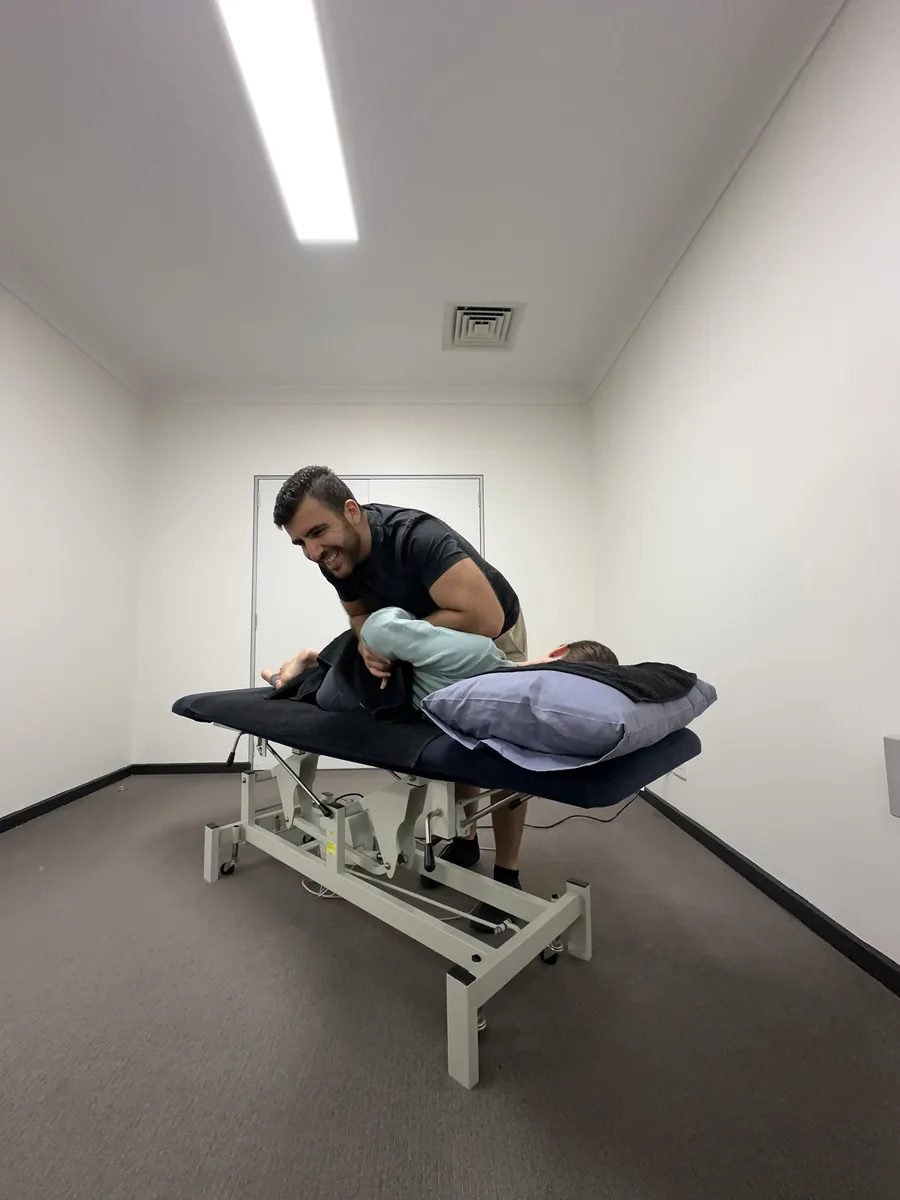
We treat back, pelvic, hip and rib pain with gentle techniques adapted to your stage, and help you modify exercise so you can stay active. We work alongside your midwife, GP or obstetrician.
See our pregnancy osteopathy page and our training hub. Book an assessment at our Berwick clinic. A 60-minute initial consultation is $149, with no referral needed and HICAPS on-site.
Sources
Book an initial consultation at RISE Sports & Spinal in Berwick. Clear diagnosis, hands-on treatment, and a plan that actually gets you better.
Related articles