Lower back pain from squats: causes and how to keep training
Lower back pain after squats is one of the most common things lifters book in for. Steven lifts and treats a lot of gym-goers, and most squat-related back pain settles with sensible changes rather than giving up the lift. Across the weight-training sports, the lower back is one of the most commonly injured areas (Keogh and Winwood, Sports Medicine, 2017).
Why does my lower back hurt after squats?
Most of the time it's the muscles and joints of the lower back reacting to more load than they're currently ready for. The usual story is a change: heavier weights, more sets, a new program, squatting after a break, or squatting on a week of poor sleep and long hours at a desk. Fatigue matters too, which is why backs often go on the last set rather than the first.
A sharp, one-sided pain that makes it hard to straighten up is usually a joint or muscle strain. Pain that spreads into the buttock or down the leg, especially with pins and needles or numbness, suggests an irritated nerve, often from a disc.
Is butt wink bad for your back?
'Butt wink' is the slight rounding of the lower back at the bottom of a deep squat. A small amount is normal for many people and isn't dangerous in itself. A review of lifting research found low-quality evidence that greater lower back flexion during lifting was not a risk factor for back pain (Saraceni et al., JOSPT, 2020). If your back is sore, though, squatting to just above the depth where your back rounds, or using a box, is a reasonable short-term change.
Are deep squats bad for your back?
No. A large review concluded that deep squats performed with good technique and progressive loading aren't a risk for healthy lifters, and noted that very heavy partial squats may actually place more stress on the spine (Hartmann et al., Sports Medicine, 2013). How much you load, and how quickly you progress, usually matters more than depth.
Should I stop squatting with lower back pain?
Usually not completely. Reduce the load and volume for a week or two, and choose a variation your back tolerates. Goblet squats, box squats, front squats, safety bar squats and belt squats tend to be easier on a sore back than heavy low-bar back squats. Split squats, leg press and sled pushes keep your legs training. Walking and gentle trunk work help recovery.
How can I squat without hurting my back?
Brace your trunk before you descend, keep the bar over your mid-foot, and let your hips and knees bend together rather than folding at the hips first. Leave a rep or two in reserve on most sets, progress weight in small steps, and plan easier weeks every month or so. Warm up with lighter sets rather than jumping straight to working weights.
Should I wear a belt for squats?
A belt can help you brace harder on heavy sets. It's a performance tool rather than protection for a sore back, so use it on your heaviest sets and keep practising bracing without it on lighter work.
How long does squat-related back pain take to settle?
Simple muscle and joint strains often improve within a few days to a couple of weeks. Disc-related pain with leg symptoms usually takes longer, from several weeks to a few months. Most lifters can keep training throughout with the right changes.
Our post on back pain after deadlifts covers the hinge side of things, and our disc bulge guide explains training with leg symptoms.
Is it my back or my hips?
Sometimes squat-related back pain is really a hip problem in disguise. If your hips are stiff or uncomfortable in deep flexion, your lower back may round earlier or take more of the load to reach depth. A hip pinch at the bottom of the squat, pain in the groin, or a big difference between how your left and right hips move are clues worth checking.
Our post on hip pain when squatting covers this in more detail.
Can an osteopath help back pain from squatting?
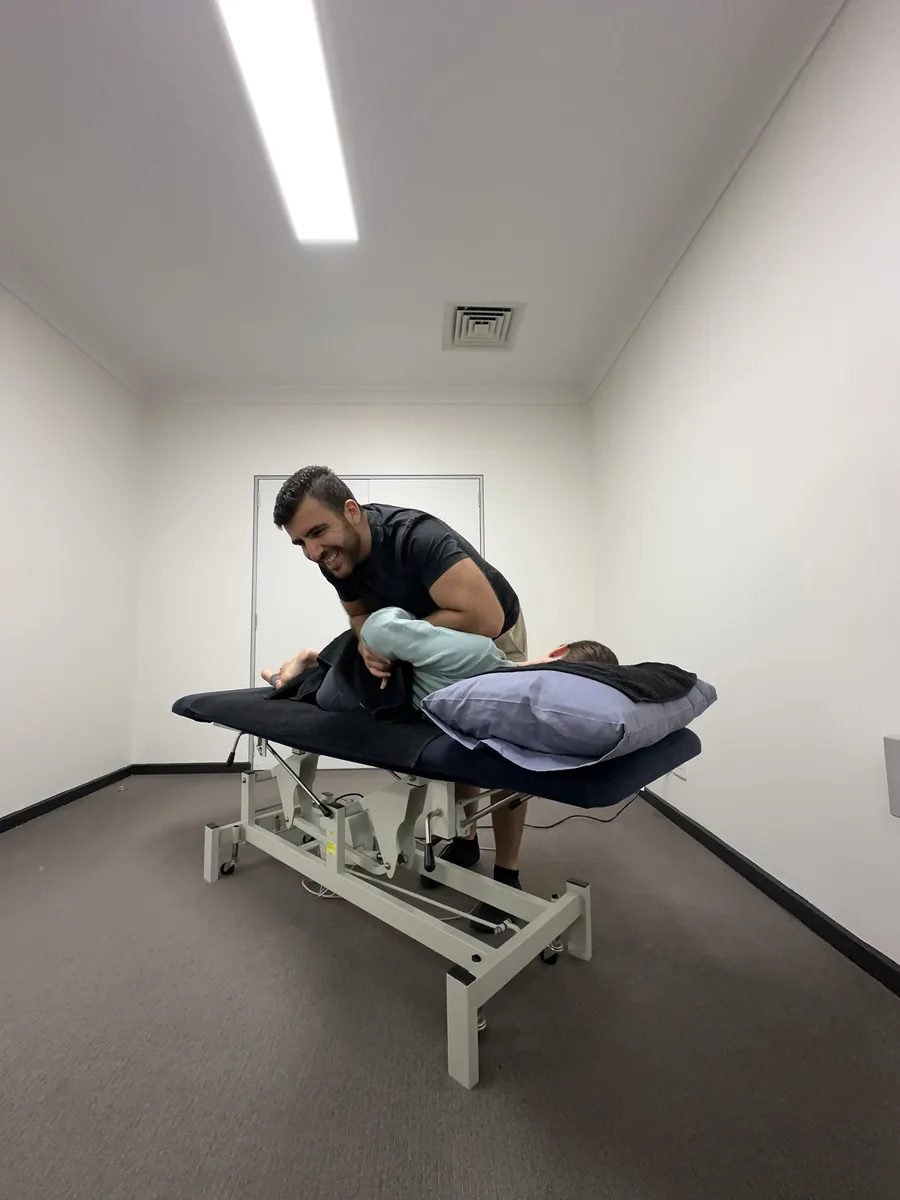
Yes. We work out where your pain is coming from, check your hips, back and squat pattern, treat the irritated area hands-on, and adjust your program so you can keep training while it settles. Then we build back to your normal squat with a graded plan.
When should back pain from squatting be checked?
Book in if it isn't improving after a week or two, keeps coming back, or you have leg pain, pins and needles or numbness. Go to an emergency department straight away if back pain comes with new difficulty controlling your bladder or bowels, numbness around the groin or inner thighs, or weakness or numbness in both legs. See your GP promptly for leg weakness that's getting worse, back pain with fever or feeling unwell, unexplained weight loss, or a history of cancer.
Book an assessment at our Berwick clinic. A 60-minute initial consultation is $149, with no referral needed and HICAPS on-site.
Sources
Book an initial consultation at RISE Sports & Spinal in Berwick. Clear diagnosis, hands-on treatment, and a plan that actually gets you better.
Related articles