Hip pain when squatting: causes and how to keep training
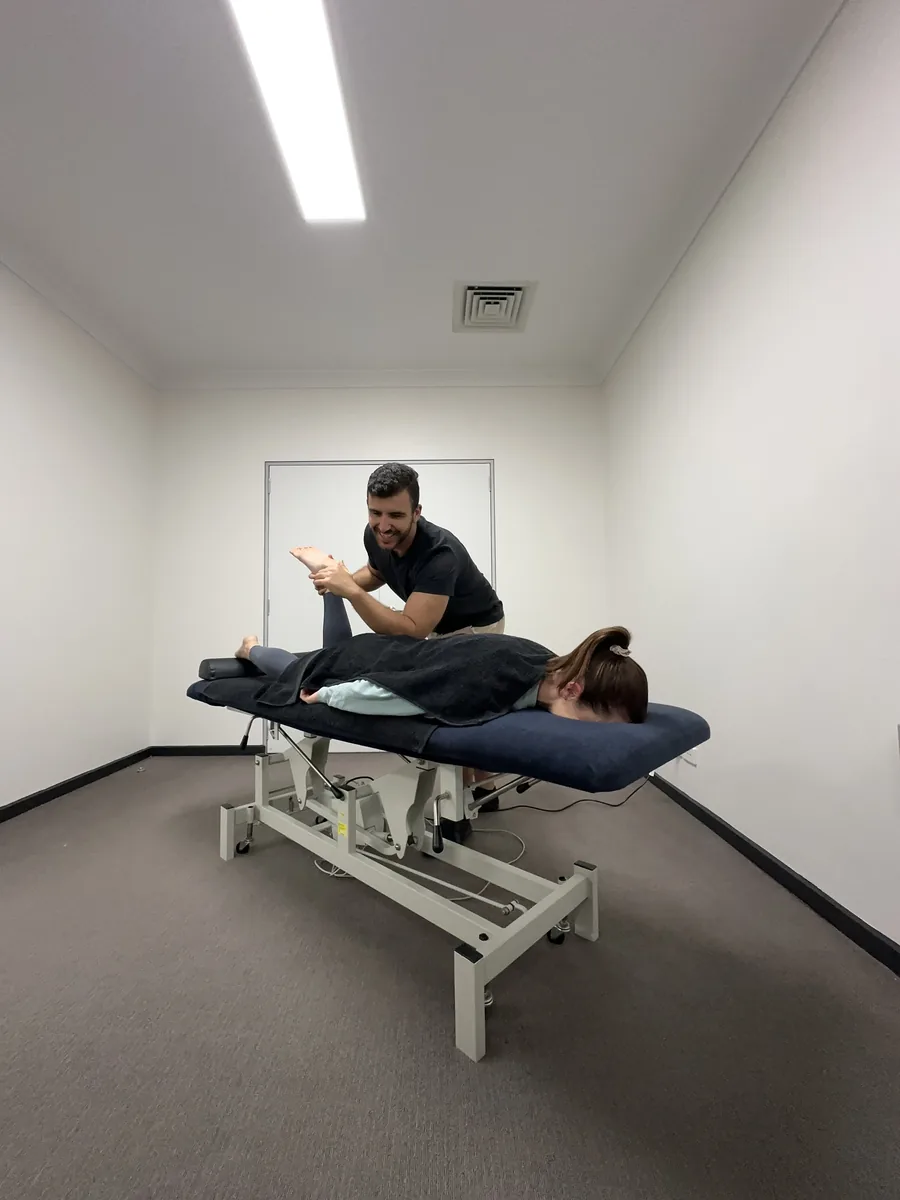
A pinch or ache at the front of the hip at the bottom of a squat is a common complaint among lifters. Steven lifts and treats a lot of gym-goers, and most of the time it can be managed without giving up squats.
Why does my hip hurt when I squat?
Deep hip bending brings the top of the thigh bone close to the rim of the hip socket. If the hip's shape or the way you squat reduces that space, you can feel a pinch at the front of the hip or in the groin. Other common causes include hip flexor irritation, adductor (groin) strains, gluteal tendon pain on the outside of the hip, and pain referred from the lower back.
Is it hip impingement?
Possibly, but a scan alone can't tell you. Differences in hip shape, often called cam or pincer morphology, are common in people with no pain, particularly those who played a lot of sport growing up. An international consensus statement defines femoroacetabular impingement (FAI) syndrome as the combination of symptoms, clinical signs and imaging findings, not the imaging alone, and lists conservative care, rehabilitation and surgery as suitable treatments (Griffin et al., British Journal of Sports Medicine, 2016).
Our post on hip impingement (FAI) goes into more detail.
How can I squat with hip pain?
Small changes often make a big difference. Try a slightly wider stance with your toes turned out a little more, which gives the hip more room. Squat to just above the depth where the pinch starts, and use a box to control depth. Slow the lowering phase. Swap back squats for goblet squats, box squats, split squats or sled pushes while it settles. Build hip strength, particularly glutes and adductors, and keep training your other lifts.
Should I stretch my hip flexors?
Only if it feels good. A front-of-hip pinch isn't usually caused by tight hip flexors, and aggressive stretching into the pinch can make it worse. Strength and control through the range you can use comfortably is usually more helpful.
Why does my hip click when I squat?
Clicking or clunking without pain is common and usually harmless. It's often a tendon, such as the hip flexor, snapping over a bony prominence as the hip moves. Clicking that comes with sharp pain, catching, or a feeling that the hip gives way is different and can point to an irritated joint or the labrum, the rim of cartilage around the socket, and is worth getting assessed.
Could my hip pain be coming from my back?
Yes. The lower back can refer pain into the buttock, groin and front of the thigh. Clues that your back may be involved include back pain alongside the hip pain, pain that changes with back movements rather than hip movements, pins and needles or numbness in the leg, and pain that doesn't match what we find when testing the hip itself. Part of an assessment is working out which is which.
What about pain on the outside of the hip when squatting or lunging?
Pain on the outside of the hip, over the bony point, that's worse with lunges, single-leg work, climbing stairs and lying on that side, often comes from the gluteal tendons. It responds well to a structured strengthening program, but it's usually aggravated by stretching across the outside of the hip and by crossing your legs.
Our post on gluteal tendinopathy covers this in more detail.
How long does hip pain from squatting take to settle?
With sensible load changes, many people notice improvement within a few weeks and get back to normal squatting over one to three months. Hip pain that has been building for a long time, or involves the joint itself, can take longer. Progress is rarely linear, so we track it over weeks rather than day to day.
How can an osteopath help hip pain?
We assess the hip, back and surrounding muscles to work out where the pain is coming from, then combine hands-on treatment to ease pain and improve movement with a progressive strength program built around your training. If we suspect a significant joint or labral problem, we'll refer you for imaging or a sports physician or orthopaedic opinion.
When should hip pain be checked?
Book in if the pain isn't improving after a few weeks of modified training, if your hip clicks, catches or locks painfully, or if pain is spreading into your groin, thigh or buttock. See a doctor promptly for hip pain with fever, severe pain after a fall, or pain in the groin with a limp in a child or teenager.
For more, see our hip and pelvic pain guide and our post on knee pain when squatting. Book an assessment at our Berwick clinic. A 60-minute initial consultation is $149, with no referral needed and HICAPS on-site.
Sources
Book an initial consultation at RISE Sports & Spinal in Berwick. Clear diagnosis, hands-on treatment, and a plan that actually gets you better.
Related articles