Knee pain when squatting: what it means and what helps
Knee pain when squatting is one of the most common complaints we see from gym-goers, and it often shows up in everyday life too: getting up from a low chair, taking the stairs, or kneeling. The good news is that most of it responds well to the right changes in training.
Why do my knees hurt when I squat?
The most common cause is patellofemoral pain: an ache at the front of the knee, around or behind the kneecap, that's worse with squatting, stairs and sitting for long periods. Pain just below the kneecap that's sharpest at the start of a session often points to the patellar tendon. Pain on the inside or outside of the joint line, especially with twisting or deep bending, can involve the meniscus, and pain on the outside of the knee in runners and cyclists often involves the ITB.
Our posts on runner's knee (patellofemoral pain), patellar tendinopathy and meniscus irritation cover each in more detail.
Are deep squats bad for your knees?
No. A large review of the research found that concerns about deep squats causing knee damage are unfounded, and that with good technique and progressive loading the deep squat is an effective, protective exercise. It also noted that half and quarter squats with very heavy loads may put more stress on the knees and spine over time (Hartmann et al., Sports Medicine, 2013). Depth isn't the enemy; too much load too soon usually is.
Should I stop squatting with knee pain?
Usually not completely. Reduce the load and the number of sets for a couple of weeks, squat to a depth that's comfortable, try a box squat, goblet squat or a slightly wider stance, and slow the lowering phase. Split squats, step-ups and sled pushes are often easier to tolerate while things settle. Keep hip and thigh strength work going.
What helps knee pain when squatting?
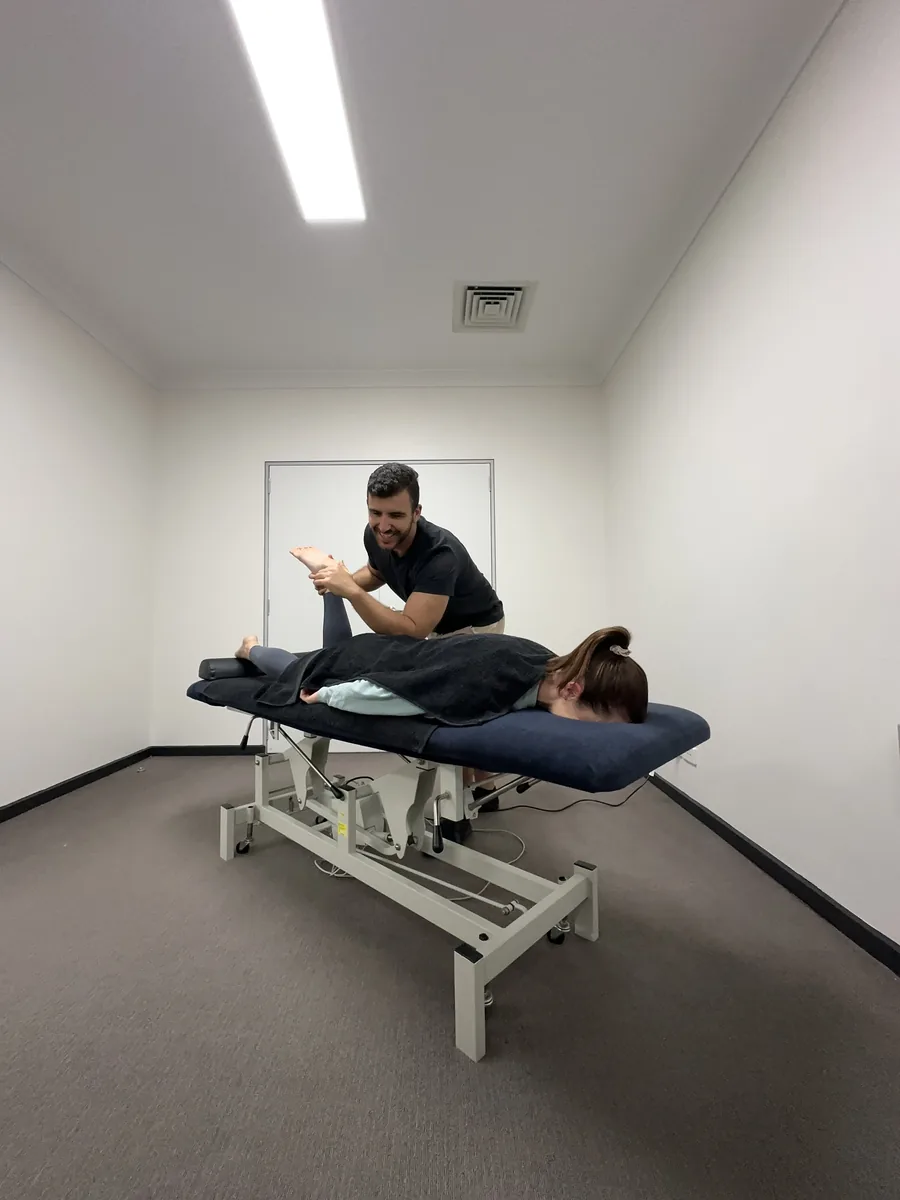
For patellofemoral pain, the strongest evidence is for exercise, especially combining hip-focused and knee-focused strengthening, according to an international consensus statement. The same statement advises against using knee mobilisations on their own (Collins et al., British Journal of Sports Medicine, 2018). So at RISE hands-on work is used to settle pain and restore movement, and the core of the plan is a progressive strength program built back to the squats you want to do.
When should knee pain be checked?
Get it assessed if the pain isn't improving after two to three weeks of modified training, or if your knee clicks painfully, catches or locks. Get seen promptly if your knee swells quickly after an injury, gives way, or you can't straighten it fully, as these can mean a ligament or meniscus tear.
For more on knee conditions, see our knee and ankle pain guide. Book an assessment at our Berwick clinic. A 60-minute initial consultation is $149, with no referral needed and HICAPS on-site.
Sources
Book an initial consultation at RISE Sports & Spinal in Berwick. Clear diagnosis, hands-on treatment, and a plan that actually gets you better.
Related articles