Knee pain after running: what the location tells you
Knee pain is the most common complaint we see in runners. Where it hurts is the best clue to what's going on, and most running knee problems respond well to adjusting training and building strength.
Does running damage your knees?
Not for recreational runners. A meta-analysis found hip and knee arthritis in 3.5% of recreational runners, compared with 10.2% of non-runners (Alentorn-Geli et al., JOSPT, 2017). Most knee pain after running is a load problem, not wear and tear.
See our post on whether running damages your knees.
Pain at the front of the knee, around or behind the kneecap
This is usually patellofemoral pain, or runner's knee. It's often worse running downhill, on stairs, squatting and after sitting with the knees bent. An international consensus recommends exercise therapy, particularly combined hip and knee strengthening, as the main treatment (Collins et al., British Journal of Sports Medicine, 2018).
See our post on runner's knee.
Pain just below the kneecap
Pain at the bottom of the kneecap that's worse with hills, speed work and jumping usually comes from the patellar tendon. It responds to progressive tendon loading. In teenagers, pain on the bump below the kneecap is often Osgood-Schlatter disease.
See our post on patellar tendinopathy.
Pain on the outside of the knee
A sharp or burning pain on the outer side of the knee that comes on at a predictable point in a run, often worse downhill, is typical of ITB-related pain. It usually settles with reduced volume, flatter routes and hip strengthening.
See our post on ITB syndrome.
Pain on the inside of the knee
Pain on the inner side can come from the meniscus, especially with twisting or deep bending, from tendon and bursa irritation a few centimetres below the joint line, or from early arthritis.
See our post on running with a torn meniscus.
Pain at the back of the knee
Usually the hamstring or calf tendons, or a Baker's cyst. Calf swelling, warmth and redness need a doctor the same day to rule out a clot.
See our post on pain behind the knee.
Why does my knee only hurt after the run, not during?
Tendons and the kneecap joint often warm up and feel fine during a run, then ache afterwards or the next morning. That delayed pain is a useful guide to whether the load was too much.
What should I change in my training?
Most running knee problems follow a change: more distance, more hills, speed work, new shoes or a return after a break. Reduce weekly distance for a couple of weeks, avoid downhill running and speed sessions, and keep runs easy. Build back gradually.
What exercises help?
Quadriceps and hip strengthening: sit-to-stands, step-ups, split squats, wall sits, side-lying leg raises, bridges and calf raises. Start pain-free and progress the load over weeks.
See our post on strength training for runners.
Do shoes, taping or braces help?
Comfortable shoes and a gradual approach to any shoe change matter more than a specific model. Taping or a kneecap brace can ease pain in the short term while you strengthen.
When should I stop running?
Stop and get assessed if your knee swells, locks, gives way, makes you limp, or if pain is getting worse each run.
Can I keep running with knee pain?
Often, if the pain is mild during the run, settles within 24 hours, and isn't getting worse week to week. Use a simple 0 to 10 scale: staying at 3 or below during and after running is generally acceptable for patellofemoral and tendon pain. If pain climbs higher, or the next morning is worse, reduce distance or pace for the next run.
Do I need a scan?
Most running knee problems are diagnosed with a history and examination, and don't need imaging. A scan is worth considering if the knee swells, locks or gives way, after a significant twisting injury, or if pain isn't improving after six to eight weeks of a good rehab plan.
What role do the hips play?
Weak hip muscles can let the knee drift inwards when you land, increasing load on the kneecap and outer knee. That's why the consensus statement recommends combining hip and knee exercises rather than focusing on the knee alone.
Does running on the road or treadmill matter?
A change in surface matters more than the surface itself. Switching suddenly from treadmill to road, or from road to trails with steep descents, changes the load on the knee. Introduce new surfaces gradually, and mix them up once your knee is settled.
How can an osteopath help?
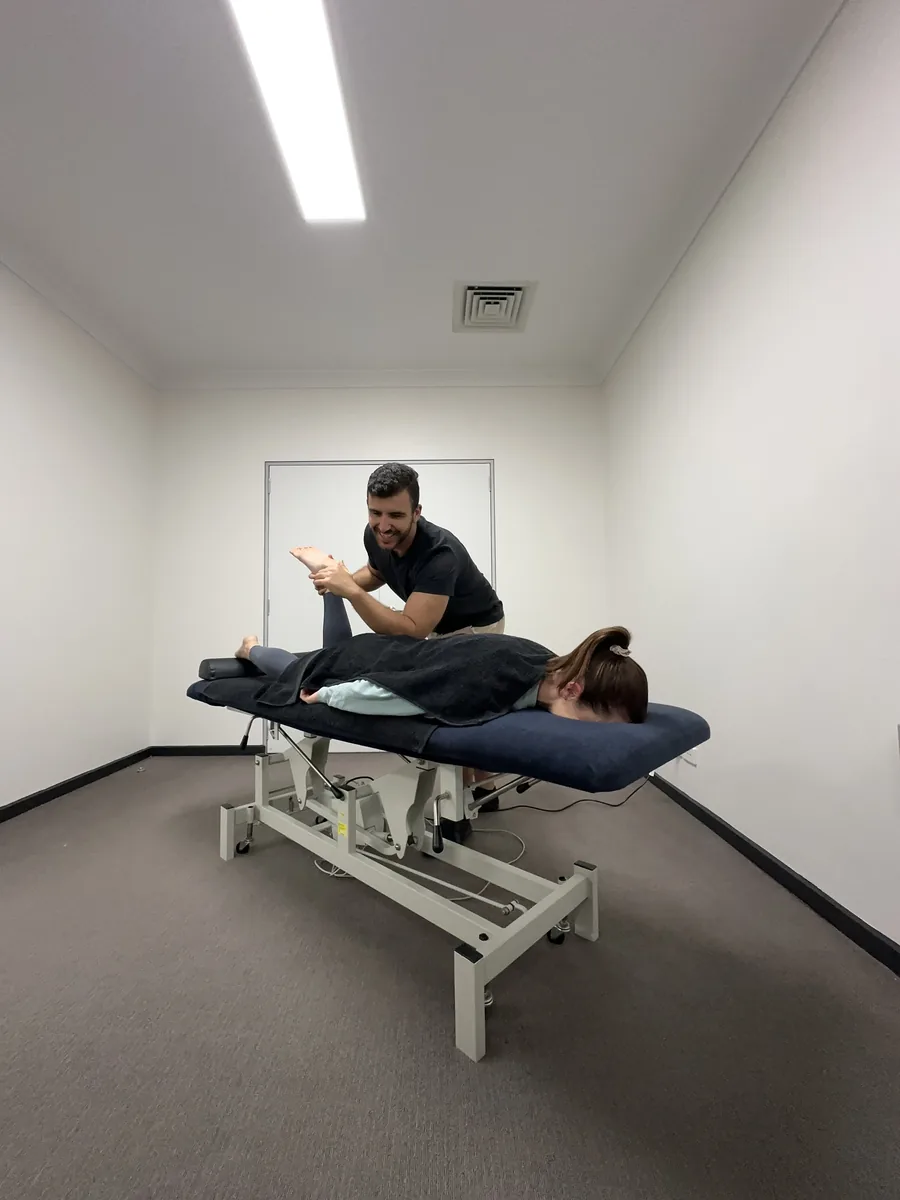
We pinpoint which structure is involved, look at your hips, ankles and training, treat hands-on, and build a plan that keeps you running where possible.
See our knee and ankle pain guide and our training hub. Book an assessment at our Berwick clinic. A 60-minute initial consultation is $149, with no referral needed and HICAPS on-site.
Sources
Book an initial consultation at RISE Sports & Spinal in Berwick. Clear diagnosis, hands-on treatment, and a plan that actually gets you better.
Related articles