Why does my shoulder click? Causes and when to worry
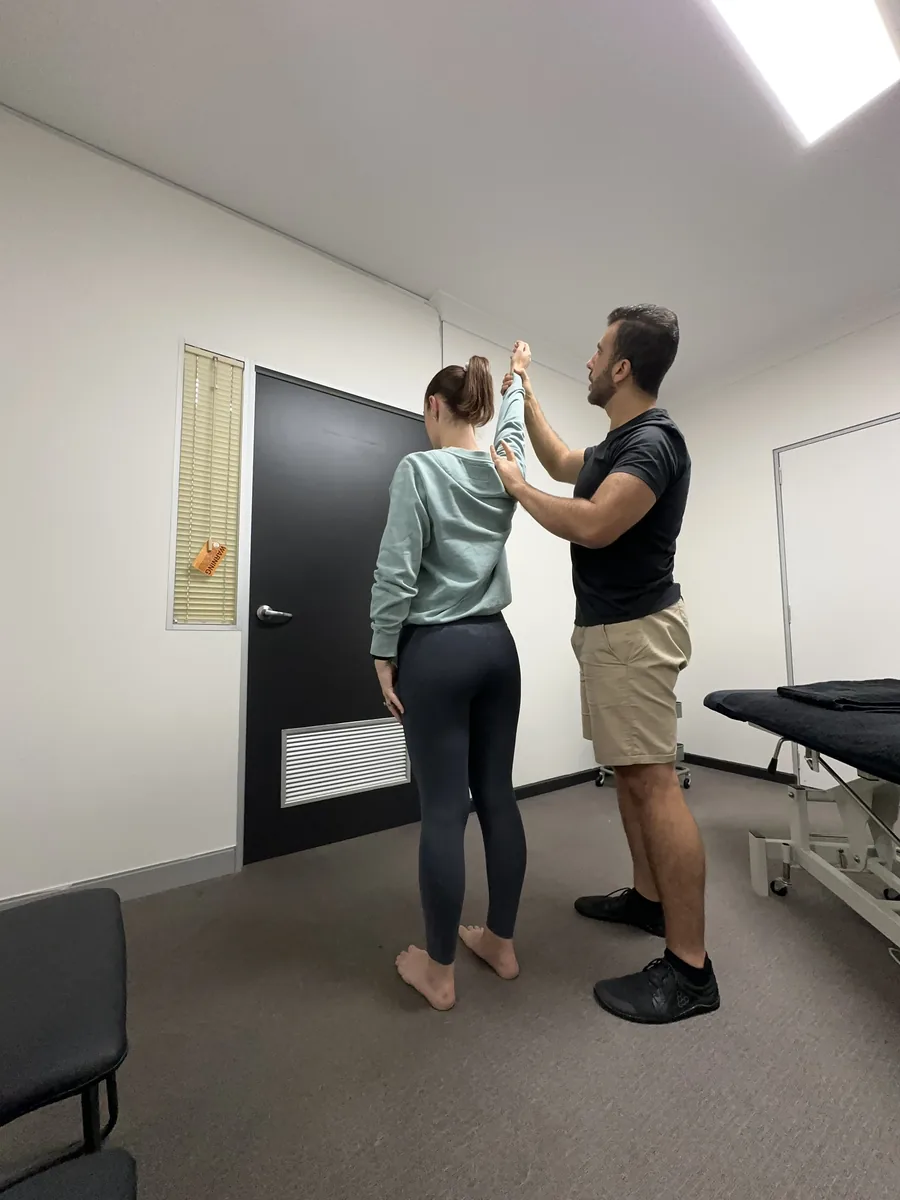
Shoulders are the most mobile joints in the body, and they're noisy. Clicks when you roll your shoulder, a pop reaching overhead, or grinding around the shoulder blade are very common and usually nothing to worry about.
Why does my shoulder click?
Common harmless causes include gas bubbles in the joint fluid, tendons sliding over bone as the arm rotates, the shoulder blade gliding over the ribs, and small irregularities in the joint surfaces that come with age. Because so many structures move at once, some noise is expected.
Is shoulder clicking a sign of damage?
Not necessarily. Changes inside the shoulder are very common in people with no symptoms. An ultrasound study of men aged 40 to 70 with no shoulder symptoms found abnormalities in 96% of them, most often thickening of the bursa, arthritis of the AC joint and tendon changes (Girish et al., American Journal of Roentgenology, 2011). In an MRI study of pain-free adults aged 45 to 60, labral tears were reported in 55% to 72% (Schwartzberg et al., Orthopaedic Journal of Sports Medicine, 2016). Noise and scan findings often don't mean much without symptoms.
When is a clicking shoulder a problem?
When it comes with pain, weakness, a feeling that the shoulder is slipping or about to come out, catching or locking, or when it started after an injury such as a fall, a dislocation or a heavy lift.
Why does my shoulder click when I lift my arm?
Clicking as the arm passes shoulder height often comes from the tendons and bursa under the bony arch at the top of the shoulder, or from the AC joint. If it's painful in the middle part of the movement, the rotator cuff or bursa may be irritated.
See our posts on shoulder bursitis and rotator cuff injuries.
Why does my shoulder blade grind or crunch?
A grinding or crunching feeling under the shoulder blade when you roll your shoulders comes from the blade moving over the rib cage and the muscles between them. It's common in people who sit a lot or have changed their training. It's usually painless, and often improves with strengthening the muscles that control the shoulder blade.
Why does my shoulder click on bench press or push-ups?
Pressing movements take the shoulder to the end of its range under load. A painless click is common. If there's pain at the front of the shoulder, adjusting grip width, elbow position and depth usually helps.
See our post on shoulder pain from bench press.
Could it be a labral tear?
A deep click or clunk with pain inside the joint, catching, or a sense of instability can come from the labrum, especially after an injury. Because labral changes are so common in pain-free shoulders, a scan result has to be matched with your symptoms.
See our post on SLAP and labral tears.
Does clicking mean arthritis?
In older adults, grinding with stiffness and aching can be related to arthritis of the shoulder or the AC joint on top of the shoulder. Painless noise on its own isn't a sign of arthritis.
Should I stop moving it?
No. Keep using the shoulder normally. Avoid repeatedly making it click on purpose, and judge by pain, strength and movement.
What exercises help a clicking shoulder?
Rotator cuff strengthening with a band (external and internal rotation), rows, face pulls, wall slides, push-up plus, and upper back mobility. These improve how the ball sits in the socket and how the shoulder blade moves, and often reduce noise over time.
Do I need a scan?
Not for painless clicking. A scan is worth considering for clicking with significant pain, weakness, instability or after an injury, or when symptoms aren't improving with rehabilitation.
Is it bad to crack my shoulder on purpose?
Rolling or stretching your shoulder until it pops isn't known to cause harm. If you feel a constant urge to do it, the area probably needs more movement and strength through the day.
Why did my shoulder start clicking after an injury or surgery?
Swelling, stiffness and weakness change how the ball moves in the socket, which can create new noises. They often fade as strength and control return. Painful clunking or a feeling of slipping after an injury should be reviewed.
Does poor posture make shoulders click?
A stiff upper back and rounded shoulders can change how the shoulder blade moves and make noise more noticeable. Upper back mobility and shoulder blade strengthening usually help more than trying to hold a fixed posture.
How can an osteopath help?
We examine the shoulder, neck and upper back, work out where the noise and any pain are coming from, treat hands-on, and give you a strengthening plan. We'll refer you if a tear or instability is suspected.
When should a clicking shoulder be checked?
Book in for clicking with pain, weakness or catching that isn't settling. See a doctor promptly for a shoulder that slips out, sudden weakness after a fall, or numbness or tingling down the arm.
See our shoulder pain guide. Book an assessment at our Berwick clinic. A 60-minute initial consultation is $149, with no referral needed and HICAPS on-site.
Sources
Book an initial consultation at RISE Sports & Spinal in Berwick. Clear diagnosis, hands-on treatment, and a plan that actually gets you better.
Related articles