Calcific tendinopathy of the shoulder: causes and treatment
Calcific tendinopathy means calcium deposits have formed within the rotator cuff tendons of the shoulder. It's often found on an X-ray or ultrasound, sometimes by chance. It can be painless for years, or cause some of the most severe shoulder pain people experience.
What is calcific tendinopathy?
Calcium crystals build up inside a rotator cuff tendon, most often the supraspinatus tendon at the top of the shoulder. It tends to affect adults between about 30 and 60 and is more common in women. It isn't caused by too much calcium in your diet, and taking or avoiding calcium doesn't change it.
What causes calcium deposits in the shoulder?
The exact cause isn't known. It isn't simply wear and tear, and it isn't usually linked to an injury. The deposits typically go through stages: forming, sitting quietly for a period, and then being reabsorbed by the body.
What does calcific tendinopathy feel like?
Symptoms vary. Many people have a nagging ache at the front or side of the shoulder that's worse lifting the arm, reaching overhead and lying on that side. During the reabsorption stage, pain can become sudden and intense, with the shoulder very painful to move and sleep badly disturbed, sometimes lasting days to a couple of weeks.
Does the calcium go away by itself?
Often, yes. The body can reabsorb the deposits over time, though how long that takes varies a lot, from months to years. In a randomised trial, the deposit had completely gone in the majority of patients in both treatment groups by five years (de Witte et al., American Journal of Sports Medicine, 2017).
What is the best treatment for calcific tendinopathy?
Most people start with conservative care: pain relief, exercises to keep the shoulder moving and strong, and sometimes a corticosteroid injection. If pain persists, options through your GP or a specialist include ultrasound-guided needling and lavage (barbotage), where the deposit is broken up and washed out, and shockwave therapy. Surgery is reserved for cases that don't respond.
Does barbotage work?
In a randomised trial comparing barbotage plus a corticosteroid injection with a corticosteroid injection alone, both groups improved over a year, with better clinical and X-ray results in the barbotage group (de Witte et al., American Journal of Sports Medicine, 2013). At five years, there was no longer a significant difference between the groups (de Witte et al., 2017). So barbotage may speed things up, but outcomes tend to even out with time.
Can an osteopath help calcific tendinopathy?
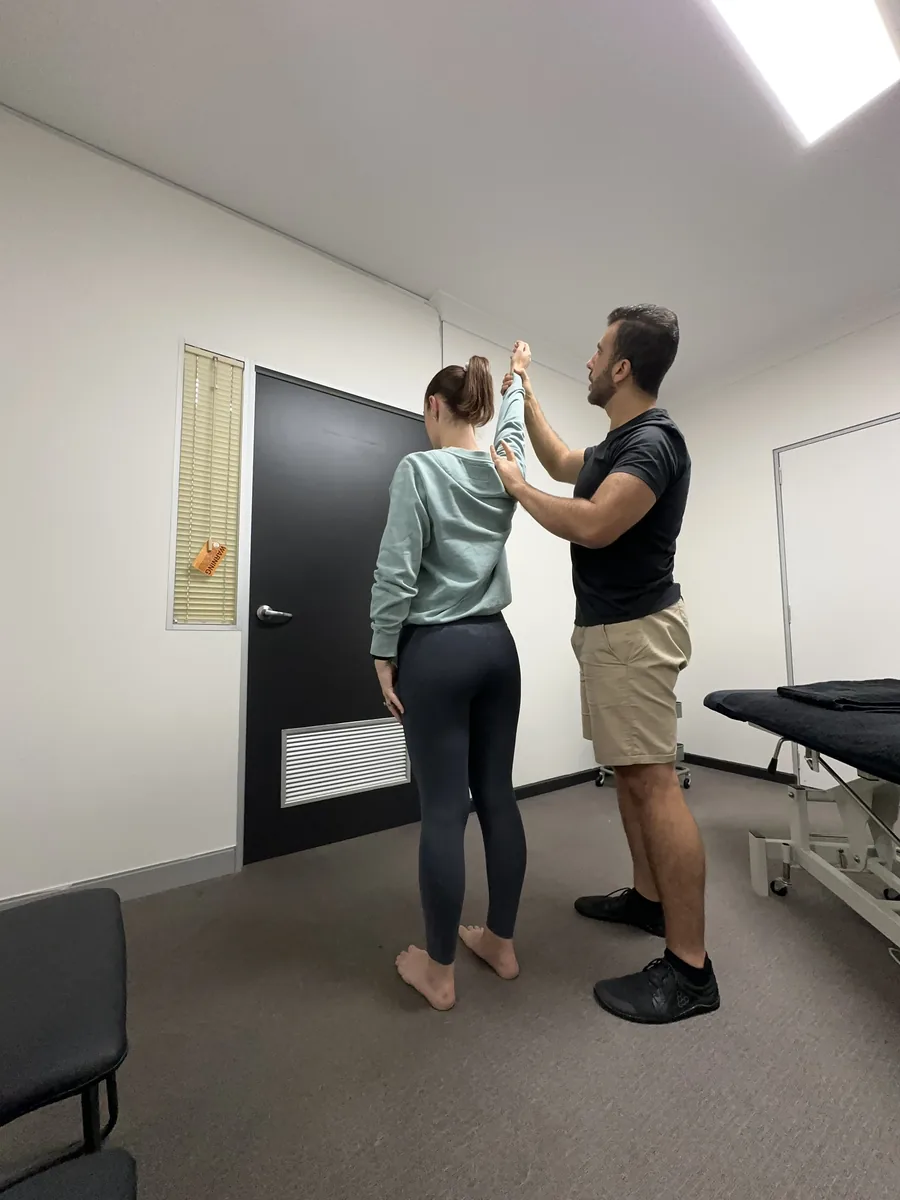
We can't remove the calcium, but we can help with pain, movement and strength. Treatment includes hands-on work for the shoulder, neck and upper back, a graded exercise program for the rotator cuff and shoulder blade muscles, and advice on sleeping and activity. If your pain is severe or not improving, we'll refer you to your GP to discuss imaging, injection or barbotage.
What exercises help?
During a painful flare, gentle pendulum movements and supported arm raises keep the shoulder from stiffening. As pain settles, progressive strengthening with a band or light weights, external rotation, rows and gradual overhead work, helps restore function. Exercises should be comfortable; pushing into severe pain isn't helpful.
How should I sleep with calcific tendinopathy?
Avoid lying on the painful shoulder. Try lying on your back with a small pillow under your elbow, or on the other side hugging a pillow. During a severe flare, sleeping propped up in a recliner or on extra pillows is sometimes the only comfortable position; talk to your GP about pain relief.
Can I keep exercising?
Yes, within comfort. Lower-body training and walking are fine. Reduce overhead and heavy pressing work while it's painful, and keep the shoulder moving. Complete rest in a sling tends to lead to stiffness.
Does shockwave therapy help calcific tendinopathy?
Shockwave therapy is one of the options specialists and some clinics offer for calcific deposits that haven't settled with exercise and injection. We don't provide shockwave at RISE. If it's worth considering in your case, your GP or a sports physician can advise and refer you.
Will calcific tendinopathy come back?
Once a deposit has been reabsorbed, it doesn't usually return in the same place. Some people have deposits in both shoulders, or have ongoing rotator cuff pain for other reasons, which is why keeping the shoulder strong matters after the calcium has gone.
When should I see a doctor?
See your GP for sudden, severe shoulder pain, particularly if the shoulder is hot, red or swollen or you have a fever, as infection needs to be ruled out. Also get checked for significant weakness, pain after a fall, or pain that isn't improving after a few weeks. Call 000 for shoulder or arm pain with chest pain, breathlessness or sweating.
See our posts on shoulder bursitis and rotator cuff injuries, or our shoulder pain guide. Book an assessment at our Berwick clinic. A 60-minute initial consultation is $149, with no referral needed and HICAPS on-site.
Sources
Book an initial consultation at RISE Sports & Spinal in Berwick. Clear diagnosis, hands-on treatment, and a plan that actually gets you better.
Related articles