Shoulder bursitis: can an osteopath help?
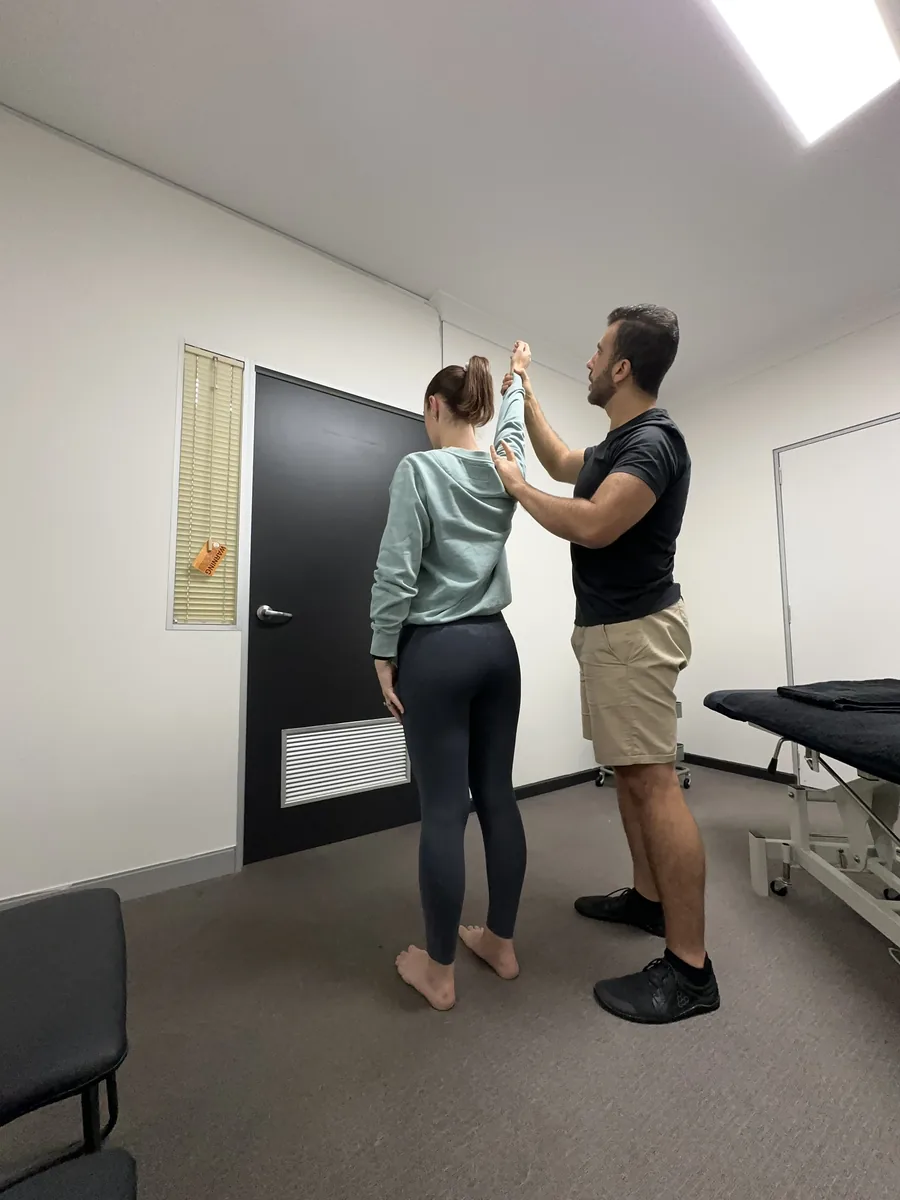
'Subacromial bursitis' is one of the most common findings on a shoulder ultrasound report, and one of the most common reasons people are told they have shoulder pain. But the bursa is rarely the whole story. Here's what it means and how an osteopath can help.
What is shoulder bursitis?
A bursa is a thin, fluid-filled sac that reduces friction between tissues. The subacromial bursa sits between the rotator cuff tendons and the bony arch at the top of the shoulder. When the area is irritated, the bursa can thicken and show up on an ultrasound. In most people, the bursa and the rotator cuff tendons are irritated together, which is why this is often grouped under 'subacromial pain' or 'shoulder impingement'.
What does shoulder bursitis feel like?
Usually an ache at the front or side of the shoulder that may spread down the upper arm. It's often worse lifting your arm out to the side or overhead, reaching behind your back, and lying on that shoulder at night. Many people notice a painful arc, where it hurts in the middle of raising the arm but eases at the top.
Can an osteopath help shoulder bursitis?
Yes. Exercise has the best evidence for this kind of shoulder pain. A meta-analysis found exercise beat non-exercise treatments for pain, and specific shoulder exercises were more effective than general ones (Steuri et al., British Journal of Sports Medicine, 2017). We combine a progressive strength program for the rotator cuff and shoulder blade muscles with hands-on treatment to ease pain and stiffness in the shoulder, neck and upper back, plus advice on modifying the activities that aggravate it.
Do I need surgery for shoulder bursitis?
Usually not. A large randomised trial compared arthroscopic subacromial decompression with a sham-style arthroscopy and with no treatment. Decompression was no better than the arthroscopy without decompression, and the small benefits of both surgical groups over no treatment weren't clinically important (Beard et al., The Lancet, 2018). For most people, a good rehab program should be the first approach.
Do cortisone injections help shoulder bursitis?
A corticosteroid injection into the bursa can ease pain in the short term, which can make it easier to do your exercises. It doesn't address why the area became irritated, so it works best alongside a rehab program rather than instead of one. Your GP or a sports physician can talk through the pros and cons.
What exercises help shoulder bursitis?
Early on, gentle movement within a comfortable range, such as pendulums and supported arm raises, and static holds for the rotator cuff. Then progressive strengthening: external and internal rotation with a band, rows, side-lying arm raises, wall slides, and gradually working back towards overhead and loaded positions. Mild discomfort during exercise is usually fine if it settles within a day.
How long does shoulder bursitis take to heal?
Many people notice improvement in pain within a few weeks of starting a structured program. Full recovery, particularly getting back to overhead work, lifting or sport, often takes two to three months.
How should I sleep with shoulder bursitis?
Avoid lying directly on the painful shoulder for now. On your back, try a small pillow under the elbow of the sore arm. On the other side, hug a pillow so the painful arm is supported in front of you rather than falling forward.
Can I keep exercising with shoulder bursitis?
Usually yes. Lower-body training, walking and cycling are normally fine. For the upper body, avoid heavy overhead work and movements that cause a painful arc for now, and keep doing exercises that are comfortable, such as rows and light pressing below shoulder height. Your rehab exercises should be the priority.
Is shoulder bursitis the same as a frozen shoulder?
No. With bursitis and rotator cuff pain, your shoulder usually moves fairly freely when someone else moves it, even if lifting it yourself hurts. With a frozen shoulder, movement is stiff and restricted in every direction, including when someone else tries to move it, particularly turning the arm outwards.
See our post on frozen shoulder.
Should I rest a shoulder with bursitis?
Complete rest usually isn't helpful. Easing off aggravating activities for a short time is sensible, but gentle movement and progressive strengthening are what help the shoulder recover. Keeping your arm in a sling or avoiding using it altogether can lead to stiffness.
When should shoulder pain be checked?
Book in if shoulder pain isn't improving after a few weeks or is affecting your sleep, work or training. See a doctor promptly for significant weakness after a fall, a shoulder that is hot, red and swollen (especially with fever), or pain with pins and needles in the arm. Call 000 for left shoulder or arm pain with chest pain, breathlessness or sweating.
See our posts on shoulder impingement and rotator cuff injuries, or our shoulder pain guide. Book an assessment at our Berwick clinic. A 60-minute initial consultation is $149, with no referral needed and HICAPS on-site.
Sources
Book an initial consultation at RISE Sports & Spinal in Berwick. Clear diagnosis, hands-on treatment, and a plan that actually gets you better.
Related articles