Shoulder pain from overhead press and pull-ups: what helps
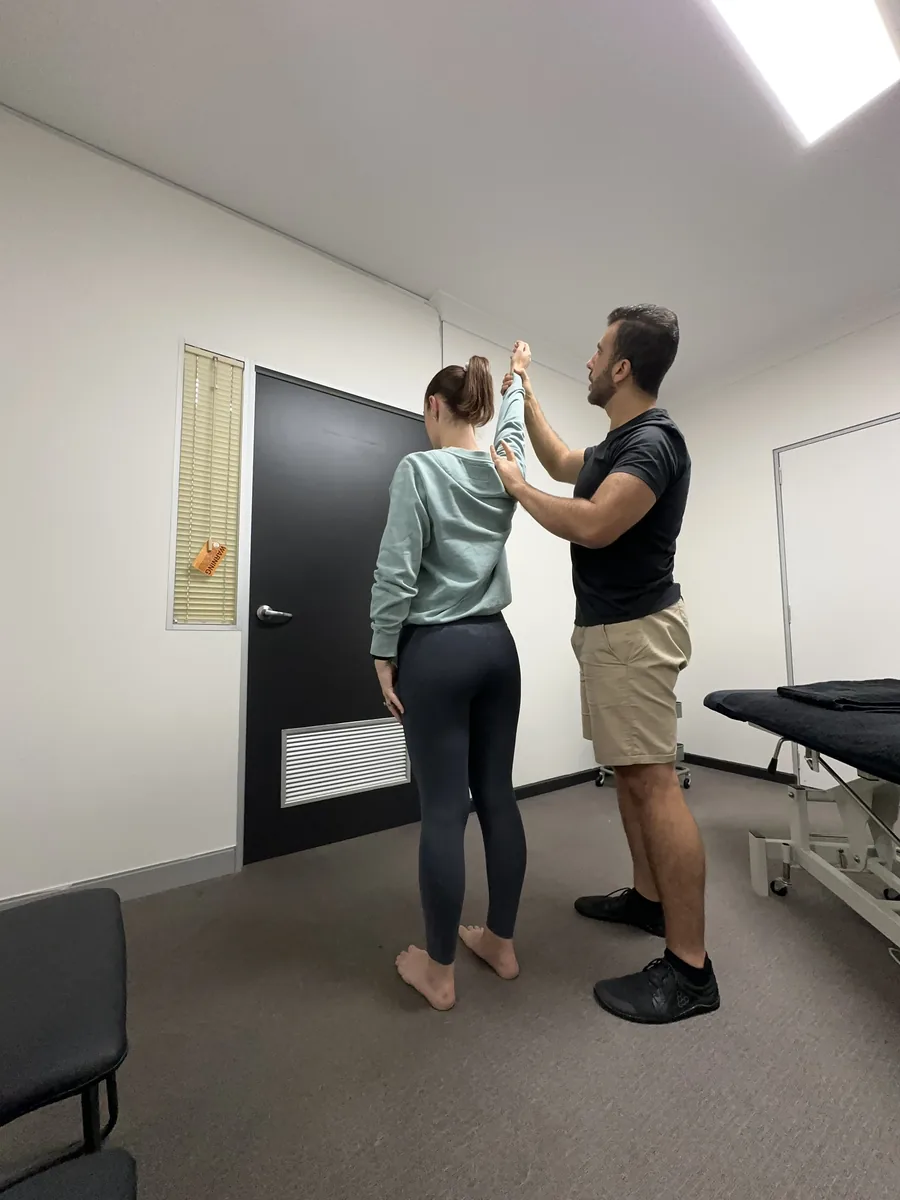
The overhead press and pull-ups ask a lot of the shoulder: full range of movement under load. When something isn't quite right, these are usually the first lifts to complain. Steven lifts and treats many gym-goers with shoulder pain, and most of it settles with the right changes.
Why does my shoulder hurt when I press overhead?
The most common cause is irritation of the rotator cuff tendons and the space under the top of the shoulder, often called subacromial pain or impingement. It usually aches at the front or side of the shoulder, often in the middle of the press or near the top. Pain right on top of the shoulder, at the bony bump, tends to come from the AC joint. Stiffness in the upper back can also make it harder to get your arms fully overhead, so the shoulder takes more of the load.
Why does my shoulder hurt during pull-ups?
Pain at the bottom of a pull-up, in the dead hang, often comes from the front of the shoulder or the long head of the biceps tendon. Pain near the top can come from the AC joint or the front of the shoulder as it rolls forward. Kipping pull-ups put a lot of stress on the front of the shoulder, and a sudden increase in pull-up volume is a common trigger.
Should I stop overhead pressing with shoulder pain?
Usually modify rather than stop. Reduce the load and volume for a couple of weeks. Try a landmine press, a half-kneeling single-arm press, or a slightly inclined press, which are often more comfortable than a strict barbell press. For pull-ups, try a neutral grip, use band assistance or a lat pulldown, avoid the very bottom of the dead hang for now, and skip kipping. Keep training your lower body and the movements that don't hurt.
What exercises help shoulder pain from pressing?
Exercise has the best evidence. A meta-analysis of treatments for shoulder impingement found exercise beat non-exercise controls for pain, and specific exercises did better than general ones (Steuri et al., British Journal of Sports Medicine, 2017). Useful options include external and internal rotation with a band or cable, face pulls and rows, prone Y and T raises, wall slides, and gradually loaded overhead work, such as half-kneeling presses and bottoms-up kettlebell carries.
Our posts on rotator cuff injuries and shoulder impingement go into more detail.
Does upper back mobility affect overhead pressing?
Often. To get your arms fully overhead, your upper back needs to extend a little and your shoulder blades need to rotate upwards. If your upper back is stiff, many people arch through the lower back or push the shoulder further than it likes. Thoracic extension and rotation drills, along with shoulder blade control work, can make pressing overhead more comfortable.
How long does shoulder pain from overhead pressing take to settle?
Mild irritation often improves within a few weeks of modified training. Tendon pain that has been building for months usually takes two to three months of progressive loading to return to full pressing and pull-ups.
Do I need a scan for shoulder pain?
Usually not at first. Scans often show tendon changes in people without pain, so they're most useful when there's significant weakness, a suspected tear after an injury, or pain that isn't improving with a good rehab program.
Can I keep training my upper body with shoulder pain?
Usually yes. Most people can keep doing rows, lat pulldowns with a neutral grip, landmine presses, push-ups at a comfortable depth, and lower-body work while the shoulder settles. Mild discomfort that eases within a day is generally acceptable; sharp pain, pain that lingers, or pain that's building week to week means reduce the load further.
Can an osteopath help shoulder pain from lifting?
Yes. We assess the shoulder, neck and upper back, check for tendon or joint involvement, and treat hands-on to ease pain and stiffness. Then we build a progressive strength plan around your training so you can get back to pressing and pull-ups with confidence.
Should I stretch a sore shoulder?
Gentle mobility can help if your shoulder is stiff, but aggressive stretching into painful positions, such as hanging stretches or forced behind-the-back stretches, often aggravates irritated tendons. Strength through the range you can comfortably use is usually more helpful.
When should shoulder pain be checked?
Book in if your shoulder pain isn't improving after two to three weeks of modified training, wakes you at night, or your arm feels weak when lifting. Get seen promptly after a fall or a sudden pop with immediate weakness, as a tendon tear is best assessed early. Pain with pins and needles or numbness down the arm can come from the neck.
See our shoulder pain guide, or our post on shoulder pain from bench press. Book an assessment at our Berwick clinic. A 60-minute initial consultation is $149, with no referral needed and HICAPS on-site.
Sources
Book an initial consultation at RISE Sports & Spinal in Berwick. Clear diagnosis, hands-on treatment, and a plan that actually gets you better.
Related articles