Shoulder pain when sleeping on your side: causes and fixes
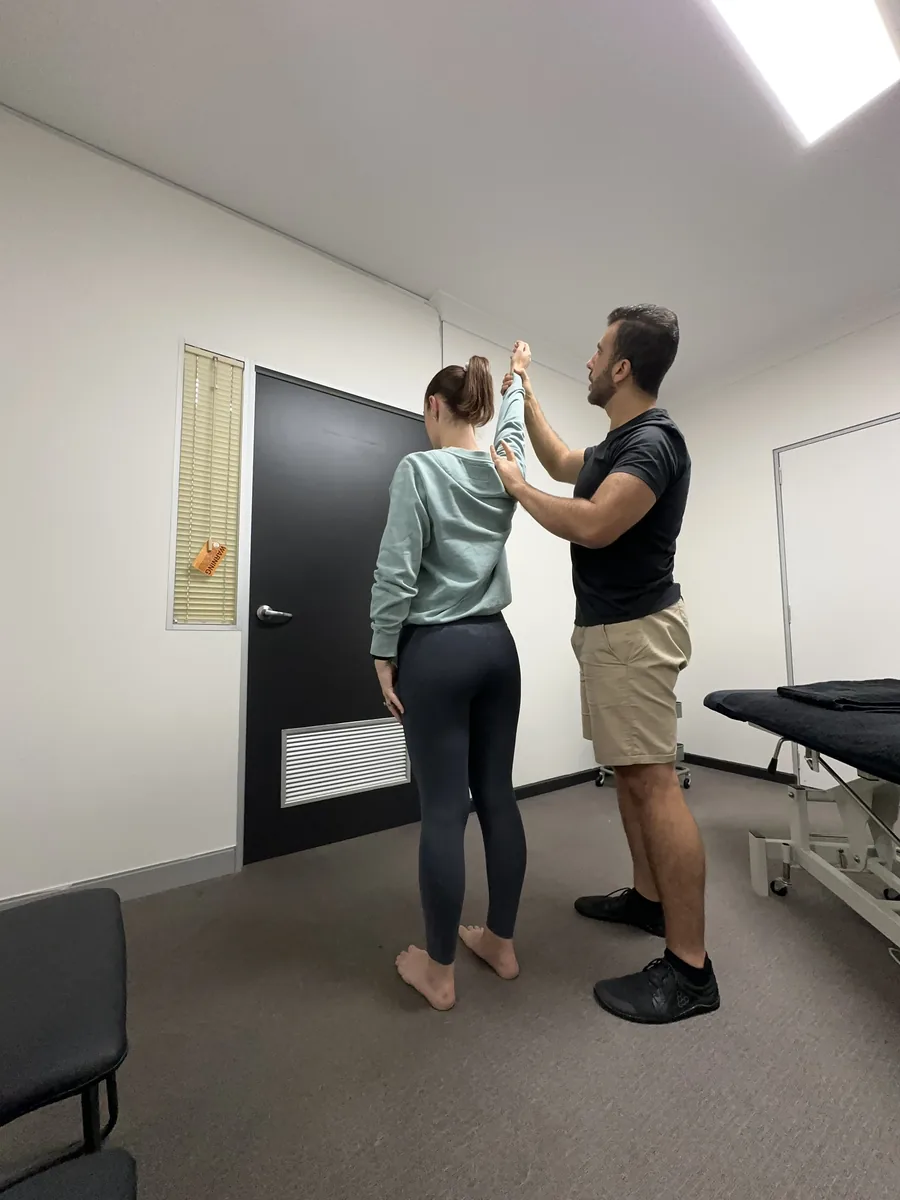
Shoulder pain that's manageable during the day but aches at night, or wakes you every time you roll onto that side, is one of the most common reasons people come in. Poor sleep then makes the pain feel worse. A few changes usually help quickly.
Why does my shoulder hurt when I sleep on my side?
Lying on the shoulder compresses the rotator cuff tendons and the bursa between the ball of the shoulder and the bony arch above it. If those tissues are already irritated, the sustained pressure hurts. Lying on the other side can hurt too, if the sore arm drops forward across your body and pulls on the same structures.
What conditions cause shoulder pain at night?
Rotator cuff tendon irritation and subacromial bursitis are the most common. Frozen shoulder causes marked night pain, with stiffness in every direction. Arthritis of the AC joint on top of the shoulder hurts when you lie on it. Less often, pain is referred from the neck.
See our posts on rotator cuff injuries, shoulder bursitis and frozen shoulder.
Does side sleeping cause shoulder problems?
It's often assumed so, but the evidence is unclear. A cross-sectional study of sleep position and shoulder pain didn't find the expected link; the position predicted to be highest risk was, unexpectedly, associated with less shoulder pain, possibly because people who are prone to pain learn to avoid it (Holdaway et al., BMC Musculoskeletal Disorders, 2018). Sleeping on your side probably doesn't cause the problem, but it can aggravate a shoulder that's already irritated.
What is the best sleeping position for shoulder pain?
On your back, with a small pillow or folded towel under the elbow and forearm of the sore arm so the shoulder isn't hanging backwards. Or on the good side, hugging a pillow so the sore arm rests in front of you, supported, at about chest height.
What if I can only sleep on the sore side?
Try lying a quarter-turn back from fully on your side, with a pillow behind you, so the weight is on the back of the shoulder blade and not on the point of the shoulder. Bring your arm slightly forward so you aren't lying directly on it. A softer mattress topper can reduce pressure.
Does pillow height matter?
Yes. On your side, a pillow that's too low lets your head drop and the lower shoulder take more load; too high pushes the neck the other way. Your head should be level with your spine.
Should I sleep with my arm overhead?
Sleeping with the arm above your head or tucked under the pillow puts the shoulder near the end of its range for hours and tends to aggravate irritated tendons. Keep the arm below shoulder height where you can.
What helps during the day?
Exercise is the best-supported treatment for rotator cuff-related shoulder pain: a meta-analysis found exercise beat non-exercise treatments for pain, with specific exercises doing better than general ones (Steuri et al., British Journal of Sports Medicine, 2017). Reduce heavy or repeated overhead work for a while, and keep the shoulder moving.
What exercises help?
Gentle pendulum swings and supported arm raises in the early, painful stage, then band exercises for the rotator cuff (external and internal rotation), rows, and gradual overhead strengthening.
Does heat, ice or pain relief help at night?
Heat or ice before bed can ease pain, whichever you prefer. Simple pain relief taken before bed may help you sleep; ask your pharmacist or GP what's suitable. If night pain is severe and persistent, your GP may discuss an injection.
Why is the pain worse at night?
Partly position and sustained pressure, partly that there are fewer distractions, and partly that inflammatory processes follow a daily rhythm. Being tired also lowers your tolerance for pain.
How long until I can sleep comfortably?
Changing positions often brings some relief within days. The underlying shoulder problem typically takes six to twelve weeks of consistent rehabilitation to settle, and frozen shoulder takes longer.
How can an osteopath help?
We examine the shoulder, neck and upper back to identify the cause, treat hands-on to ease pain and stiffness, show you sleeping set-ups that suit your shoulder, and build a strengthening program.
When should night shoulder pain be checked?
Book in if it's been disturbing your sleep for more than a couple of weeks. See a doctor promptly for sudden weakness after a fall, a hot, red, swollen shoulder or fever, or constant pain unrelated to position with weight loss or a history of cancer. Call 000 for left shoulder or arm pain with chest pain, breathlessness, sweating or nausea.
See our post on hip pain when sleeping on your side and our shoulder pain guide. Book an assessment at our Berwick clinic. A 60-minute initial consultation is $149, with no referral needed and HICAPS on-site.
Sources
Book an initial consultation at RISE Sports & Spinal in Berwick. Clear diagnosis, hands-on treatment, and a plan that actually gets you better.
Related articles