Trapped nerve in the shoulder: symptoms and what helps
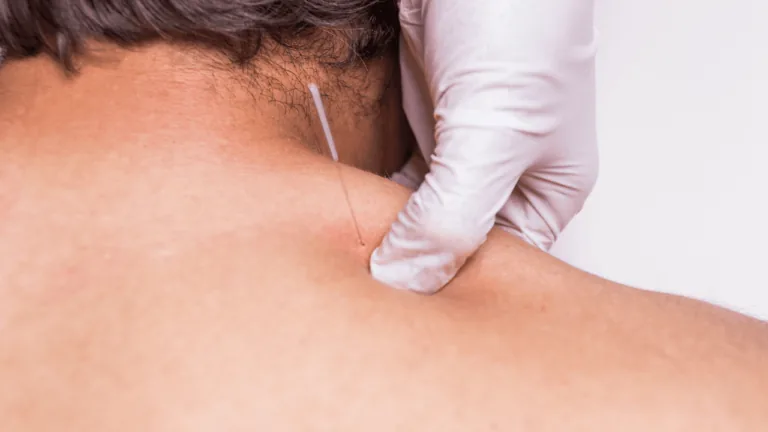
People often describe a deep, burning or sharp pain around the shoulder and shoulder blade, sometimes shooting down the arm, as a trapped nerve in the shoulder. In most cases the nerve isn't trapped in the shoulder at all; it's irritated where it leaves the neck.
What is a trapped nerve in the shoulder?
The nerves that supply the shoulder, shoulder blade and arm exit the spine in the neck. When one of these nerve roots is irritated, by a disc or by narrowing of the opening it passes through, the pain is felt along its path: in the shoulder blade, the shoulder and down the arm. The medical term is cervical radiculopathy.
What are the symptoms?
A deep ache or sharp, burning pain beside or under the shoulder blade and over the top of the shoulder, often with pain running down the arm. There may be pins and needles or numbness in part of the hand, and sometimes weakness. It's usually worse when looking up or turning towards the painful side, and some people get relief resting the hand on top of the head.
How do I know it's a nerve and not my shoulder?
Shoulder joint and tendon problems hurt mainly when you move the arm, especially lifting it or reaching behind your back, and the pain stays around the shoulder and upper arm. Nerve pain is often present at rest, changes with neck position, travels below the elbow, and comes with tingling or numbness. The two can coexist.
Can a nerve be trapped at the shoulder itself?
Occasionally. Nerves can be compressed between the neck and the armpit (thoracic outlet syndrome) or around the shoulder blade, causing aching, tingling or weakness, usually in overhead athletes or after an injury. These are much less common than a problem at the neck.
How long does a trapped nerve take to heal?
Most improve over weeks to a few months. In a population study with long-term follow-up, 90% of people with cervical radiculopathy were symptom-free or only mildly affected at their last review, though about a third had a recurrence at some stage (Radhakrishnan et al., Brain, 1994).
What is the best treatment?
A review of conservative treatments found no single approach was clearly superior, and that people generally improved over time (Thoomes et al., Clinical Journal of Pain, 2013). Treatment aims to settle the irritated nerve: finding comfortable positions, gentle neck and upper back movement, hands-on treatment, and strengthening as it improves.
What should I avoid?
For now, avoid positions that send pain down the arm: prolonged looking up, sleeping with the neck twisted, heavy overhead lifting and carrying heavy bags on that shoulder. For grapplers, avoid being stacked or having the neck cranked.
How should I sleep?
Try lying on your back or the unaffected side, with a pillow that keeps your neck level. Supporting the sore arm on a pillow often eases the pain.
Does heat help?
Heat over the neck and shoulder blade can ease muscle spasm and make it easier to move.
What exercises help?
Early on, gentle movements that don't increase arm symptoms: chin nods, shoulder blade squeezes and comfortable neck rotation. Later, strengthening for the neck, shoulder blades and shoulders. Nerve gliding exercises may be added carefully.
See our post on nerve gliding exercises.
Do I need a scan?
Not usually at first. An MRI is considered when there's significant or worsening weakness, when symptoms aren't improving after several weeks, or when an injection or surgery is being discussed.
Can I keep training?
Lower-body training and walking are fine. Avoid heavy overhead lifting, shrugs and exercises that reproduce the arm pain until it settles.
Can stress or posture cause it?
Stress and long hours in one position don't trap a nerve, but they can increase muscle tension and sensitivity around an already irritated nerve. Regular movement breaks and changing position often help the symptoms settle.
How can an osteopath help?
We test the neck, shoulder and nerves to work out where the problem is, treat hands-on to ease pain and stiffness, give you positions and exercises that calm the nerve, and refer you if there are signs of significant nerve compression.
When is it serious?
See your GP promptly for weakness in the arm or hand that's getting worse, or symptoms in both arms. Seek urgent care for clumsiness in the hands, unsteady walking, changes in bladder or bowel control, or symptoms after a significant fall or accident. Call 000 for arm, shoulder or shoulder blade pain with chest pain, breathlessness, sweating or nausea.
See our posts on pinched nerves in the neck and pain between the shoulder blades, or our neck pain guide. Book an assessment at our Berwick clinic. A 60-minute initial consultation is $149, with no referral needed and HICAPS on-site.
Sources
Book an initial consultation at RISE Sports & Spinal in Berwick. Clear diagnosis, hands-on treatment, and a plan that actually gets you better.
Related articles