BJJ shoulder injuries: kimuras, americanas and shoulder pain
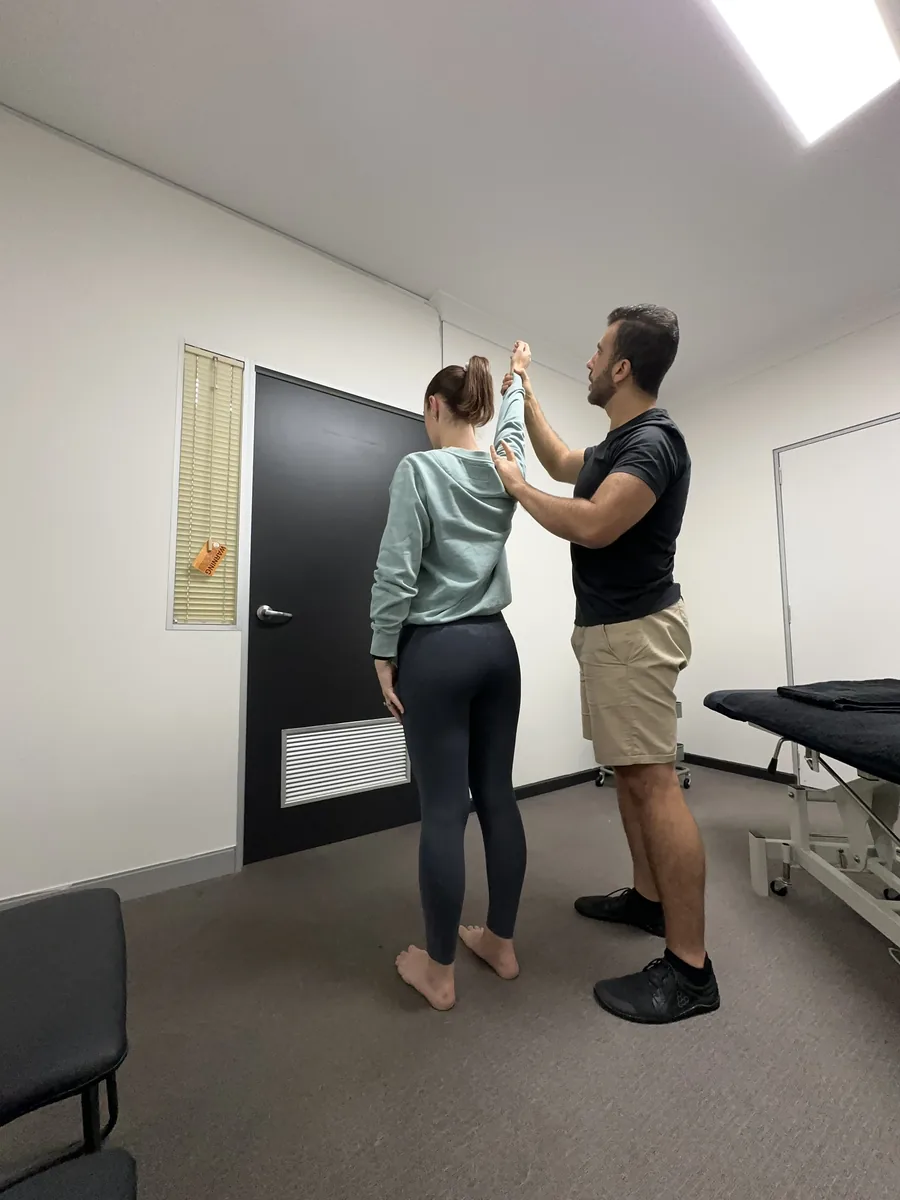
After the knee and the ribs, the shoulder is one of the most commonly injured areas in jiu-jitsu (Santos et al., Revista Brasileira de Ortopedia, 2024). Steven trains BJJ himself and treats a lot of grapplers' shoulders, so here's what's usually going on and how to keep training while it settles.
How do shoulders get injured in BJJ?
Shoulder locks are the obvious one: a kimura or americana cranks the shoulder into rotation, and holding on too long before tapping strains the rotator cuff and joint capsule. But plenty of shoulder pain comes from less dramatic things: posting an arm to stop a sweep, framing hard against pressure, getting your arm trapped while being passed, and repeated heavy grip fighting and pulling.
What are the most common BJJ shoulder injuries?
Rotator cuff strains and irritation are the most common, with an ache at the front or side of the shoulder that's worse reaching overhead or behind your back. AC joint sprains cause pain right on top of the shoulder, often after landing on it. The labrum, the rim of cartilage around the socket, can be injured by a lock or a fall, causing deep pain, clicking or catching. A dislocation, where the ball comes out of the socket, is usually obvious and needs urgent care.
Our posts on rotator cuff injuries and AC joint pain cover those in more detail.
When is a BJJ shoulder injury serious?
Go to an emergency department if your shoulder looks deformed or you can't move your arm after a lock or fall, as it may be dislocated. Get seen promptly for significant weakness lifting your arm, a shoulder that feels like it's slipping in and out, or numbness or pins and needles down your arm. Weakness after an injury can mean a tendon tear that's best assessed early.
Can I keep training BJJ with a sore shoulder?
Usually, with changes. Drill and do positional rounds that keep your injured arm out of locks and heavy posting, favour guards that don't need that arm to frame, tap early to any shoulder pressure, and let your partners know. In the gym, keep training within what's comfortable and build rotator cuff and shoulder blade strength.
What helps a BJJ shoulder injury recover?
For rotator cuff and impingement-type pain, exercise is the best-supported treatment, with specific exercises doing better than general ones (Steuri et al., British Journal of Sports Medicine, 2017). At RISE we pair hands-on treatment to settle pain and restore movement with a progressive strength program, then a staged return to the positions and locks that stress the shoulder, including controlled drilling of kimura and americana defence.
For the other injuries we see from grappling, see our guide to martial arts and BJJ injuries and our shoulder pain guide. Book an assessment at our Berwick clinic. A 60-minute initial consultation is $149, with no referral needed and HICAPS on-site.
Sources
Book an initial consultation at RISE Sports & Spinal in Berwick. Clear diagnosis, hands-on treatment, and a plan that actually gets you better.
Related articles