Shoulder pain when lifting your arm: causes and what helps
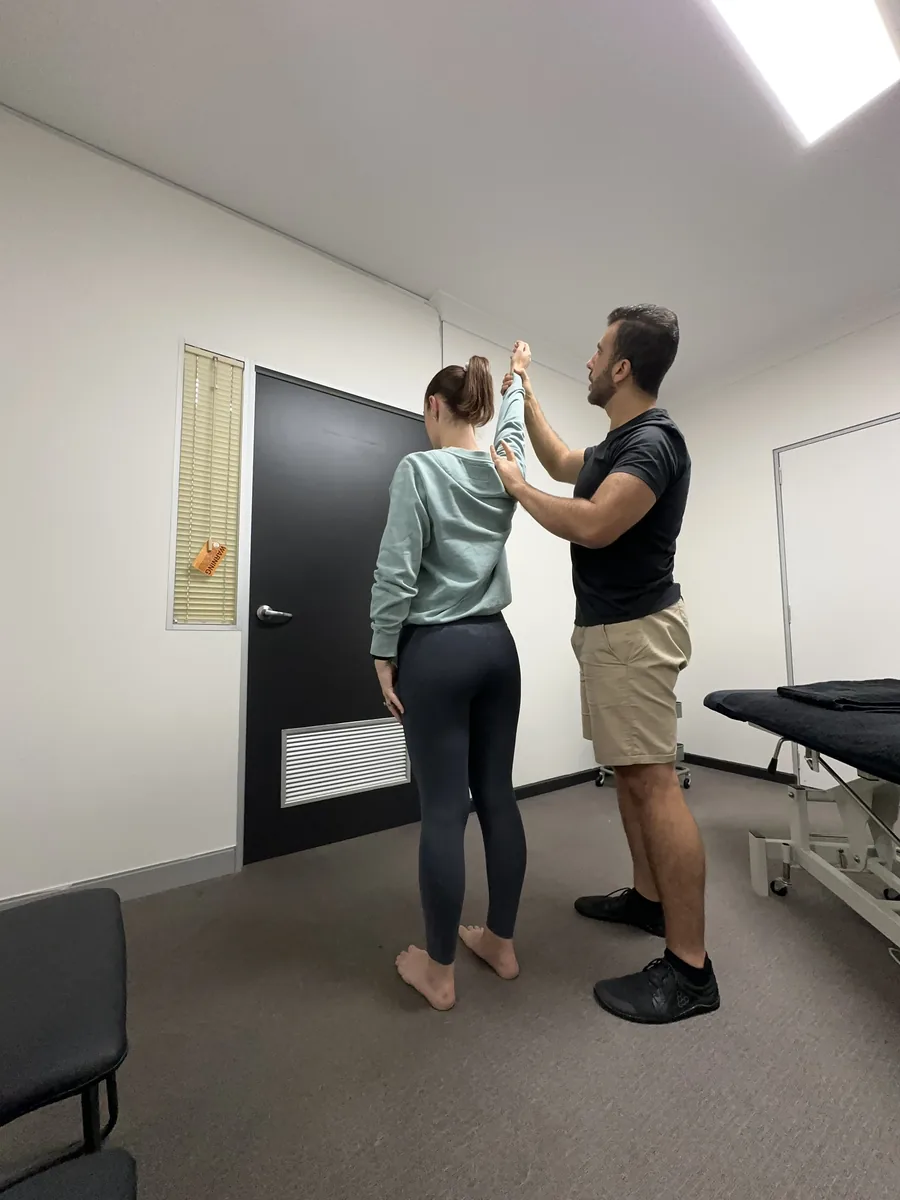
Pain when you lift your arm, reaching to a high shelf, hanging washing or putting on a jacket, is one of the most common shoulder complaints. Most of the time it comes from the rotator cuff tendons and the bursa above them, and it responds well to the right exercise.
Why does my shoulder hurt when I lift my arm?
As the arm rises, the rotator cuff tendons and the bursa above them pass under a bony arch at the top of the shoulder. If the tendons or bursa are irritated, that movement is painful. This is often called subacromial pain or shoulder impingement.
What is a painful arc?
Pain that comes on as the arm passes roughly between shoulder height and overhead when lifting it out to the side, then eases once the arm is fully up, is called a painful arc. It's a typical sign of rotator cuff tendon or bursa irritation.
What if it hurts at the very top?
Pain only at the end of the movement, felt on top of the shoulder, often comes from the AC joint where the collarbone meets the shoulder blade.
See our post on AC joint pain.
What if I can't lift it at all?
Marked weakness lifting the arm, especially after a fall or sudden effort, can mean a significant rotator cuff tear and should be assessed promptly. If the shoulder is stiff in every direction, including when someone else tries to move it, frozen shoulder is more likely.
See our post on frozen shoulder.
Will a scan show what's wrong?
Scans often show changes in shoulders that don't hurt. An ultrasound study of men aged 40 to 70 with no shoulder symptoms found abnormalities in 96%, including bursal thickening in 78% and partial tendon tears in 22% (Girish et al., American Journal of Roentgenology, 2011). That's why examination findings matter more than the report.
What is the best treatment?
Exercise. A meta-analysis of treatments for shoulder impingement found exercise beat non-exercise treatments for pain, and specific shoulder exercises were more effective than general exercise (Steuri et al., British Journal of Sports Medicine, 2017). Hands-on treatment can help ease pain and stiffness alongside.
What exercises help?
Early: arm raises with the elbow bent and thumb up, below the painful range; wall slides; external and internal rotation with a band at your side; rows. Then raise the arm progressively higher with light weights, and add overhead pressing and carrying as tolerated. Mild discomfort during exercise is acceptable if it settles within a day.
Should I rest my arm?
Avoid the movements that cause sharp pain for a while, particularly repeated or heavy overhead work, but keep the shoulder moving. Complete rest or a sling leads to stiffness.
How should I lift things in the meantime?
Keep loads close to your body and below shoulder height. Use a step stool rather than reaching up. Turn your palm up when reaching forward, which often gives the tendons more room.
Does posture matter?
A stiff upper back can make it harder to get the arm fully overhead. Upper back mobility and shoulder blade strengthening often make lifting the arm more comfortable.
Will I need an injection or surgery?
Most people improve with exercise. A corticosteroid injection may help in the short term if pain is stopping you from exercising. Surgery to shave the bony arch is rarely needed; a major trial found it was no better than a sham procedure.
See our post on shoulder bursitis.
How long does it take to improve?
Many people notice less pain within a few weeks of starting exercises. Full recovery, especially for overhead work and sport, often takes two to three months.
Can I keep going to the gym?
Usually. Keep training the lower body and the upper-body movements that don't hurt, such as rows and pressing below shoulder height. Reintroduce overhead work gradually as the shoulder improves.
See our post on shoulder pain from overhead pressing.
Could the pain be coming from my neck?
Pain at the top of the shoulder or down the arm that changes with neck movement, or comes with tingling or numbness, may be coming from the neck. An examination can sort this out.
How can an osteopath help?
We examine the shoulder, neck and upper back, identify the likely source, treat hands-on, and build a progressive strengthening plan for your work or sport.
When should it be checked?
Book in if pain isn't improving after a few weeks or is waking you at night. See a doctor promptly for sudden weakness after a fall, a hot swollen shoulder or fever. Call 000 for shoulder or arm pain with chest pain, breathlessness or sweating.
See our posts on rotator cuff injuries and shoulder pain at night, or our shoulder pain guide. Book an assessment at our Berwick clinic. A 60-minute initial consultation is $149, with no referral needed and HICAPS on-site.
Sources
Book an initial consultation at RISE Sports & Spinal in Berwick. Clear diagnosis, hands-on treatment, and a plan that actually gets you better.
Related articles