Muscle knots: what they actually are and what helps
Almost everyone has felt a muscle knot: a tender, tight spot in the neck, across the top of the shoulders, beside the shoulder blade or in the lower back that aches when you press it. They're one of the most common things people come in about, so it's worth knowing what's actually going on.
What is a muscle knot?
The popular explanation is that a knot is a small, contracted patch of muscle, often called a trigger point, that refers pain elsewhere. The honest answer is that the research doesn't fully support that picture. A systematic review found that clinicians can't reliably agree on where trigger points are through physical examination (Lucas et al., Clinical Journal of Pain, 2009), and a critical review in Rheumatology argued that the theory that trigger points cause pain doesn't stand up, while agreeing that the tender spots and the pain people feel are real and need a better explanation (Quintner et al., Rheumatology, 2015).
A more useful way to think about it: tender, tight areas are sensitive muscle and nerve tissue, often a sign that an area is overloaded, under-recovered, or guarding something else that's irritated nearby.
What causes muscle knots?
Common triggers are sustained positions such as long hours at a desk or driving, sudden increases in training, repetitive work, poor sleep, and stress. Knots often appear around a joint or area that's stiff or irritated, which is why treating only the knot rarely solves the problem for long.
What helps muscle knots?
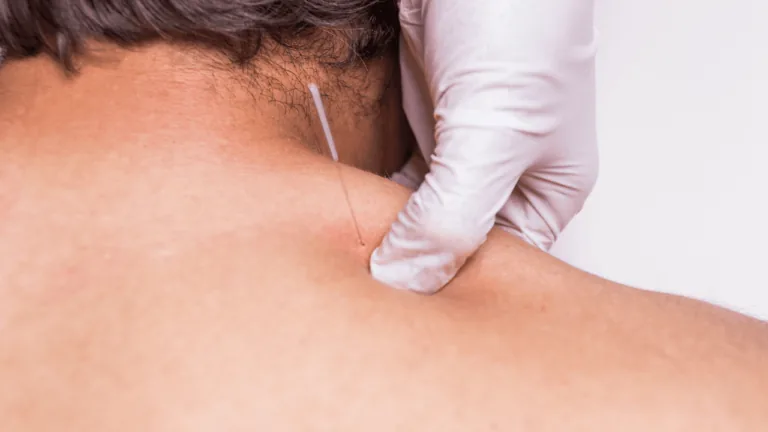
Short-term relief often comes from pressure (a massage ball or your own hands), heat, and gentle movement. Dry needling has evidence for short-term pain relief: a meta-analysis found it reduced pain compared with no treatment or sham needling over up to 12 weeks, though the quality of evidence ranged from very low to moderate and long-term benefits weren't shown (Gattie et al., JOSPT, 2017).
That's why at RISE we use hands-on treatment and dry needling as part of a plan rather than on their own. We look for what's overloading the area, whether that's your desk set-up, training load, a stiff joint or a pinched nerve, and pair treatment with strength work so the same knot doesn't keep coming back.
When should a muscle knot be checked?
See someone if the pain isn't settling over a couple of weeks, keeps returning, spreads down your arm or leg with pins and needles or numbness, or comes with weakness. See a doctor promptly for a hard lump that doesn't go away or is growing, or pain with fever or feeling unwell.
If your knot is between your shoulder blades, see our post on pain between the shoulder blades. Book an assessment at our Berwick clinic. A 60-minute initial consultation is $149, with no referral needed and HICAPS on-site.
Sources
Quintner JL, et al. A critical evaluation of the trigger point phenomenon. Rheumatology, 2015.
Book an initial consultation at RISE Sports & Spinal in Berwick. Clear diagnosis, hands-on treatment, and a plan that actually gets you better.
Related articles