Hip and pelvic pain after birth: what's normal and what helps
Many women expect some aches after birth, but hip and pelvic pain can linger longer than expected, making it hard to walk, lift the baby, roll over in bed or get back to exercise. It's common, and it usually improves with the right approach.
How common is pelvic and hip pain after birth?
A systematic review estimated that about 25% of women have pelvic girdle pain or low back pain after pregnancy, and that problems are serious in about 7% (Wu et al., European Spine Journal, 2004). For most, pain is less after birth than during pregnancy and continues to improve.
Why does my hip or pelvis hurt after birth?
Pregnancy changes the ligaments, muscles and joints of the pelvis, and labour and birth add further strain. Afterwards, lifting, carrying and feeding a baby load the hips, back and pelvis in new ways, often while you're short of sleep and haven't been able to exercise. Pelvic girdle pain that started in pregnancy can continue.
See our post on pelvic girdle pain in pregnancy.
Where is the pain usually felt?
At the back of the pelvis near the sacroiliac joints, at the pubic bone at the front, in the groin or buttocks, or on the outside of the hip. Pain at the outer hip with lying on your side can be the gluteal tendons, which often become irritated in the months after birth.
See our posts on sacroiliac joint pain and hip pain when side-sleeping.
What helps in the early weeks?
Rest when you can, and change positions often. Keep your knees together when rolling over and getting out of bed or the car. Sit to dress. Use pillows to support your baby when feeding rather than holding the weight with your arms and back. A support belt may help some women with pelvic pain for short periods.
How should I lift and carry my baby?
Bring your baby close before lifting, bend your knees, and avoid twisting. Alternate which hip you carry on, or use a well-fitted carrier that spreads the load. Raise the change table and bassinet to a comfortable height if you can.
When can I start exercising?
Gentle walking and pelvic floor exercises can usually begin within days, as comfort allows. Build walking gradually. The European guidelines for pelvic girdle pain recommend individualised exercise as part of treatment (Vleeming et al., European Spine Journal, 2008). Return to running and heavy lifting is more gradual, ideally after a pelvic floor check with a women's health physiotherapist.
See our post on women's health and the pelvic floor.
What exercises help?
Pelvic floor and deep abdominal exercises, bridges, side-lying leg raises, sit-to-stands and walking, progressing gradually. If pubic pain is the main problem, avoid wide-legged positions and single-leg exercises until it settles.
Is it normal for pain to last months?
Most women improve steadily over the first few months. Pain that isn't improving by three months, or is getting worse, should be assessed. Persistent pelvic pain is common enough that you shouldn't feel you just have to put up with it.
Could it be something else?
Pain in the groin with a limp after birth can occasionally be a stress fracture or, rarely, a pelvic joint separation that needs medical care. Hip pain after a caesarean may relate to the abdominal wound and altered movement.
Is treatment safe while breastfeeding?
Yes. Hands-on treatment and exercise are safe. Discuss any medication with your GP or pharmacist.
Does how I gave birth make a difference?
It can. A long or assisted vaginal birth may strain the pelvic floor and pubic area more, while recovery after a caesarean involves healing of the abdominal wall. Either way, the principles are similar: rest when needed, change position often, and build activity gradually.
Will it come back in my next pregnancy?
Women who had pelvic girdle pain in one pregnancy are more likely to have it again. Starting strength work before the next pregnancy, and seeking help early if symptoms return, can make it more manageable.
Can breastfeeding affect joint pain?
Hormonal changes during breastfeeding may contribute to joint and ligament sensitivity for some women. Pain usually continues to improve as strength returns, and doesn't mean you need to stop breastfeeding.
How can an osteopath help?
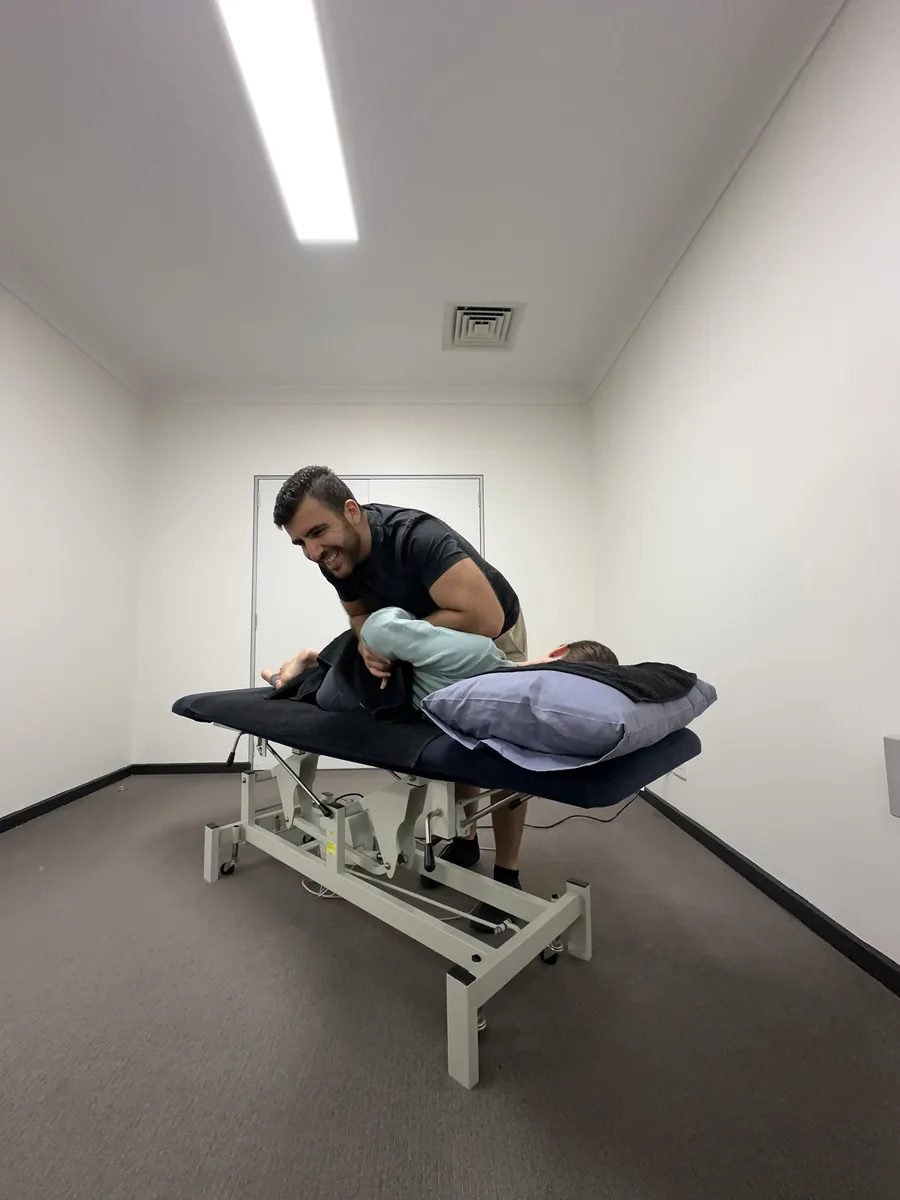
We assess the pelvis, hips and lower back, use gentle hands-on treatment, and build a graded exercise plan that fits around caring for a baby. We work with your GP, midwife and women's health physiotherapist.
When should I see a doctor?
See a doctor promptly for fever, a hot or swollen wound, severe or worsening pain, pain with difficulty walking or weight-bearing, or new bladder or bowel control problems. Seek same-day care for calf pain and swelling, chest pain or shortness of breath.
See our posts on post-natal back pain and thumb and wrist pain in new parents, or our pregnancy osteopathy page. Book an assessment at our Berwick clinic. A 60-minute initial consultation is $149, with no referral needed and HICAPS on-site.
Sources
Book an initial consultation at RISE Sports & Spinal in Berwick. Clear diagnosis, hands-on treatment, and a plan that actually gets you better.
Related articles