Hip pain when sitting: causes and what helps
Hip pain that builds the longer you sit, or that grabs as you stand up from a chair or car, is common in desk workers, drivers and people with hip or back problems. Where you feel it, front, side or back, points to different causes.
Why does my hip hurt when I sit?
Sitting holds the hip bent for long periods. That compresses the front of the joint, shortens the hip flexors, puts pressure on the buttock and sit bones, and loads the lower back. Any of these can be sensitive.
What does pain at the front of the hip or groin mean?
Pain in the groin or front of the hip with sitting, especially in low chairs or with the knees higher than the hips, often comes from the hip joint itself. In younger, active adults this may be related to hip shape and the labrum; an international consensus defines femoroacetabular impingement syndrome as a combination of symptoms, clinical signs and imaging findings (Griffin et al., British Journal of Sports Medicine, 2016). In older adults, hip osteoarthritis is more common.
See our posts on hip impingement and hip osteoarthritis.
What does pain on the outside of the hip mean?
Pain over the bony point at the side, worse sitting with your legs crossed or knees together, and when lying on that side, usually comes from the gluteal tendons.
See our post on gluteal tendinopathy.
What does pain at the back of the hip mean?
Pain in the buttock or at the sit bone when sitting is covered in our separate guide; common causes are the hamstring tendon, the deep buttock muscles, the sacroiliac joint and the lower back.
See our post on buttock pain when sitting.
Could it be my back?
Yes. The lower back can refer pain to the hip, groin and buttock. A study comparing hip and spine problems found a limp, groin pain and limited inward rotation of the hip were the best predictors that the hip joint was the main source (Brown et al., Clinical Orthopaedics and Related Research, 2004).
See our post on telling hip pain from back pain.
Why does my hip hurt when I stand up after sitting?
Stiffness and pain for the first few steps after sitting is typical of hip osteoarthritis and of irritated tendons, which stiffen when still. It usually eases after a minute of walking.
How should I sit with hip pain?
Raise the seat so your hips are level with or slightly higher than your knees; a cushion or wedge helps. Avoid low, deep sofas and bucket seats. Sit with your knees slightly apart rather than crossed or pressed together. Change position every 20 to 30 minutes.
What about driving?
Raise the seat height if you can, tilt the base so your hips aren't sharply bent, and stop for a short walk every hour on long trips. Swinging both legs in and out together makes getting into the car easier.
What exercises help?
Gentle hip mobility (knee rocks, hip circles, gentle hip flexor stretches), bridges, side-lying leg raises, sit-to-stands from a raised chair, and walking. For tendon pain on the outside of the hip, avoid stretches that cross the leg over the body.
Does a standing desk help?
Alternating between sitting and standing reduces the time the hip is held bent. It's useful, especially combined with short walks.
Is sitting cross-legged or on the floor a problem?
Deep hip bending and crossing the legs often aggravate both hip joint pain and gluteal tendon pain. A higher, firmer seat is usually more comfortable while symptoms settle.
Does losing weight help hip pain?
For people above a healthy weight with hip arthritis or tendon pain, reducing weight lowers the load on the hip with every step, and combined with exercise can ease pain.
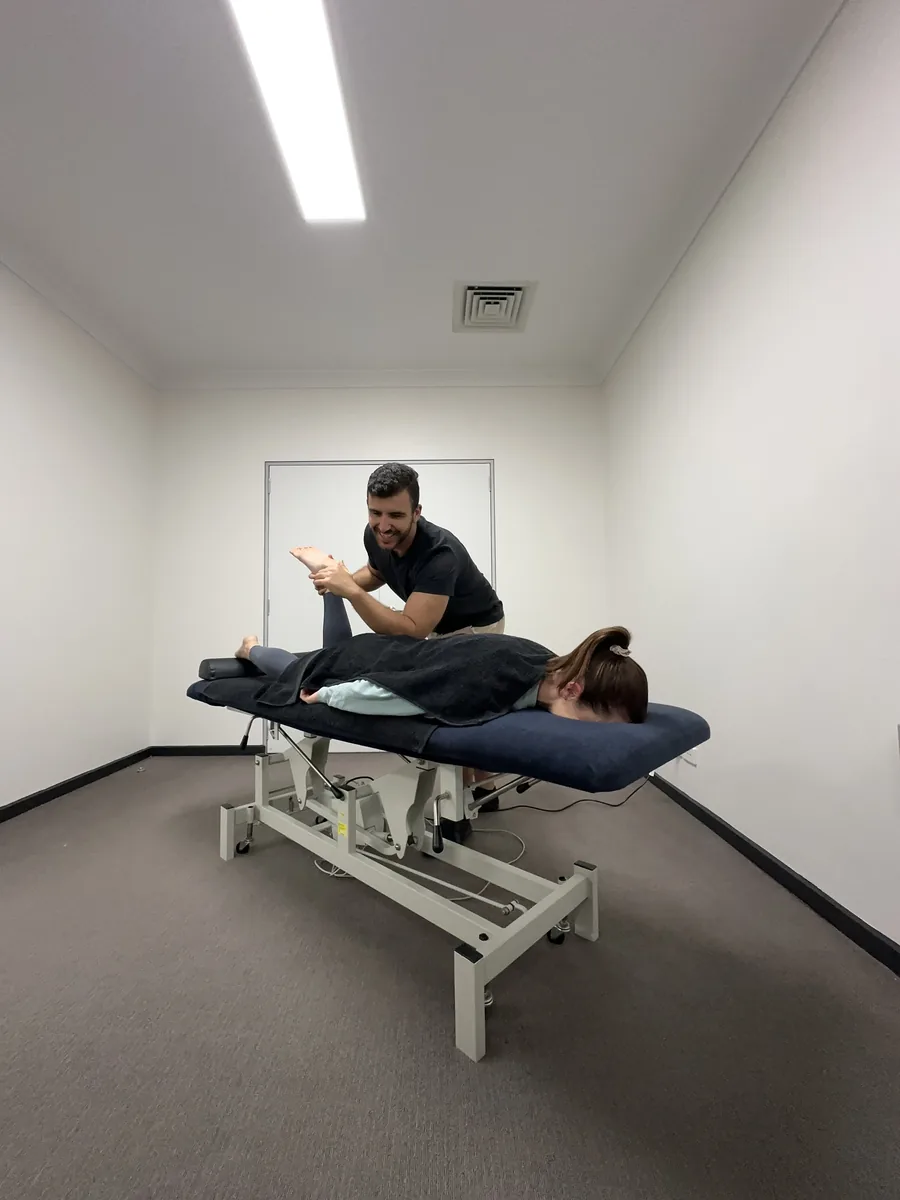
How can an osteopath help?
We work out whether the pain is coming from the hip joint, tendons, muscles or back, treat hands-on, and give you a set of exercises and sitting strategies that suit the cause.
When should hip pain be checked?
Book in if hip pain when sitting isn't improving after a few weeks or is affecting work and sleep. See a doctor promptly for hip pain after a fall, especially if you can't bear weight, hip pain with fever, groin pain with a limp in a child or teenager, or constant pain at night. Go to an emergency department straight away for new difficulty controlling your bladder or bowels, numbness around the groin or inner thighs, or weakness or numbness in both legs. See your GP promptly if weakness in your leg or foot is getting worse.
See our hip and pelvic pain guide. Book an assessment at our Berwick clinic. A 60-minute initial consultation is $149, with no referral needed and HICAPS on-site.
Sources
Book an initial consultation at RISE Sports & Spinal in Berwick. Clear diagnosis, hands-on treatment, and a plan that actually gets you better.
Related articles