
Sciatica
Beaconsfield.
Evidence-based sciatica care for Beaconsfield, about 5 minutes away in Berwick.
Beaconsfield is five minutes down the Princes Highway, and its club sporting culture shapes the sciatica we see from the area. A good share of it is hamstring-adjacent: footballers and runners who have been told they have a recurring hamstring problem that never quite resolves, when what they actually have is nerve irritation referring into the back of the thigh.
Last updated: October 2026
Beaconsfield is five minutes down the Princes Highway, and its club sporting culture shapes the sciatica we see from the area. A good share of it is hamstring-adjacent: footballers and runners who have been told they have a recurring hamstring problem that never quite resolves, when what they actually have is nerve irritation referring into the back of the thigh. The two feel similar and get confused constantly — but a hamstring rehab program applied to a sciatic nerve will not work, and that mismatch is the reason a lot of these have been dragging on for a season or more.
For a full explanation of what causes sciatica, how the different presentations are told apart, and what recovery usually looks like, read our complete guide to sciatica.
Every appointment is at our Berwick clinic. For the clinic itself and what to expect when you arrive, see sciatica treatment in Berwick.
Common causes
Nerve irritation mistaken for hamstring injury
Lumbar disc herniation
Read more →Piriformis compression
Read more →Lumbar facet joint compression
Spinal stenosis
How we treat it
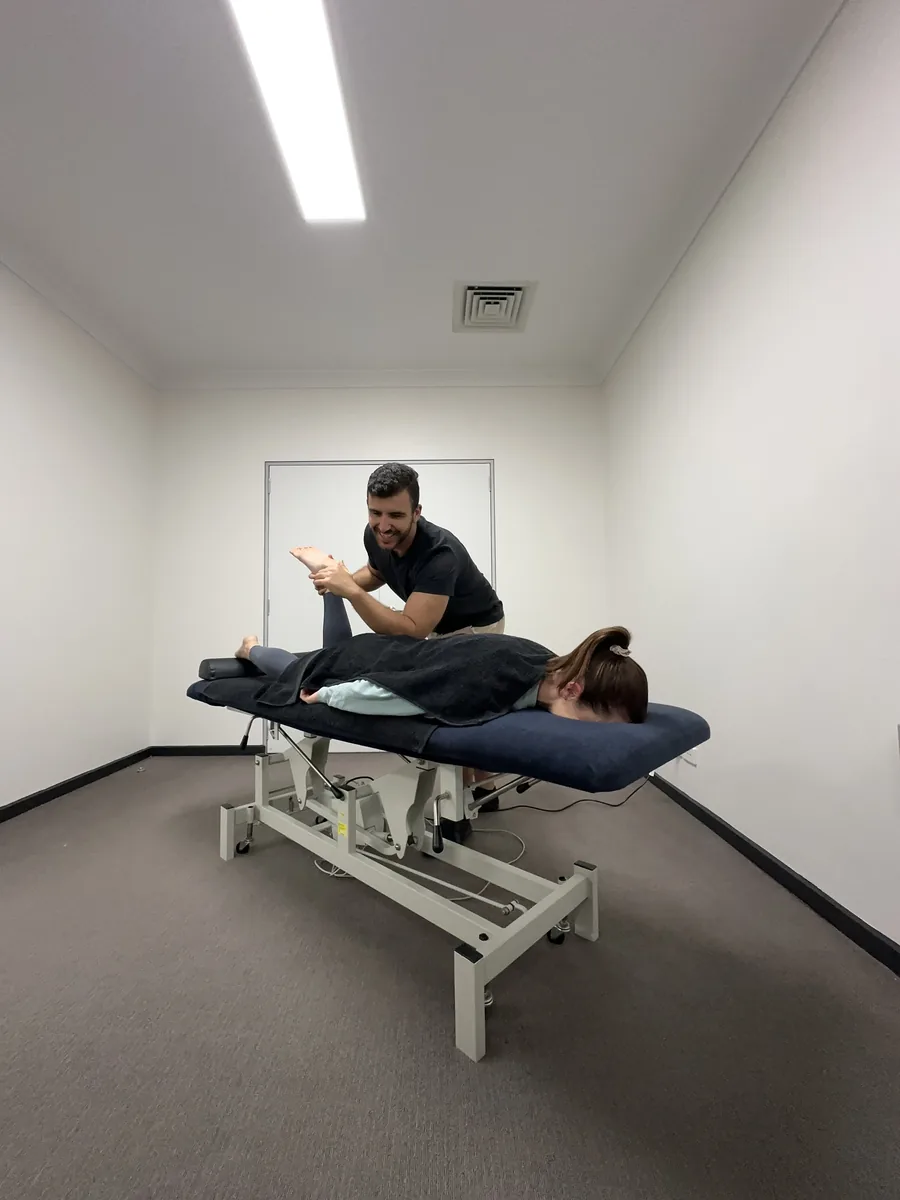
Assessment covers lumbar mobility, neurological signs, and the likely compression point — and for athletes it deliberately includes the tests that separate genuine hamstring injury from nerve referral, because getting that wrong wastes a season. Treatment combines joint mobilisation to reduce compressive load, soft tissue release through the piriformis and deep hip rotators, neural mobilisation to desensitise the nerve, and progressive loading to rebuild tolerance. Return to sport is graded rather than cleared in one go: the nerve needs to tolerate speed and length under load before you sprint on it, and skipping that step is the usual reason it recurs at the first hard session back. Most acute episodes respond well within 4–6 sessions, and being five minutes away means we can reassess weekly through a return to play.
Same-week appointments available. Initial consult 60 min · $149 · HICAPS on-site.
FAQ: sciatica beaconsfield
Sciatica treatment in other suburbs
Also treating
Areas we serve
Seen enough?
Let's fix it.
Book an initial assessment in Berwick. Same-week availability most weeks.