Back of thigh pain: hamstring, sciatic nerve or referred?
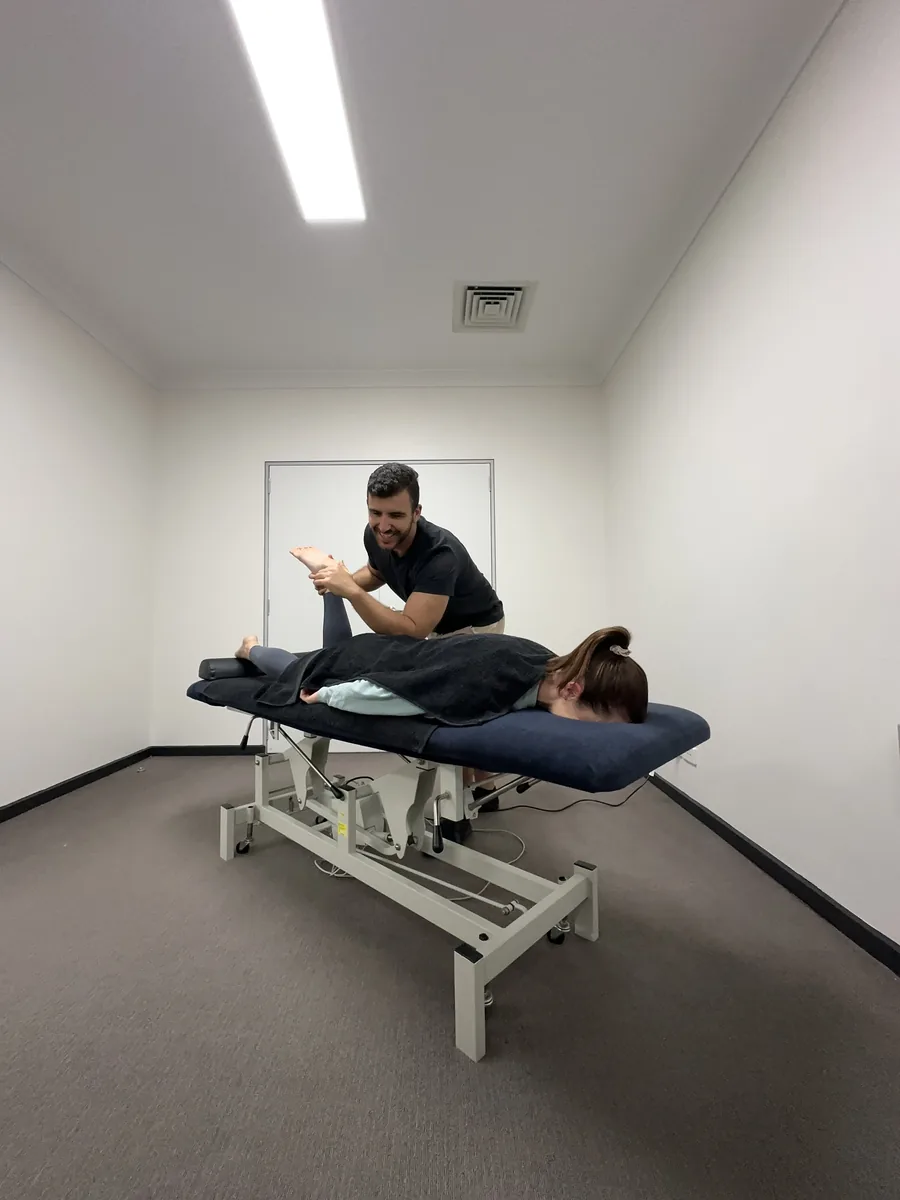
Pain at the back of the thigh can come from the hamstring muscles, the hamstring tendon at the sit bone, the sciatic nerve, or the lower back. They feel similar, but they're treated differently, so it's worth working out which one you have.
What causes pain at the back of the thigh?
The main causes are a hamstring strain, proximal hamstring tendinopathy (tendon pain at the sit bone), sciatica (an irritated nerve root in the lower back), and pain referred from the lower back or buttock without nerve involvement. Less common causes include a blood clot and, in older people, problems with blood flow.
Hamstring strain
A hamstring strain usually happens suddenly during sprinting, kicking or a fast stretch, with a sharp pain or pull in the back of the thigh. There may be bruising a few days later, and walking fast, bending forward and stretching hurt. It's common in football, sprinting and dance.
See our post on hamstring strain recovery.
Pain at the sit bone
A deep ache at the sit bone, worse sitting on hard chairs, driving, running uphill and lunging, is typical of proximal hamstring tendinopathy. It builds gradually rather than starting with a sudden injury. A clinical review describes it as a load-related tendon problem managed mainly with progressive loading, while avoiding compressive positions early on (Goom et al., JOSPT, 2016).
See our post on sit bone pain.
Sciatica
Sciatica is pain from an irritated nerve root in the lower back, travelling down the back of the leg, often below the knee and into the foot. It may come with pins and needles, numbness or weakness. Leg pain is often worse than back pain. A BMJ review notes most people with sciatica improve over time, and first-line care is staying active with advice and exercise (Jensen et al., BMJ, 2019).
See our post on how long sciatica lasts.
Referred pain from the back
Joints and discs in the lower back can refer an ache into the buttock and back of the thigh without a nerve being irritated. This usually stays above the knee, has no pins and needles, and changes with back movement.
See our post on referred pain from the lower back.
How can I tell them apart?
A sudden onset during sprinting points to a strain. A gradual ache at the sit bone worse sitting points to the tendon. Pain below the knee, pins and needles or numbness point to the nerve. Pain that changes with bending or arching the back points to the back. A slump test, where you sit slumped and straighten the knee, often reproduces nerve-related pain.
Is it tight hamstrings?
Feeling tight at the back of the thigh is common and isn't always a muscle problem. An irritated nerve can make the hamstrings feel tight, and stretching hard can aggravate both nerve and tendon pain.
See our post on tight hamstrings and back pain.
What helps?
For a strain: early gentle movement, then progressive strengthening and running. For the tendon: avoid deep stretches and long sitting on hard surfaces, and use bridges, isometrics and progressive loading. For sciatica: keep active, walk, avoid prolonged sitting, and use nerve-friendly movements. For referred back pain: back movement and strengthening.
How long does it take to settle?
Mild hamstring strains often take two to four weeks; more significant ones six weeks or more. Tendon pain at the sit bone commonly takes three to six months. Sciatica often improves substantially within six to twelve weeks.
When is it serious?
Seek same-day care for calf or thigh swelling, warmth and redness, which can be a clot. Go to an emergency department for numbness in the groin or buttocks, new bladder or bowel problems, or rapidly worsening leg weakness. A sudden pop at the sit bone with large bruising and weakness needs prompt assessment for a tendon tear.
Can sitting cause pain at the back of the thigh?
Yes. Sitting compresses the hamstring tendon at the sit bone and can irritate a sensitive sciatic nerve. If sitting is the main trigger, use a cushion, take frequent breaks, and avoid crossing the legs.
See our post on buttock pain when sitting.
Can I keep running or training?
Usually, with changes. For a strain, start with easy jogging once walking is pain-free and build speed gradually. For tendon pain, avoid hills and sprinting for a while. For sciatica, walking is usually better than running at first.
Do I need a scan?
Usually not. Imaging is considered for a suspected tendon tear at the sit bone, for sciatica that isn't improving after six to twelve weeks or with worsening weakness, or when red flags are present.
How can an osteopath help?
We assess the back, hip and hamstrings to work out the source, treat hands-on, and give you a targeted plan, whether that's tendon loading, nerve-friendly movement or strength work.
See our sciatica treatment in Berwick page. Book an assessment at our Berwick clinic. A 60-minute initial consultation is $149, with no referral needed and HICAPS on-site.
Sources
Jensen RK, et al. Diagnosis and treatment of sciatica. BMJ, 2019.
Book an initial consultation at RISE Sports & Spinal in Berwick. Clear diagnosis, hands-on treatment, and a plan that actually gets you better.
Related articles