Tight calves: why they happen and what to do
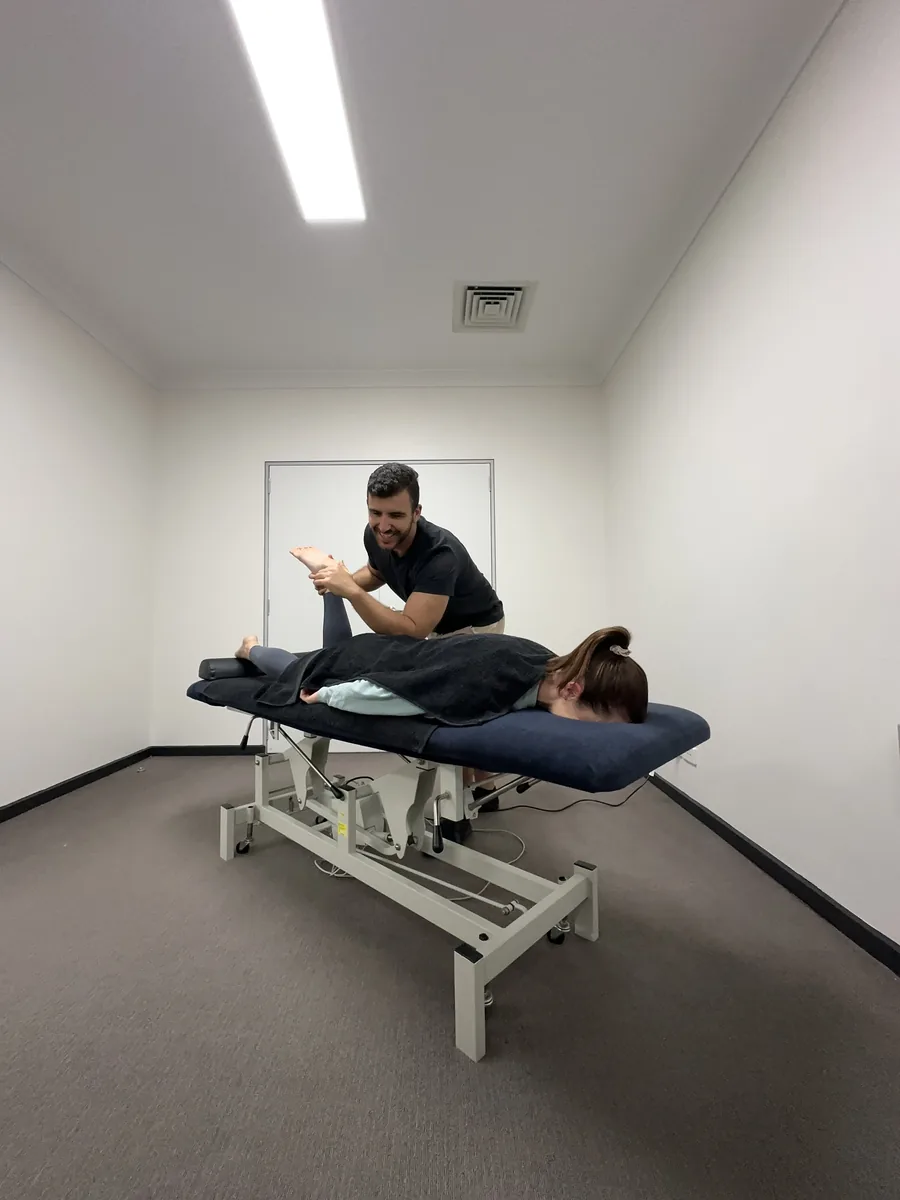
Tight calves are one of the most common complaints in runners, walkers and people on their feet all day. They're usually a sign the calves are working near their limit, and they respond well to the right mix of loading and recovery.
When is calf tightness or pain an emergency?
Seek same-day medical care for a calf that is swollen, warm, red or tender, particularly in one leg and after a long flight or car trip, surgery or a period of immobility. These can be signs of a deep vein thrombosis. Call 000 if it comes with chest pain or shortness of breath.
Why are my calves always tight?
The calf muscles absorb and produce very high forces with every step. They commonly feel tight after an increase in running or walking, hill work, a change to flatter shoes, long days standing, or training hard without enough recovery. Calves that aren't strong enough for what you're asking of them tend to feel tight. A sensitive nerve from the lower back can also make the calf feel tight.
Does stretching fix tight calves?
It helps a little. A systematic review found calf stretching produced a small, statistically significant increase in ankle range of two to three degrees, and the authors noted it was unclear whether a change of that size is clinically important (Radford et al., British Journal of Sports Medicine, 2006). Stretching can feel good and ease stiffness, but it rarely solves recurring tightness alone.
Is strengthening better than stretching?
For most people, yes. Stronger calves cope better with load and feel less tight. Strength training through a full range also improves flexibility: a meta-analysis found no significant difference between strength training and stretching for improving range of motion (Afonso et al., Healthcare, 2021). Calf raises taken through the full range, lowering the heel below the step, do both jobs.
What are the best calf exercises?
Straight-knee calf raises off a step, for the larger gastrocnemius muscle, and bent-knee calf raises, seated or in a slight squat, for the deeper soleus, which does much of the work in running. Build to three sets of 12 to 15 slow single-leg raises, then add weight. Skipping and hopping can be added later for runners.
How do I stretch my calves?
Stand facing a wall with one leg back, heel down and knee straight, and lean forward until you feel a pull in the upper calf. Then bend the back knee slightly, keeping the heel down, to move the stretch lower. Hold each for 30 seconds, two or three times.
Does foam rolling or massage help?
Both can ease the feeling of tightness for a while and make the calves feel better before or after activity. The effect is short-lived, so use them alongside strengthening.
See our post on foam rollers and massage guns.
Why are my calves tight when I run?
Running loads the calves at several times body weight. Tightness often shows up with a jump in distance or speed, more hills, a move to lower-drop or minimalist shoes, or a change to landing more on the forefoot. Introduce any of these gradually.
Why are my calves tight in the morning or at night?
Morning stiffness in the calves and Achilles that eases after a few minutes is common after a hard day, and can be an early sign of Achilles tendon irritation. Night cramps are a different problem.
See our posts on Achilles tendinopathy and muscle cramps.
Could tight calves cause other problems?
Limited ankle movement and calf capacity are associated with problems such as Achilles pain, plantar heel pain and shin pain, and can affect squat depth. Improving calf strength and ankle mobility is part of managing all of these.
Is it tightness or a strain?
A strain usually comes on suddenly, with a sharp pain or the feeling of being hit in the calf, followed by soreness when you rise onto your toes and sometimes bruising. General tightness builds gradually and affects both legs more often.
See our post on calf strains.
What about calf pain when walking that eases with rest?
Cramping calf pain that comes on after walking a set distance and eases within minutes of stopping can be a sign of reduced blood flow to the legs, particularly in people over 50, smokers and those with diabetes. See your GP.
How can an osteopath help?
We assess calf strength, ankle and foot movement and your training, treat hands-on to ease tension, and build a calf-loading program. We'll check the lower back and nerves if the tightness doesn't behave like a muscle problem.
When should tight calves be checked?
Book in if tightness keeps returning, limits your running or walking, or comes with pain in the Achilles, heel or shin.
See our training hub and our muscular strains page. Book an assessment at our Berwick clinic. A 60-minute initial consultation is $149, with no referral needed and HICAPS on-site.
Sources
Book an initial consultation at RISE Sports & Spinal in Berwick. Clear diagnosis, hands-on treatment, and a plan that actually gets you better.
Related articles