Strength and conditioning for BJJ: what grapplers need
Technique wins in jiu-jitsu, but a stronger, fitter body lets you use that technique for longer and makes you harder to injure. Steven trains BJJ and lifts, and sees plenty of grapplers who either don't lift at all or lift so much they're too sore to roll. Here's a middle path.
Does strength matter in BJJ?
Yes. A systematic review of 58 studies on BJJ athletes concluded that maximal, isometric and endurance strength can be associated with sporting success, and that decisive actions in matches depend mainly on muscular power. Aerobic fitness was moderate and didn't distinguish between competitive levels (Andreato et al., Sports Medicine - Open, 2017).
Does strength training reduce BJJ injuries?
There's no trial in BJJ specifically, but across sports strength training is one of the most effective injury-prevention strategies, reducing injuries to less than a third in a meta-analysis (Lauersen et al., British Journal of Sports Medicine, 2014). Most BJJ injuries happen during sparring, and the knees and shoulders are the most affected areas (Stegerhoek et al., BMJ Open Sport & Exercise Medicine, 2025), so those are sensible areas to strengthen.
How often should grapplers lift?
Two sessions a week suits most people training BJJ three or four times a week. One session maintains strength in a heavy mat week or before competition. More than three usually cuts into recovery unless you reduce mat time.
What exercises carry over to jiu-jitsu?
Build around big movements: a squat or split squat, a hinge such as a deadlift or hip thrust, a horizontal and vertical pull (rows and pull-ups), a push (push-ups or presses), and loaded carries. Pulling strength and hip strength are especially useful for grappling. Keep sessions to five or six exercises.
How heavy and how many reps?
For strength, three or four sets of 3 to 6 reps on the main lifts, leaving a rep or two in reserve. For supporting exercises, 8 to 12 reps. Avoid training to failure regularly, as the fatigue carries onto the mats.
Should I train grip?
Rolling already trains grip hard, especially in the gi. Extra grip work is often unnecessary and can aggravate fingers and elbows. If you add any, dead hangs, towel or gi pull-ups and carries are enough, once or twice a week.
See our posts on BJJ finger injuries and elbow pain from lifting.
Should I train my neck?
A stronger neck helps you tolerate stacking, front headlocks and posture battles. Start with gentle isometric holds, pressing your head into your hand or a band in each direction, and progress gradually. Avoid heavy neck bridges until you've built up to them.
See our post on BJJ neck injuries.
Do I need extra cardio for BJJ?
Rolling is the most specific conditioning. If you gas out, more mat time and positional sparring usually help most. Adding one or two short conditioning sessions, such as intervals on a bike, rower or sled, can help without the joint stress of extra rolling. Easy aerobic work like walking supports recovery.
How do I fit lifting around rolling?
Put lifting on days you don't roll hard, or lift earlier on the same day as an easier class. Avoid heavy leg sessions the day before hard sparring. A typical week might be BJJ on Monday, Wednesday and Saturday, with lifting on Tuesday and Friday and rest on Thursday and Sunday.
What about mobility?
Hip and upper back mobility help with guard work and reduce the load on the lower back and neck. Strength training through a full range, such as deep squats and Romanian deadlifts, builds mobility and strength together. Add specific drills for areas that limit your game.
How should I train before a competition?
In the last one to two weeks, reduce lifting volume and keep intensity moderate, so you arrive fresh. Don't try new exercises or test maxes close to a tournament.
I'm over 40. Should I change anything?
Recovery takes longer, so two quality lifting sessions and well-chosen rolling partners matter more than volume.
See our post on BJJ over 40.
What if lifting leaves me too sore to roll?
That's a sign of too much volume or training too close to failure. Cut the number of sets, keep a couple of reps in reserve, and avoid introducing several new exercises at once. Soreness from lifting should fade within the first few weeks of a consistent routine.
Are kettlebells and body-weight training enough?
They're a good start, and useful if you train at home. To keep building strength over time, you'll eventually need heavier loads, which is where barbells, dumbbells and machines help.
How can an osteopath help?
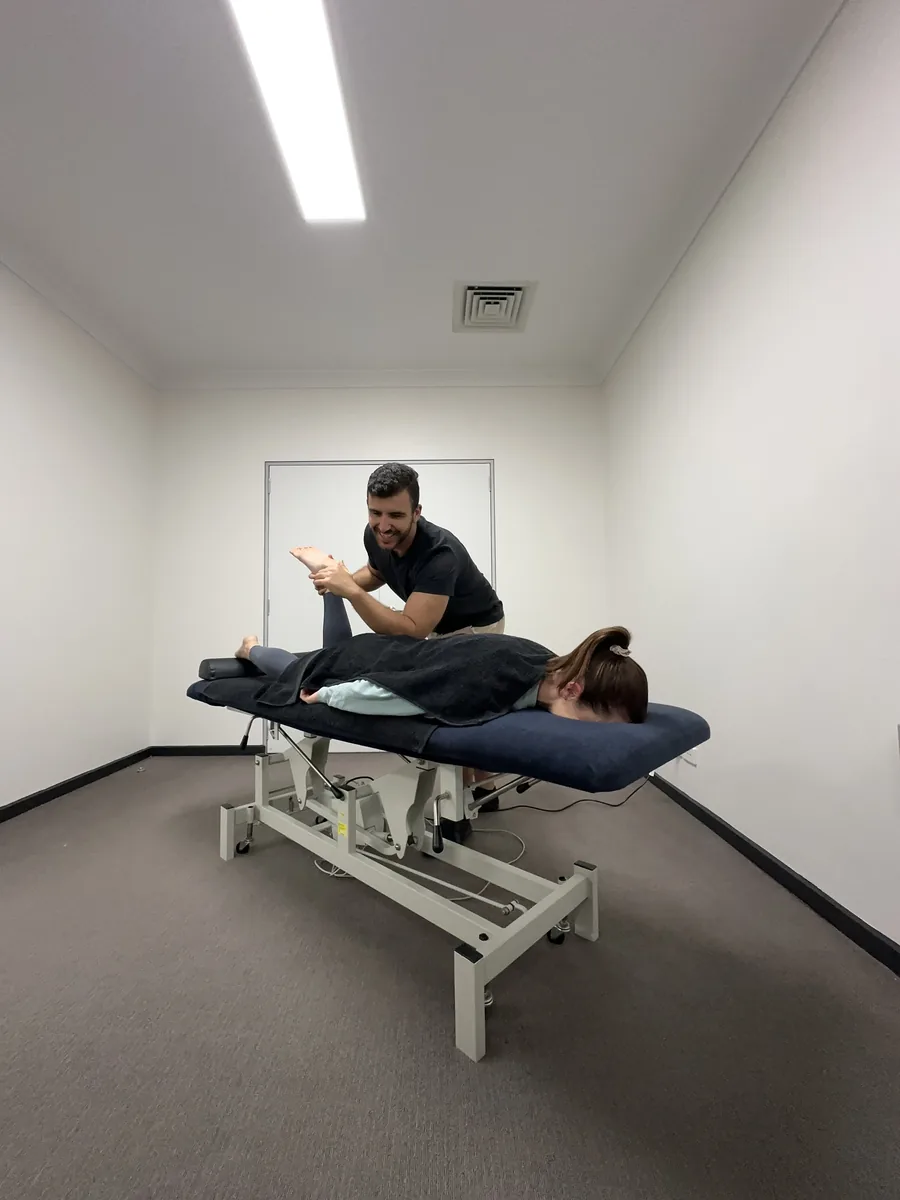
We treat grappling injuries and help you build strength work around what's sore, so you keep rolling and lifting while it settles.
See our training hub and our guide to BJJ injuries. Book an assessment at our Berwick clinic. A 60-minute initial consultation is $149, with no referral needed and HICAPS on-site.
Sources
Book an initial consultation at RISE Sports & Spinal in Berwick. Clear diagnosis, hands-on treatment, and a plan that actually gets you better.
Related articles