Wrist pain from push-ups and bench press: what helps
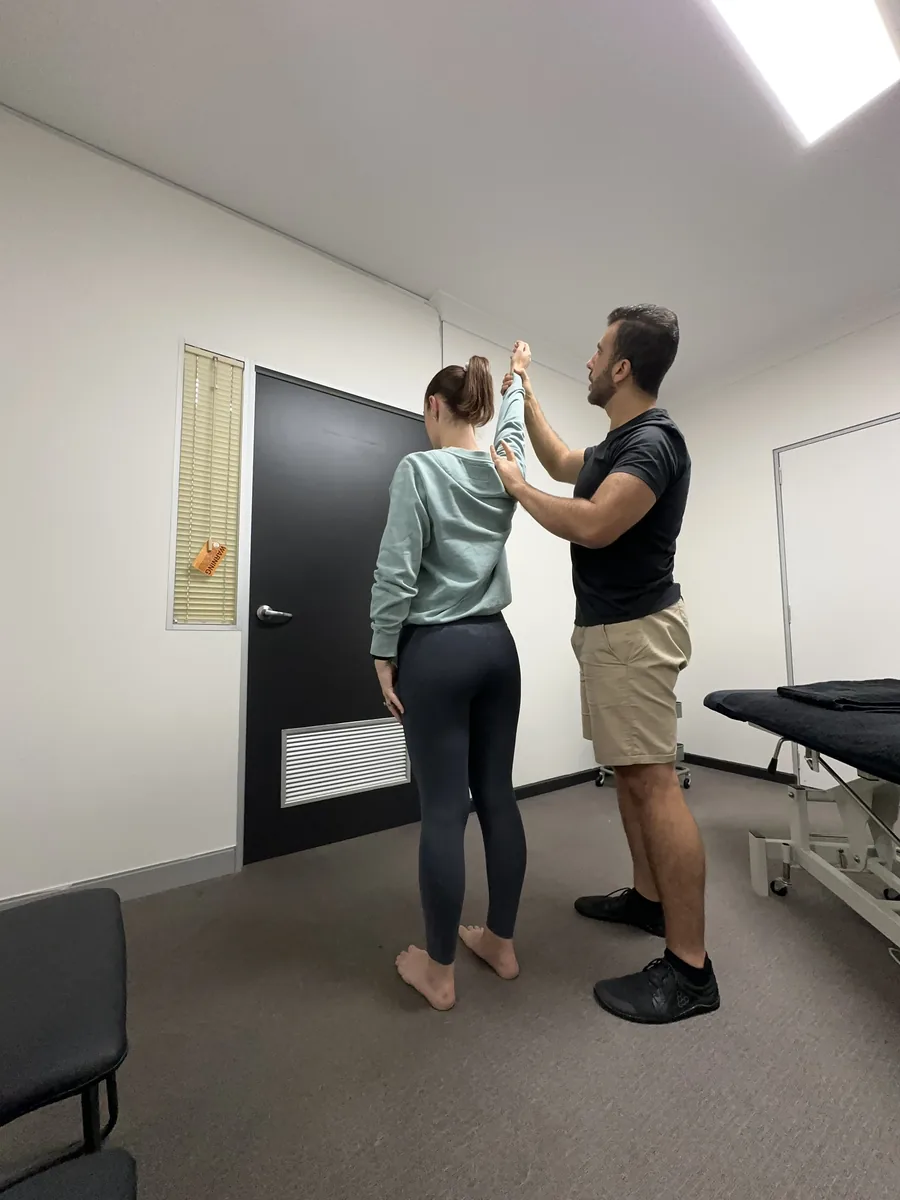
Wrist pain in the gym usually shows up with push-ups, bench press, front squats, cleans or handstands: anything that loads the wrist bent right back. Steven lifts and treats a lot of gym-goers, and most wrist pain like this settles with a few changes.
Why do my wrists hurt when I do push-ups?
A push-up puts your wrist into close to its full backward bend while taking a big share of your body weight. If your wrists aren't used to that position under load, the joints and soft tissues on the back of the wrist can get irritated. Pain on the little-finger side of the wrist often involves the TFCC, a small cartilage and ligament complex that doesn't like twisting and weight-bearing.
Why does my wrist hurt when I bench press?
The most common reason is the bar sitting too high in your palm, near the fingers, which lets the wrist bend backwards under the load. Setting the bar lower in your palm, over the heel of the hand and in line with your forearm, keeps your wrist stacked and usually eases pain straight away. A grip that's too wide or too narrow can also push the wrist out of line.
How can I keep training with wrist pain?
Do push-ups on your knuckles, dumbbells or push-up handles to keep your wrist straight. Use a straighter wrist on bench and consider wrist wraps for heavy sets. For front squats, try a cross-arm or strap grip until it settles. Reduce the volume of the provoking exercises for a couple of weeks rather than stopping altogether.
What exercises help wrist pain?
Gradual loading tends to help more than rest. Useful options include wrist curls and reverse wrist curls with a light dumbbell, grip work, forearm rotation with a hammer or light bar, and slowly building up to weight-bearing on your hands, first against a wall, then on a bench, then on the floor. Hands-on treatment can help ease pain and stiffness while you build back up.
What is TFCC wrist pain?
The triangular fibrocartilage complex (TFCC) is a small cushion of cartilage and ligaments on the little-finger side of the wrist. It helps stabilise the wrist and forearm, particularly when you twist and bear weight. It can be irritated gradually by lots of push-ups, bench press and front squats, or injured suddenly in a fall. Typical signs are pain on the pinky side when you push up from a chair, turn a door handle or twist a jar lid, and sometimes clicking. Most TFCC irritation settles with load changes and strengthening.
Do wrist wraps help?
Wrist wraps can help on heavy pressing sets by limiting how far your wrist bends back. They're a useful tool, especially while your wrist is sore. But they don't replace good bar position, and wearing them for every set means your wrist doesn't get the chance to build its own strength. Many lifters use wraps only for their heaviest sets.
Why do my wrists hurt in front squats and cleans?
The front rack position asks your wrist to bend back a long way while supporting the bar, and it depends on your shoulder, elbow and upper back mobility too. Holding the bar with just your fingertips rather than a full grip, using straps looped around the bar, or a cross-arm grip takes a lot of pressure off the wrist. Improving shoulder and upper back mobility often helps the wrist more than stretching the wrist itself.
Can wrist pain come from the neck or elbow?
Sometimes. A nerve irritated at the neck or elbow can cause pain, tingling or weakness in the wrist and hand. Tingling in the fingers, symptoms that spread up the arm, or pain that doesn't change with wrist movements are clues that the wrist may not be the main problem.
How long does wrist pain from lifting take to heal?
Mild irritation often settles within two to four weeks once you've adjusted your grip and reduced the aggravating exercises. TFCC and ligament irritation can take longer, often six to twelve weeks, and occasionally needs a splint, imaging or a hand specialist's opinion if it isn't improving. Returning to full push-ups and heavy pressing gradually, rather than all at once, is the best way to avoid a flare-up.
When should wrist pain be checked?
Get it assessed if it isn't improving after two to three weeks, clicks or catches painfully, or you have pins and needles or numbness in your fingers. See a doctor promptly after a fall on an outstretched hand if you have pain in the hollow at the base of your thumb, significant swelling, or can't grip, as a scaphoid fracture can be missed on early X-rays.
If you have tingling in your hand, see our post on carpal tunnel syndrome, or our elbow and wrist pain guide. Book an assessment at our Berwick clinic. A 60-minute initial consultation is $149, with no referral needed and HICAPS on-site.
Sources
Book an initial consultation at RISE Sports & Spinal in Berwick. Clear diagnosis, hands-on treatment, and a plan that actually gets you better.
Related articles