Sore after dry needling or osteopathy: is it normal?
Feeling sore, heavy or tired after a treatment session can be unsettling if you weren't expecting it. It's common, usually mild, and passes quickly. Here's what's normal and what isn't.
Is it normal to be sore after osteopathic treatment?
Yes. A systematic review of manual therapy found that minor to moderate short-lived reactions, such as soreness, stiffness or tiredness, occurred after roughly 20% to 40% of treatments, while major adverse events were rare, at about 0.13% (Carnes et al., Manual Therapy, 2010). The authors concluded that the risk of serious harm from manual therapy is low.
Is it normal to be sore after dry needling?
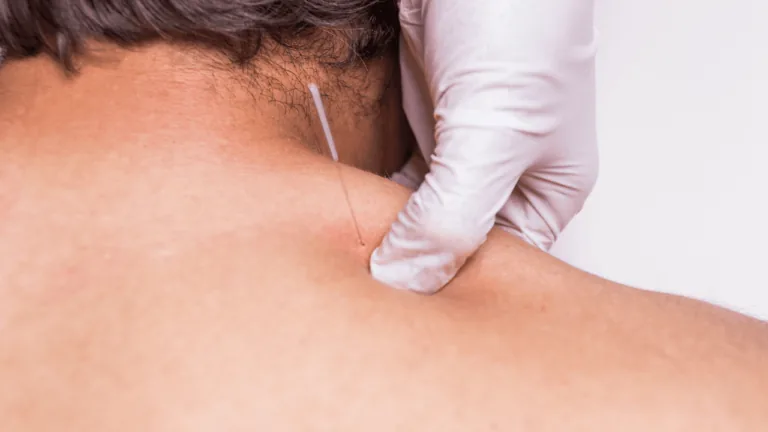
Yes. In a survey covering 7,629 dry needling treatments, mild effects were reported in about 19%, most commonly bruising, minor bleeding, and pain during or after treatment; no significant adverse events occurred (Brady et al., Journal of Manual & Manipulative Therapy, 2014). A larger survey of more than 20,000 treatments found minor effects in about a third, and major events in fewer than 0.1% (Boyce et al., International Journal of Sports Physical Therapy, 2020).
What does normal post-treatment soreness feel like?
A dull ache or tenderness in the area treated, similar to how muscles feel after exercise. After needling, the muscle may feel heavy or bruised. Some people feel tired or a little light-headed for a few hours.
How long does it last?
Usually 24 to 48 hours. Soreness after dry needling typically peaks the next day and fades within a day or two. If you're still significantly sore after three days, let us know.
Why does treatment make you sore?
Hands-on treatment and needling stimulate tissues that are already sensitive, and stretch or load joints and muscles that haven't been moving well. The reaction is similar to the soreness after unaccustomed exercise. It isn't a sign of damage.
What helps soreness after treatment?
Keep moving gently; a walk and light stretching help. Heat on the area is soothing. Drink normally. Simple pain relief can be used if needed; check with your pharmacist. Avoid a heavy gym session on the treated area that day if it's sore.
Can I exercise after dry needling or treatment?
Light activity is fine and usually helpful. For heavy training of the treated area, many people prefer to wait until the next day. We'll advise based on what was treated.
Is bruising after dry needling normal?
Small bruises occur in a minority of treatments and are harmless. Tell us if you bruise easily or take blood-thinning medication, so we can adjust.
Why do I feel tired or emotional after treatment?
Tiredness after treatment is common and short-lived. Occasionally people feel a little emotional or light-headed, particularly after needling. Sit for a few minutes, have some water and something to eat, and it usually passes.
Does more soreness mean the treatment worked better?
No. Soreness isn't a measure of effectiveness. Treatment doesn't need to hurt to help, and we adjust pressure and technique to your comfort. Tell us during the session if something is too strong.
What if my pain is worse after treatment?
A temporary flare of your usual symptoms for a day or two can happen, especially after a first session. It should settle. If your pain is significantly worse, or lasts more than a few days, contact us so we can reassess and change the approach.
What isn't normal after treatment?
Seek urgent medical care for shortness of breath, chest pain or a persistent dry cough after needling around the chest, upper back or shoulders, as these can be signs of a punctured lung, which is rare but serious. Also seek urgent care for a sudden severe headache, dizziness, difficulty speaking, vision changes, facial drooping, or new weakness or numbness after neck treatment, and for spreading redness, heat or swelling at a needle site.
Will I be sore after every session?
Usually not. The first session tends to produce the most reaction, as your body isn't used to it and the area is most irritable. Many people have little or no soreness after later sessions.
Can I shower, use heat or have a massage afterwards?
Yes. A warm shower or heat pack is fine and often eases post-treatment soreness. There's no need to avoid normal daily activities.
Should I take anti-inflammatories after treatment?
Most people don't need anything. If you're sore, simple pain relief is an option; ask your pharmacist what's appropriate for you.
How do we reduce the chance of soreness?
We take a full history, explain what we plan to do, start conservatively, and check in with you during treatment. You can decline any technique, including needling, at any time.
See our dry needling page and our posts on how dry needling works and what to expect at your first appointment. Book an assessment at our Berwick clinic. A 60-minute initial consultation is $149, with no referral needed and HICAPS on-site.
Sources
Carnes D, et al. Adverse events and manual therapy: a systematic review. Manual Therapy, 2010.
Book an initial consultation at RISE Sports & Spinal in Berwick. Clear diagnosis, hands-on treatment, and a plan that actually gets you better.
Related articles