Pins and needles in the feet: causes and when to worry
Everyone gets pins and needles after sitting on a foot. Tingling, numbness or burning that keeps coming back, or doesn't go away, is different. It has a range of causes, some musculoskeletal and many medical, so working out the pattern is the first step.
When are pins and needles in the feet an emergency?
Call 000 for sudden numbness or weakness in a leg, arm or the face, particularly on one side, or with difficulty speaking. Go to an emergency department for numbness around the groin or inner thighs, new difficulty controlling your bladder or bowels, weakness in both legs, or numbness that is spreading up the legs over hours or days.
What causes pins and needles in the feet?
Broadly, three groups. A nerve irritated in the lower back, which usually affects one leg in a particular strip. A nerve compressed locally in the leg or foot. And conditions that affect nerves generally, called peripheral neuropathy, which typically affect both feet.
What is peripheral neuropathy?
It's damage to the long nerves, and it usually starts in the toes and feet on both sides, sometimes later reaching the hands, in a 'stocking and glove' pattern. A JAMA review describes diabetes as the most common cause, and recommends blood tests including blood glucose and vitamin B12 as part of the initial work-up (Callaghan et al., JAMA, 2015). Other causes include heavy alcohol use, some medications including certain chemotherapy drugs, kidney disease, thyroid problems and inherited conditions. In a proportion of people no cause is found.
What does neuropathy feel like?
Tingling, numbness, burning or a feeling of walking on cotton wool or pebbles, usually worse at night. Balance can be affected. It tends to come on gradually over months.
Can a problem in my back cause it?
Yes. A nerve root irritated in the lower back, often by a disc, causes tingling or numbness in part of one foot: the top of the foot and big toe, or the outer edge and little toes, usually with pain in the buttock or leg. It often changes with back position, sitting, coughing or sneezing.
See our post on pain down the leg.
Can a nerve be trapped in the leg or foot?
Yes. Pressure on the nerve at the outside of the knee, from crossing your legs or prolonged squatting, causes numbness on the top of the foot. Tight shoes or laces can compress nerves on top of the foot. Tarsal tunnel syndrome, behind the inner ankle, causes tingling in the sole. A Morton's neuroma causes burning or numbness between two toes.
Why do I get pins and needles in my hands and feet together?
Symptoms in all four limbs point towards a general cause, such as neuropathy or, occasionally, a problem affecting the spinal cord in the neck. Anxiety with rapid breathing can also cause temporary tingling in the hands, feet and around the mouth. This pattern should be assessed by a GP.
Could it be circulation?
Reduced blood flow to the legs more often causes cramping calf pain with walking, cold feet, colour changes and slow-healing sores than tingling. Your GP can check pulses and arrange tests.
Who should I see?
If the tingling is in both feet, is constant or slowly spreading, or you have diabetes or other health conditions, start with your GP for blood tests. If it's in one foot, comes with back or leg pain, or changes with position and movement, a musculoskeletal assessment is a reasonable first step.
How can an osteopath help?
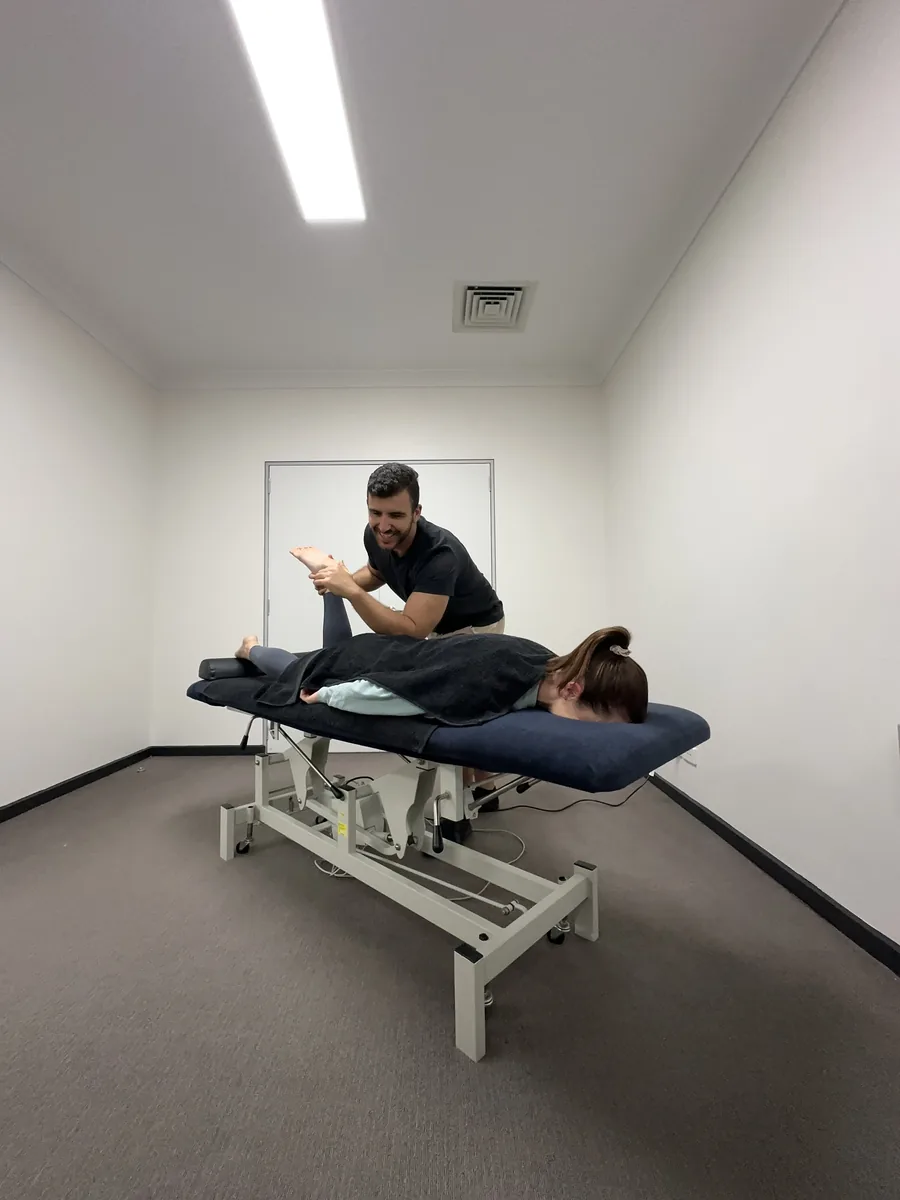
We test sensation, strength and reflexes, examine the lower back, hip, knee and foot, and work out whether the pattern fits a nerve irritated in the spine or compressed in the leg. If it does, we treat it with hands-on care, movement and exercise. If the pattern suggests neuropathy or anything else medical, we refer you to your GP.
What helps if it's coming from my back?
Staying active with walking, finding positions that ease the leg symptoms, gentle nerve mobility exercises where appropriate, and strengthening as it settles. Most nerve root irritation improves over weeks to a few months.
How should I look after numb feet?
If sensation is reduced, check your feet daily for cuts, blisters and redness, wear well-fitting shoes, and test bath water with your hand. People with diabetes should have regular foot checks with their GP or a podiatrist.
When should I see a doctor?
See your GP for tingling or numbness in both feet, symptoms that are persistent or worsening, any weakness or balance problems, foot wounds you didn't feel, or symptoms that started with a new medication.
See our post on numbness and tingling in the hands and our foot pain guide. Book an assessment at our Berwick clinic. A 60-minute initial consultation is $149, with no referral needed and HICAPS on-site.
Sources
Callaghan BC, et al. Distal symmetric polyneuropathy: a review. JAMA, 2015.
Book an initial consultation at RISE Sports & Spinal in Berwick. Clear diagnosis, hands-on treatment, and a plan that actually gets you better.
Related articles