Pickleball injuries: what gets hurt and how to prevent it
Pickleball has grown quickly in Australia, with courts appearing at tennis clubs and recreation centres across Melbourne's south-east. It's sociable, easy to learn and gentler than tennis, which is why it's popular with players over 50. It also sends a steady stream of people to physios, osteopaths and emergency departments.
How common are pickleball injuries?
In the United States, where the sport is more established, pickleball accounted for 13.1% of the estimated 792,773 racket and paddle sport injuries seen in emergency departments between 2000 and 2023. Across these sports, falls were the most common mechanism, and sprains and strains the most common diagnosis (Ferguson et al., American Journal of Emergency Medicine, 2026).
What are the most common pickleball injuries?
A study of US emergency department data found fractures (28.7%) and sprains and strains (24.7%) were the most common diagnoses, and nearly half of all injuries resulted from impact with the floor. Players aged 60 and over had the highest proportion of fractures, wrist injuries and injuries from falls (Lee et al., Arthroscopy, Sports Medicine, and Rehabilitation, 2025). Those are the injuries serious enough for hospital; in clinic we mostly see overuse problems.
What overuse injuries do pickleball players get?
Tennis elbow from gripping and repeated backhands, shoulder pain from overhead shots, Achilles and calf strains from sudden lunges, knee pain from the low, bent-knee position at the kitchen line, lower back stiffness, and wrist pain.
See our posts on tennis elbow and calf strains.
Why are falls such a problem?
The game involves quick forward, backward and sideways movements on a small court. Back-pedalling for a lob is the classic way to fall. Landing on an outstretched hand can fracture the wrist, particularly in players with lower bone density.
How do I avoid falling?
Turn and run for lobs rather than back-pedalling. Wear court shoes with lateral support, not running shoes, which are designed for going forward and can roll on sideways movements. Keep the court clear of balls and bags, and avoid playing on wet surfaces. Balance and leg strength training help.
How should I warm up?
Five to ten minutes: brisk walking or a light jog, side shuffles, leg swings, lunges, arm circles and some gentle practice shots before playing points. Calf and Achilles injuries often happen in the first game when players start cold.
How can I prevent elbow and shoulder pain?
Use a paddle with a grip size that fits your hand and avoid squeezing it tightly between shots. Build up playing time gradually, especially if you're playing several days a week. Forearm, shoulder and upper back strengthening makes a difference.
How much should I play when starting?
Start with one or two sessions a week of an hour or so, with a day between, and add more over several weeks. The sport is addictive, and many injuries come from going from nothing to playing most days.
Does strength training help?
Yes. Calf raises, squats or sit-to-stands, lunges, hip strengthening and balance work prepare your legs for the stop-start movements. Stronger legs and better balance also reduce the risk of falls.
See our post on osteoporosis and exercise.
Should I worry about my heart?
Pickleball can be more vigorous than it looks. In the emergency department study, exertional cardiovascular events made up a notable share of presentations, particularly in older players. If you have heart disease, high blood pressure or haven't exercised for a long time, see your GP before starting. Stop and call 000 for chest pain or pressure, unusual breathlessness, dizziness or fainting.
Do I need eye protection?
Eye injuries from the ball or paddle do occur, particularly in doubles at close range. Protective sports eyewear is a sensible precaution.
Can I play with arthritis or a joint replacement?
Often, yes. Doubles involves less court coverage than singles. Discuss it with your surgeon or GP if you have a joint replacement, and build up gradually.
Is pickleball easier on the body than tennis?
Generally. The court is smaller, the paddle is lighter and the serve is underarm, so there's less running and less load on the shoulder. The quick, low movements at the net still demand good leg strength and balance.
How can an osteopath help?
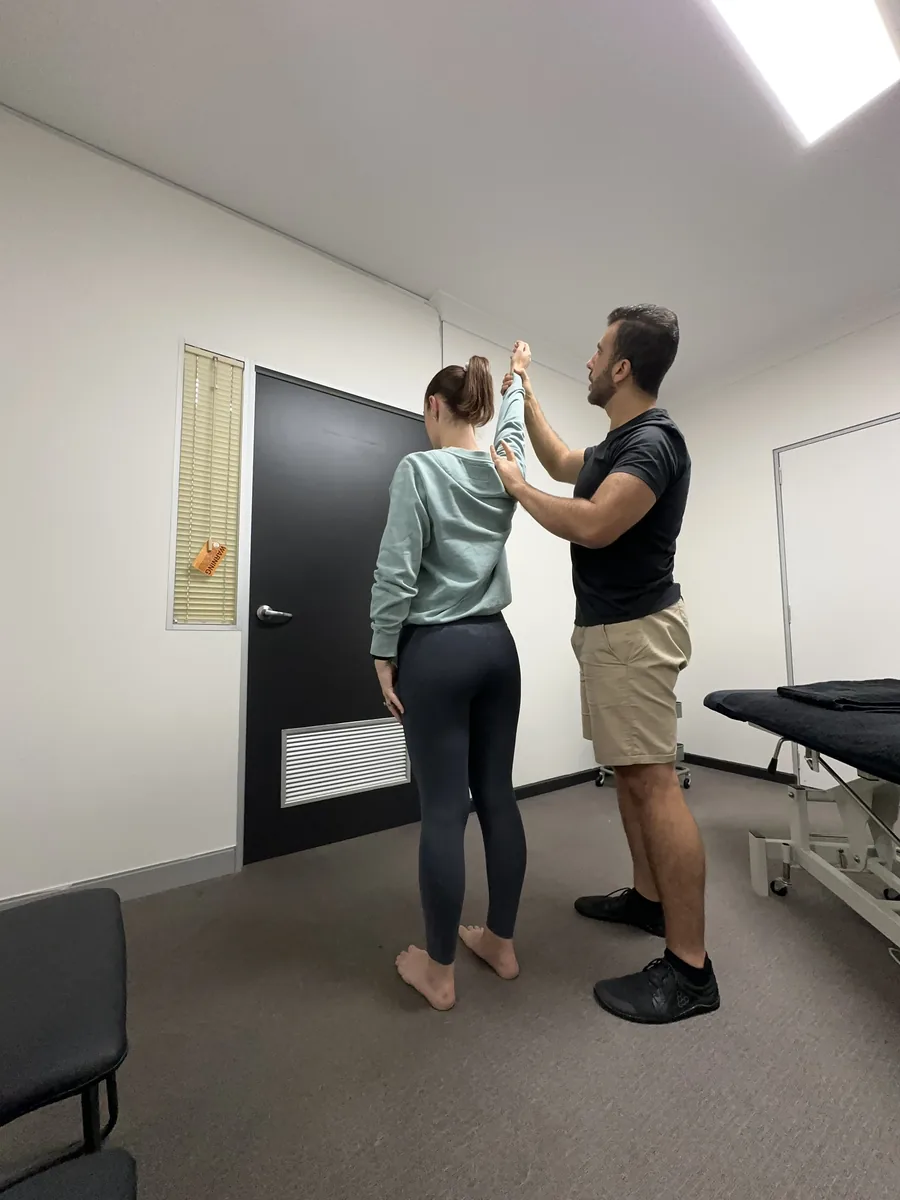
We assess and treat pickleball injuries, from sore elbows and shoulders to calf and Achilles problems, and give you strength and balance exercises to keep you on court.
When should an injury be checked?
Go to an emergency department after a fall with wrist, hip or shoulder pain and difficulty using the limb, or any head knock with symptoms. See someone for a sudden pop in the calf or Achilles, or pain that isn't improving after a week or two.
See our training hub and our sports injuries page. Book an assessment at our Berwick clinic. A 60-minute initial consultation is $149, with no referral needed and HICAPS on-site.
Sources
Book an initial consultation at RISE Sports & Spinal in Berwick. Clear diagnosis, hands-on treatment, and a plan that actually gets you better.
Related articles