High ankle sprain: why it's slower to heal than a rolled ankle
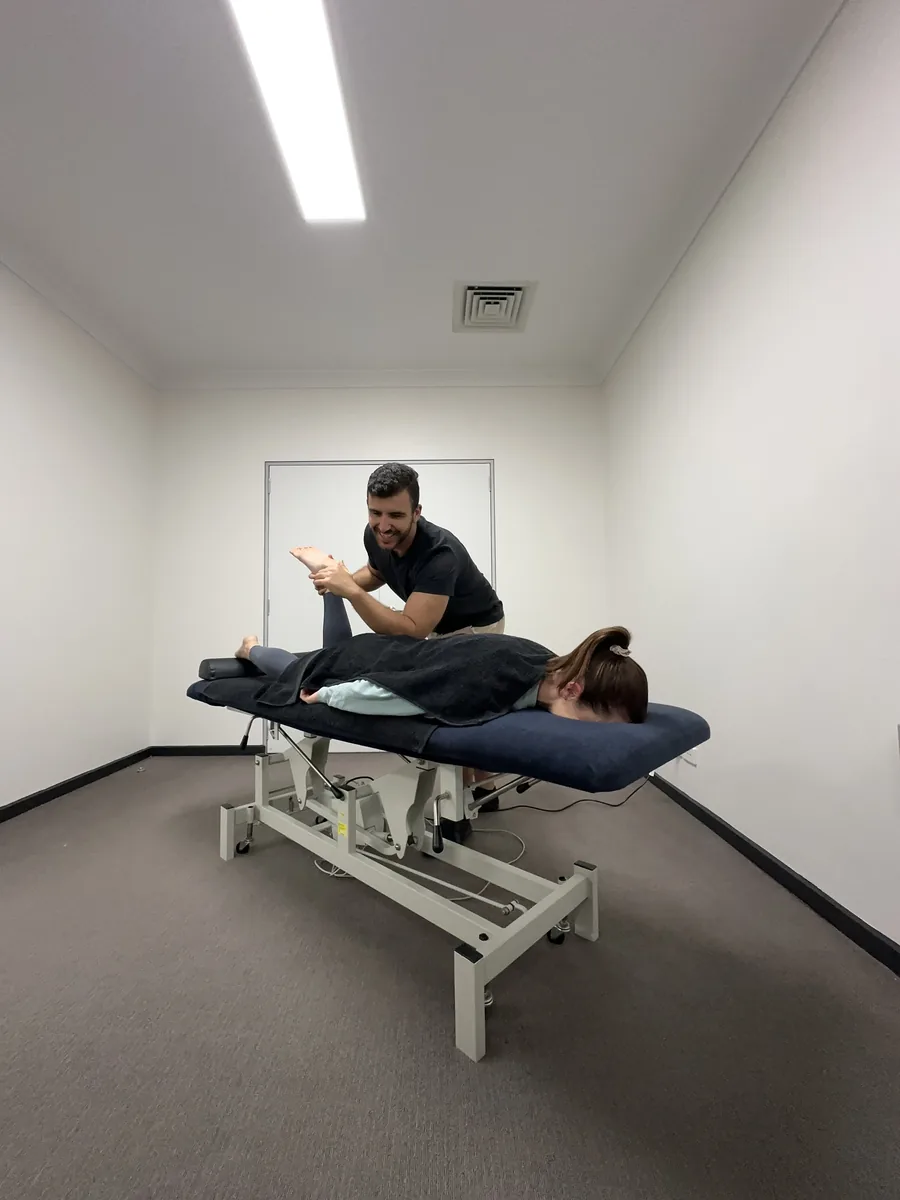
Most ankle sprains involve the ligaments on the outside of the ankle and recover fairly quickly. A high ankle sprain is different: it injures the ligaments that hold the two shin bones together just above the ankle, and it usually takes longer. It's well known in footy, soccer and rugby.
What is a high ankle sprain?
The tibia and fibula are joined just above the ankle by a group of strong ligaments called the syndesmosis. When the foot is forced outwards or upwards relative to the leg, these ligaments can be stretched or torn. A review found syndesmosis injuries make up between 1% and 18% of ankle sprains, and noted they are probably under-reported and often missed (McCollum et al., Knee Surgery, Sports Traumatology, Arthroscopy, 2013).
How does a high ankle sprain happen?
The usual mechanism is the foot being planted and turned outwards while the body rotates over it, or the foot being forced up towards the shin. Tackles where someone lands on the back of your leg, changing direction on a planted foot, and skiing falls are common causes.
How is it different from a normal rolled ankle?
A typical rolled ankle hurts and swells on the outside, below the ankle bone. A high ankle sprain causes pain above the ankle, at the front between the two shin bones, sometimes extending up the leg. There may be less swelling than you'd expect, yet walking, and especially pushing off or turning on the foot, is very painful.
How do I know if I have a high ankle sprain?
Clues include pain above the ankle joint, pain when the foot is turned outwards or when the two shin bones are squeezed together higher up the leg, difficulty pushing off your toes or doing a single-leg calf raise, and an injury that isn't recovering like your previous ankle sprains. It needs a proper assessment, as examination alone isn't always definitive.
Do I need a scan?
Often, yes. X-rays check for a fracture and whether the gap between the two bones has widened. MRI and ultrasound are accurate for diagnosing the ligament injury itself. If we suspect a syndesmosis injury, we'll refer you for imaging and, where needed, a sports physician or orthopaedic opinion.
How is a high ankle sprain treated?
It depends on the grade. Stable, lower-grade injuries are usually treated without surgery, typically in a boot with a period of reduced or no weight-bearing, followed by rehabilitation. Unstable injuries, where the bones have separated, usually need surgery to stabilise the joint (McCollum et al., 2013).
How long does a high ankle sprain take to heal?
Longer than a standard sprain. Milder injuries commonly take six to eight weeks, and more severe or surgically treated ones take three months or more. In a meta-analysis of elite athletes, 96% returned to sport after a syndesmosis injury, on average at about 58 days, with similar return rates after surgery and non-surgical management (Li et al., Journal of Orthopaedic Surgery and Research, 2025). Recreational players without full-time rehab should expect it to take longer.
What does rehab involve?
After the protection phase, rehab restores ankle movement, then calf and lower-leg strength, balance and single-leg control. Next comes straight-line running, then cutting, jumping and landing, and finally sport-specific drills and contact. Pushing off and changing direction are the last things to return, so they're tested carefully before you play.
When can I return to sport?
When you have full, pain-free movement, calf strength close to the other side, can hop, land, sprint and cut without pain, and have completed full training. Returning too early is a common reason these injuries drag on.
Should I tape or brace a high ankle sprain?
Taping or a brace can provide support when you return to sport and may give confidence. Specific taping around the lower leg to support the syndesmosis can be used alongside standard ankle taping. Neither replaces a full rehab program.
Can an osteopath help?
Yes. We assess the ankle, identify when a syndesmosis injury is likely and arrange imaging or referral, and then guide rehabilitation and return to sport. Hands-on treatment helps restore ankle and foot movement once the ligaments have had time to heal.
When should an ankle injury be checked urgently?
Go to an emergency department if you can't take four steps on the ankle, there's obvious deformity, severe swelling, or numbness or coldness in the foot. See someone within a few days for any ankle sprain with pain above the ankle or one that isn't improving as expected.
See our posts on ankle sprains and instability and the first 48 hours after an injury, or our knee and ankle pain guide. Book an assessment at our Berwick clinic. A 60-minute initial consultation is $149, with no referral needed and HICAPS on-site.
Sources
Book an initial consultation at RISE Sports & Spinal in Berwick. Clear diagnosis, hands-on treatment, and a plan that actually gets you better.
Related articles