Dry needling vs acupuncture: what's the difference?
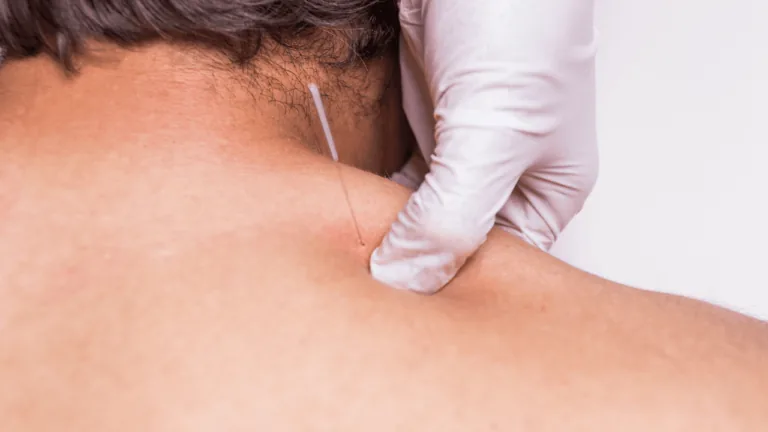
Dry needling and acupuncture look almost identical from the treatment table: fine, solid needles placed into the skin and muscle. But they come from different traditions and are practised by different professions. We offer dry needling at RISE, not acupuncture, so here's an honest comparison.
What is the difference between dry needling and acupuncture?
Acupuncture comes from traditional Chinese medicine. Points are chosen along meridians, and the reasoning is based on concepts such as the flow of qi. It's used for a wide range of complaints, not only musculoskeletal pain.
Dry needling is based on Western anatomy and physiology. Needles are placed into tender, sensitive areas of muscle (often called trigger points) and other tissues related to your pain, as one part of a musculoskeletal treatment plan. Western medical acupuncture sits somewhere in between: it uses acupuncture needles with anatomical reasoning.
Who can do dry needling and acupuncture in Australia?
Acupuncturists are registered with the Chinese Medicine Board of Australia through AHPRA. Dry needling isn't a separately regulated title; it's used by registered practitioners such as osteopaths, physiotherapists and chiropractors after additional training, within their own scope of practice. At RISE, needling is performed by Steven, an AHPRA-registered osteopath.
Is dry needling or acupuncture better for muscle pain?
There's no clear winner, and the research on both is mixed. A meta-analysis found dry needling reduced pain more than no treatment or sham needling for up to 12 weeks, though the quality of evidence ranged from very low to moderate (Gattie et al., JOSPT, 2017). Another review noted immediate and short-term improvements in pain but found no high-quality long-term trials, and pointed out that the same needling techniques are studied in the acupuncture literature too (Dunning et al., Physical Therapy Reviews, 2014).
The practical takeaway: needling is best used as a short-term way to ease pain and muscle tension so you can move and strengthen better, not as a stand-alone fix.
Does dry needling hurt?
Most people feel a small prick, and sometimes a brief twitch or deep ache in the muscle, which is normal. Mild soreness for a day or so afterwards is common. Serious complications are rare but possible, which is why needling should only be done by a trained, registered practitioner who has taken a full history first.
What does dry needling help with?
At RISE, dry needling is most often used for muscle-related neck and shoulder tension, headaches with a neck component, lower back pain, hip and buttock pain, and sports injuries such as calf, hamstring and quad strains. It's used alongside hands-on treatment and exercise rather than on its own, usually to ease pain and muscle tension enough that you can move and load the area more comfortably.
Is dry needling safe?
When performed by a trained, registered practitioner, serious complications are rare. The most common side effects are mild soreness, small bruises, and occasionally feeling light-headed. A rare but important risk is needling too deeply over the chest wall and puncturing a lung, which is why careful technique and training matter. Let us know if you take blood thinners, have a bleeding disorder, are pregnant, have a needle phobia, have a skin infection or lymphoedema, or have an implanted device, as needling may need to be modified or avoided.
What happens in a dry needling session at RISE?
Needling isn't a separate appointment. It happens within a standard osteopathy consultation. We start with a history and assessment, explain what we've found, and discuss whether needling is likely to help. If you agree, we use single-use, sterile needles, usually leaving them in for a short time or using a brief in-and-out technique. The rest of the session typically includes hands-on treatment and exercises for you to continue at home. You can say no to needling at any time.
Is dry needling covered by private health insurance?
Dry needling at RISE is part of an osteopathy consultation, so it's claimed under your fund's osteopathy extras cover, with on-the-spot claiming through HICAPS. Acupuncture is claimed under a separate acupuncture item. Check your own policy, as cover and limits vary between funds.
How many dry needling sessions will I need?
There isn't a set number. Some people notice easier movement and less pain straight after one session, while others don't find needling helpful at all. We'll tell you honestly whether it seems to be helping after a session or two. Because the evidence points to short-term benefits, needling is usually one part of a few early appointments while exercise and other treatment build longer-lasting change, rather than an ongoing course on its own.
Which should I choose?
If your problem is musculoskeletal, such as neck, back, shoulder or sports-related pain, dry needling as part of an assessment-led plan with hands-on treatment and exercise is a sensible choice. If you're seeking treatment within a traditional Chinese medicine framework, a registered acupuncturist is the right person to see.
Read more on our dry needling in Berwick page, or in what dry needling is and whether it works. Book an assessment at our Berwick clinic. A 60-minute initial consultation is $149, with no referral needed and HICAPS on-site.
Sources
Book an initial consultation at RISE Sports & Spinal in Berwick. Clear diagnosis, hands-on treatment, and a plan that actually gets you better.
Related articles